Work gloves and other PPE (personal protective equipment) carry real liability if they fail to perform as labeled, which is why cut-resistance and protection ratings are tested and certified rather than self-declared.
EN 388 and ANSI Cut Resistance Ratings

EN 388 (EU) rates gloves on abrasion, cut, tear, and puncture resistance using a standardized scale, while ANSI/ISEA 105 (US) uses a separate but comparable cut-level scale (A1-A9). These ratings aren’t interchangeable one-to-one, so always request the specific test standard and level relevant to your target market rather than assuming a rating transfers directly.
Material Options for Different Hazards

HPPE (high-performance polyethylene) and Kevlar blends dominate cut-resistant gloves; nitrile or latex coating adds grip and liquid resistance for wet or oily work environments; leather remains common for general-purpose heavy-duty work gloves. Match the material to the actual hazard your end customer faces — over-speccing (like using Kevlar for a low-risk general handling glove) just adds unnecessary cost.
Verifying Certification Authenticity
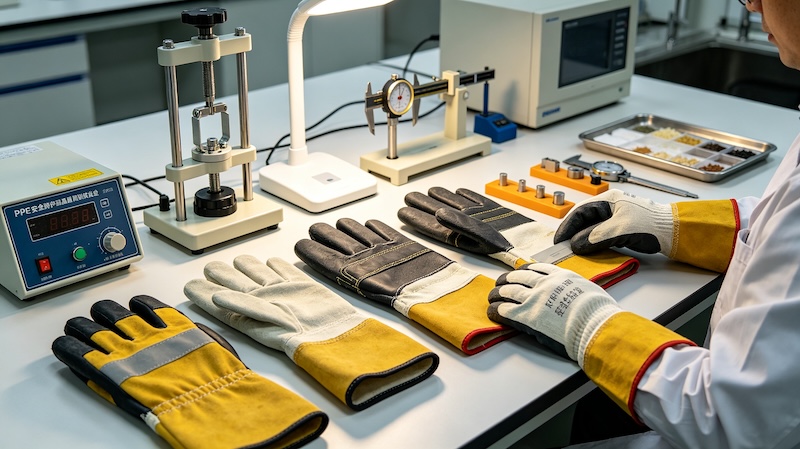
PPE certification fraud is a real and documented problem in some lower-cost supply chains. Ask for the specific test lab name and certificate number, and verify directly with the issuing lab (like SATRA or TÜV) rather than accepting a certificate image alone, especially for a new factory relationship.
Frequently Asked Questions
Can I use an EN 388 rating to market a glove in the US?
No, EN 388 is the EU standard. For US market claims, request testing against ANSI/ISEA 105, which uses a different (though conceptually similar) rating scale.
What cut level is appropriate for general warehouse handling gloves?
Lower cut levels (A1-A3 under ANSI, or level 1-2 under EN 388) are typically sufficient for general handling; higher levels are reserved for glass, metal, or sharp material handling.
How do I verify a factory’s safety certification is genuine?
Contact the issuing test lab directly with the certificate number to confirm validity, rather than relying solely on a document image provided by the factory.