If you are sourcing products from multiple factories in China, shipping each order individually is a fast way to drain your profit margins. Small shipments are disproportionately expensive, difficult to track, and increase the risk of customs delays.
The solution to this logistical headache is cargo consolidation.
Consolidation shipping from China involves taking several smaller shipments from different suppliers and combining them into one larger shipment—usually a Full Container Load (FCL). This strategy can dramatically cut your shipping costs and streamline your supply chain. Here is how it works and how you can implement it.
What is Cargo Consolidation?
In international freight, you generally have two main ways to ship by sea:
* LCL (Less than Container Load): Your goods share a shipping container with goods from other companies. You pay for the space you use (per cubic meter or CBM). However, LCL incurs high origin and destination handling fees.
* FCL (Full Container Load): You rent an entire 20ft, 40ft, or 40HQ container. While the flat rate is higher, the cost per unit is significantly lower, and the handling fees are vastly reduced.
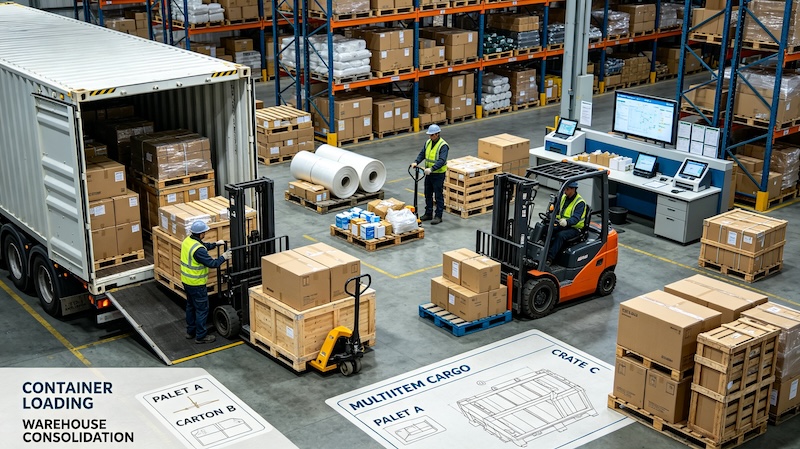
Cargo consolidation allows you to take three or four LCL-sized orders from different Chinese suppliers, ship them to a central warehouse in China, load them all into one FCL container, and ship that single container to your destination.
The Benefits of Consolidation Shipping from China
1. Massive Cost Savings
This is the primary reason importers use consolidation. While you have to pay a consolidation warehouse fee, upgrading from multiple LCL shipments to a single FCL shipment almost always saves money. FCL avoids the steep deconsolidation fees charged by forwarders at the destination port.
2. Reduced Damage and Loss
LCL shipments are handled multiple times. They are loaded, unloaded, and moved around warehouses with other people’s cargo, increasing the risk of damage or loss. With an FCL consolidated shipment, the container is sealed at the consolidation warehouse in China and not opened again until it reaches your warehouse.
3. Simplified Customs Clearance
Filing customs documents for five different shipments is tedious and multiplies your customs brokerage fees. By consolidating, you file one single customs entry for the entire container, saving both time and administrative costs.
Step-by-Step Guide to Consolidating Cargo
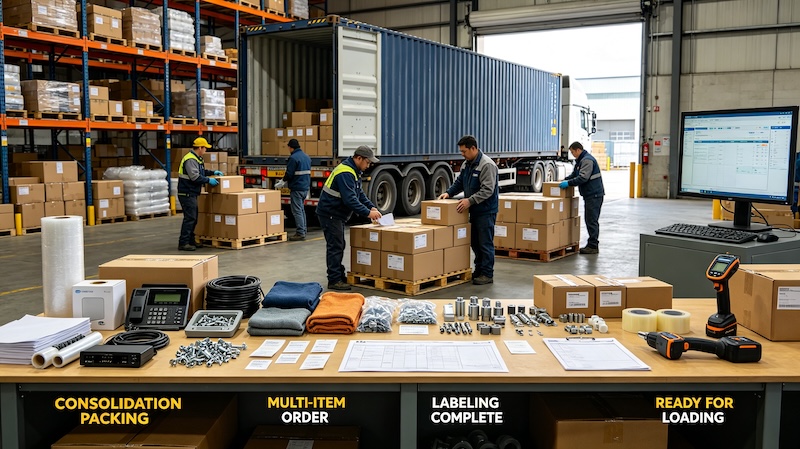
Implementing a consolidation strategy requires coordination, but the process is straightforward once established:
- Hire a Freight Forwarder or Sourcing Agent: You need a partner on the ground in China who owns or leases warehouse space. They will act as your consolidator.
- Coordinate Production Schedules: This is the trickiest part. You must manage your suppliers so their production finishes around the same time. If Supplier A finishes weeks before Supplier B, you will incur storage fees at the consolidation warehouse while waiting.
- Ship to the Consolidation Warehouse: Have all your suppliers ship their finished goods domestically to your forwarder’s warehouse (usually located near a major port like Shenzhen, Ningbo, or Shanghai).
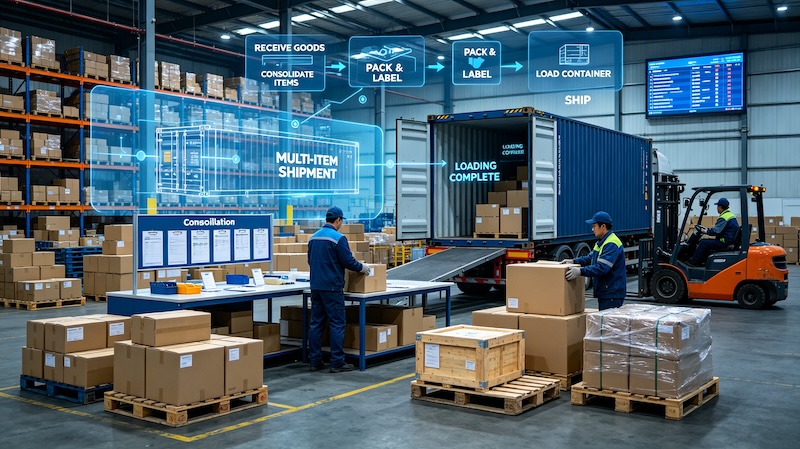
- Consolidate and Load: Your forwarder will receive the goods, verify the carton counts, inspect for visible damage, and optimally pack them into a shipping container.
- Ship as FCL: The container is sealed, loaded onto a vessel, and shipped to your destination as a single entity.
Potential Pitfalls to Avoid
While consolidation is highly beneficial, there are a few risks to keep in mind:
- The “Weakest Link” Delay: If one supplier is delayed by three weeks, your entire container is held up. You must build buffer time into your inventory planning.
- Inaccurate Volume Estimates: If you miscalculate the total volume (CBM) of your combined goods, they might not all fit into the container you booked, forcing you to leave stock behind or book a larger, more expensive container at the last minute.
- Missing Paperwork: Ensure every supplier provides accurate packing lists and commercial invoices. A discrepancy from just one supplier can delay the entire container at customs.
Conclusion
For e-commerce sellers, Amazon FBA businesses, and traditional retailers sourcing from multiple factories, cargo consolidation from China is not just a neat trick—it is a mandatory strategy for staying competitive. By partnering with a reliable forwarder and tightly managing your supplier timelines, you can significantly lower your landed costs and gain better control over your inventory.
Frequently Asked Questions
What is the difference between LCL and FCL shipping?
LCL (Less than Container Load) means sharing a container with other companies’ goods, paying per cubic meter, and facing higher handling fees. FCL (Full Container Load) involves renting a whole container for just your goods, offering a lower cost per unit and reduced handling fees.
How does cargo consolidation save money?
By combining multiple smaller LCL orders into a single FCL shipment, you avoid the high destination handling and deconsolidation fees associated with LCL. It also reduces customs brokerage fees by requiring only one customs entry.
What is the biggest risk of consolidation shipping?
The biggest risk is production delays. If one supplier finishes late, it holds up the entire consolidated shipment, potentially causing stockouts for your other products.