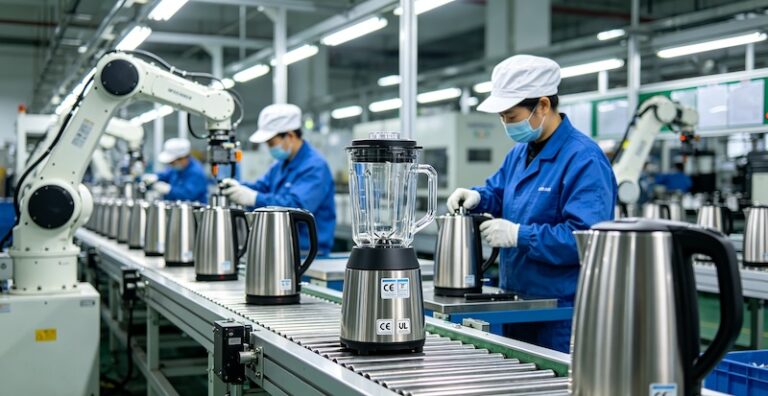
Transforming an idea into a physical, sellable product is one of the most exciting phases of entrepreneurship. For many creators and businesses, looking overseas for manufacturing is the most logical step. Learning how to get a product prototype made in China is crucial for minimizing costs, streamlining production, and validating your product before investing in mass manufacturing.
In this guide, we will walk you through the entire process of sourcing a product prototype in China, detailing the timeline, costs, and what you should expect at every critical stage.
Stage 1: Preparation and Design (1 to 4 Weeks)
Before you even contact a Chinese manufacturer, you must have your designs completely locked down. Factories in China excel at execution, but they are not product design agencies.
What to Expect
You will need to create detailed specifications. For a physical product, this means providing CAD (Computer-Aided Design) files, 3D models, or a comprehensive Tech Pack (for textiles and apparel). You must outline materials, dimensions, colors (Pantone codes), and specific functionalities.
Cost
If you hire a freelance industrial designer or an agency to create your CAD files, expect to pay anywhere from $300 to $3,000+, depending on the complexity of the product.
Pro Tip
Always have the manufacturer sign an NNN agreement (Non-Disclosure, Non-Use, Non-Circumvention) drafted under Chinese law before sharing your design files.
Stage 2: Sourcing and Selecting a Prototyping Partner (2 to 4 Weeks)
Not all factories handle prototyping. Some only deal with mass production and will outsource prototype requests, which increases costs and reduces quality control.
What to Expect
You need to identify whether you are working with a trading company, a mass-market manufacturer, or a specialized rapid prototyping facility. Many businesses use platforms like Alibaba or hire sourcing agents to find the right factory. You will send out Requests for Quotation (RFQs) to multiple suppliers, evaluate their communication skills, check their past work, and eventually select a partner.
Cost
Finding a supplier is generally free if you do it yourself. If you hire a sourcing agent to vet factories, fees typically range from $200 to $500 for the initial sourcing phase.
Stage 3: Tooling and Creating the First Prototype (2 to 6 Weeks)
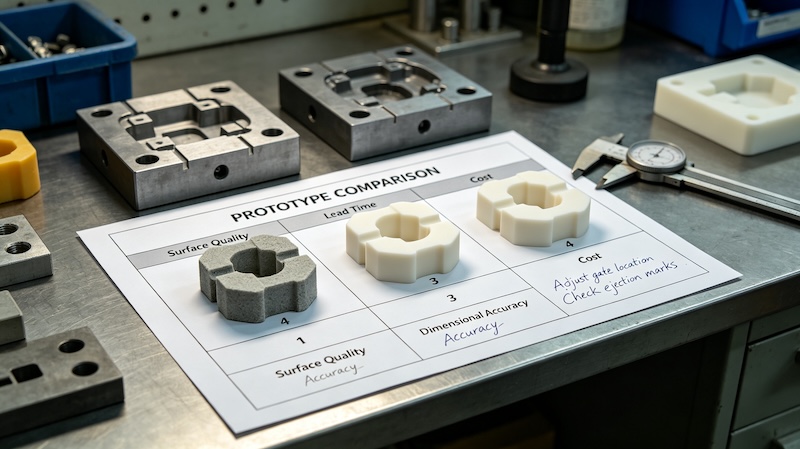
This is the phase where your design becomes a tangible object.
What to Expect
Depending on your product, the factory may use 3D printing, CNC machining, or basic molding to create a “looks-like, works-like” prototype. Do not expect perfection on the first try. The initial prototype is designed to test functionality, fit, and aesthetic appeal.
Cost
The cost for a product prototype in China varies wildly based on materials and complexity.
* Simple items (textiles, basic plastics, 3D prints): $50 to $300.
* Complex items (CNC machined parts, basic electronics): $300 to $1,500+.
* Custom Tooling/Molds: If a custom mold is required right away, this can cost anywhere from $1,000 to $10,000+. However, tooling is usually reserved for mass production, not early prototypes.
Stage 4: Review, Feedback, and Iteration (2 to 4 Weeks per iteration)
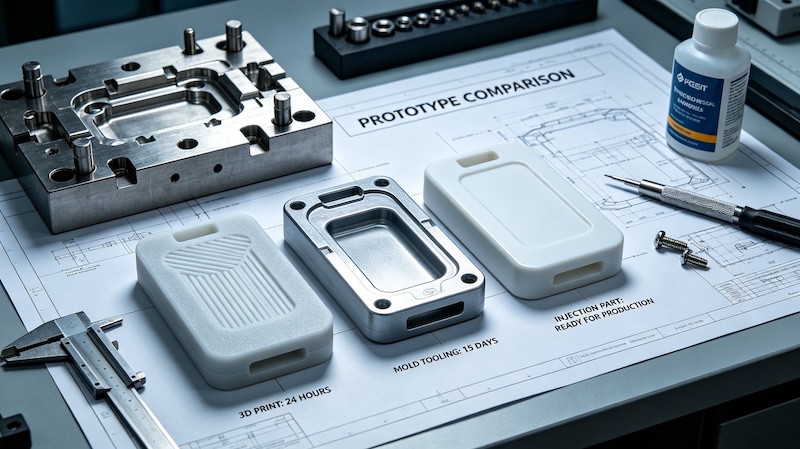
It is extremely rare for the first prototype to be perfect. Iteration is a standard part of the manufacturing process.
What to Expect
The factory will ship the physical prototype to you (usually via DHL or FedEx). You will test it vigorously. You must document every flaw, fit issue, or design change needed. Provide clear, visual feedback to the factory—using photos and videos with annotations is highly effective. The factory will then produce a second (and sometimes third) prototype based on your revisions.
Cost
Expect to pay for the shipping ($30 to $100+ depending on weight) and a reduced prototype fee for each iteration. Some factories will absorb the cost of minor changes, but major design overhauls will incur new charges.
Stage 5: The “Golden Sample” and Mass Production Prep (1 to 2 Weeks)
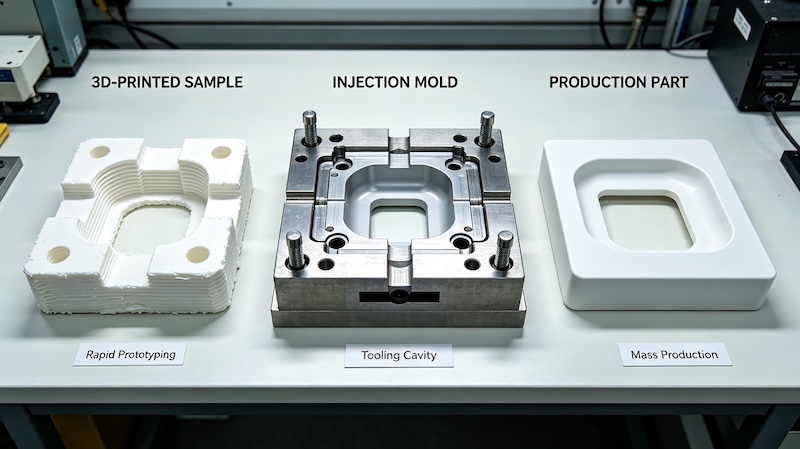
Once an iteration perfectly matches your requirements, it becomes the “Golden Sample.”
What to Expect
The Golden Sample serves as the definitive benchmark for mass production. You will sign off on this specific prototype. From this point forward, every unit produced on the assembly line must match the Golden Sample in quality, material, and function. The factory will begin preparing for mass production, finalizing custom tooling, and sourcing raw materials in bulk.
Cost
The cost of the final sample is usually credited back to your account if you proceed with a large mass production order (e.g., placing an order for 1,000+ units).
Conclusion
Getting a product prototype made in China is a multi-step journey that requires patience, clear communication, and careful planning. From finalizing your CAD designs to iterating on the physical samples, the process usually takes 2 to 4 months and costs a few hundred to a few thousand dollars. By setting realistic expectations for the timeline and costs at each stage, you can navigate the prototyping phase successfully and prepare your product for a profitable market launch.
Frequently Asked Questions
How much does it cost to get a product prototype made in China?
The cost varies based on complexity. Simple prototypes like textiles or 3D prints cost $50 to $300. Complex prototypes requiring CNC machining or basic electronics can range from $300 to $1,500 or more. If custom tooling/molds are needed, costs can exceed $1,000.
How long does it take to make a product prototype in China?
The entire process typically takes 2 to 4 months. This includes finalizing designs (1-4 weeks), sourcing a factory (2-4 weeks), creating the first prototype (2-6 weeks), and handling multiple rounds of revisions and shipping (2-4 weeks per iteration).
What is a Golden Sample in prototyping?
A Golden Sample is the final, approved prototype that perfectly matches your design and functionality requirements. It serves as the definitive benchmark that all mass-produced units must replicate exactly.