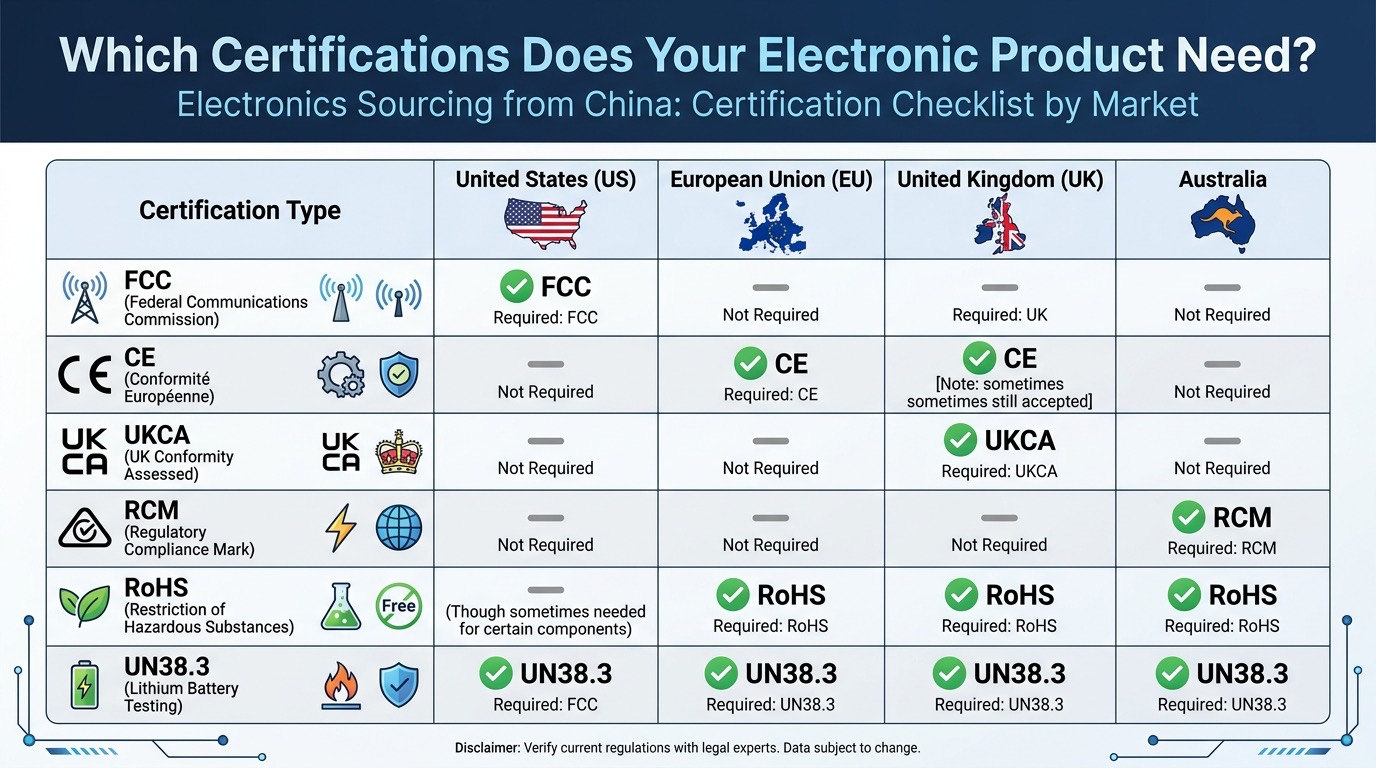
RoHS (Restriction of Hazardous Substances) is one of the most consistently required certifications for electronics and electrical products sold into the EU, and increasingly expected by buyers elsewhere too, even where not strictly mandated by local law.
What RoHS Actually Restricts
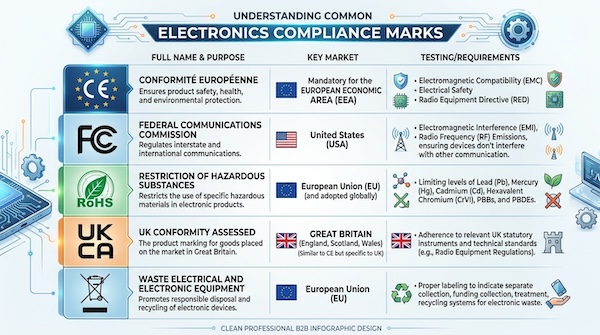
RoHS limits the presence of specific hazardous substances — lead, mercury, cadmium, hexavalent chromium, and several brominated flame retardants and phthalates — in electrical and electronic equipment, above set threshold concentrations. It applies to virtually all EEE (electrical and electronic equipment) sold in the EU, from consumer electronics to cables and chargers.
How RoHS Compliance Is Verified
Compliance is typically verified through XRF (X-ray fluorescence) screening for a fast initial check, followed by full lab testing (via methods like ICP-OES) for definitive substance concentration measurement if the XRF screen raises any concern. Most established Chinese electronics factories exporting to the EU will already have RoHS test reports for their standard components — ask for the specific report covering your exact product configuration, since component substitutions can affect compliance.
Documentation You Should Keep
Maintain RoHS test reports and a Declaration of Conformity for each product, and note that RoHS compliance needs re-verification any time a factory substitutes a component supplier or material, even if the visible product design doesn’t change — hidden substitutions (like a different cable insulation supplier) are a real, if underappreciated, compliance risk.
Frequently Asked Questions
Is RoHS compliance only required for products sold in the EU?
It’s an EU requirement, but many buyers, marketplaces, and even non-EU regulators increasingly expect or reference RoHS compliance as a general safety benchmark, making it a practical requirement well beyond the EU market.
Can I rely on my factory’s general RoHS certification for my specific product?
Only if it specifically covers your exact product configuration and components — a general company-level RoHS statement doesn’t guarantee every product variant complies, especially after component changes.
What’s the difference between XRF screening and full RoHS lab testing?
XRF is a fast, non-destructive initial screening method; full lab testing (like ICP-OES) provides more precise and legally defensible substance concentration results, typically used to confirm results near threshold limits.