The Harmonized System (HS) code determines your duty rate, whether your product needs additional permits, and how customs treats your shipment at the border. Getting it wrong isn’t a minor paperwork issue — misclassification can mean unexpected duty bills, shipment holds, or penalties.
How HS Codes Are Structured
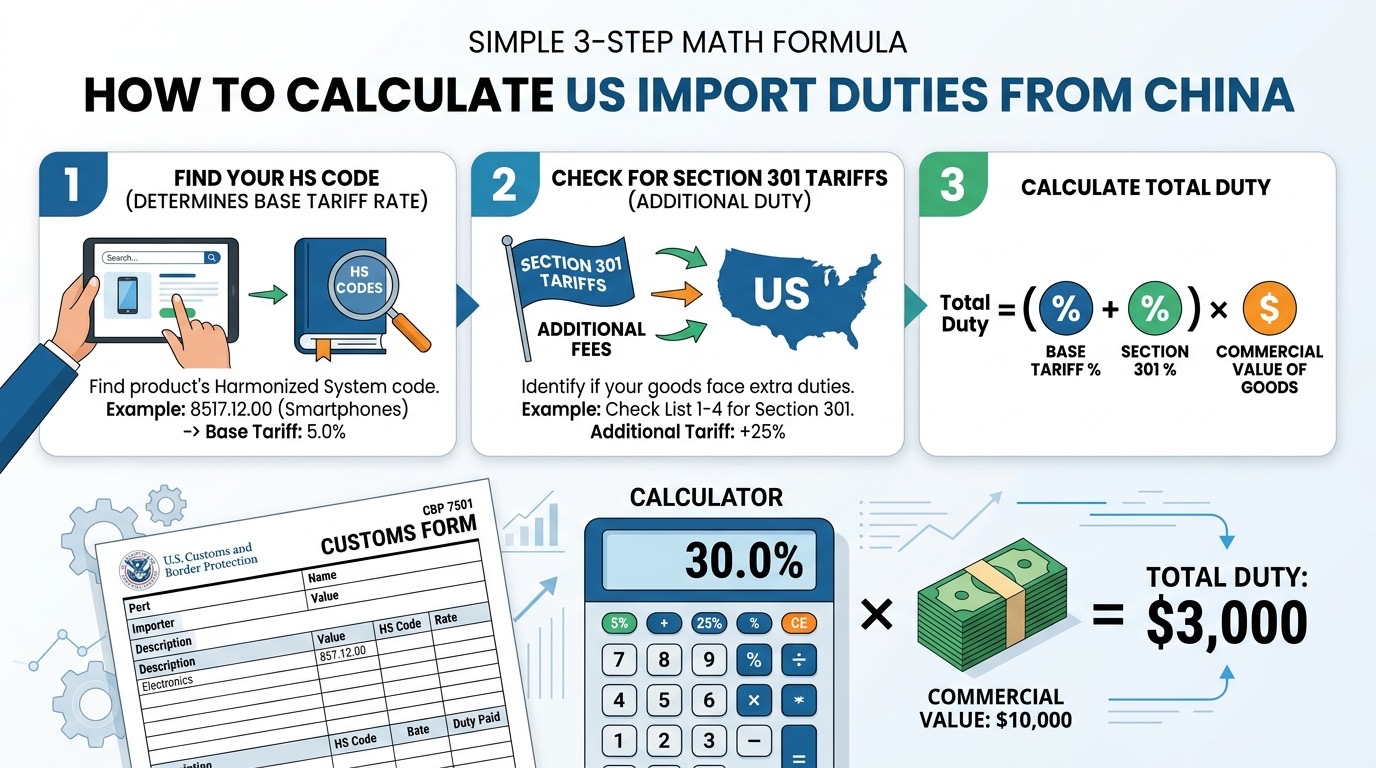
HS codes are internationally standardized to 6 digits, with individual countries adding additional digits (the US uses 10-digit HTS codes) for more granular classification and duty determination. The first 2 digits indicate the broad chapter (like 42 for leather goods, 85 for electrical machinery), with each additional digit narrowing the classification further.
Why Getting the Code Right Matters
Two products that look nearly identical to a layperson can carry very different duty rates depending on precise material composition, function, or even minor construction details. A classic example: a bag classified as “leather” versus “textile with leather trim” can carry meaningfully different duty rates. Anti-dumping duties, when applicable, are also assigned at the HS code level, so misclassification can mean either overpaying or — more seriously — unknowingly evading duties you actually owe.
How to Get Classification Right
Use official resources (like the US International Trade Commission’s HTS search tool) to identify candidate codes, but for anything with real ambiguity or high volume, it’s worth paying a licensed customs broker for a formal classification opinion, or filing for a binding ruling from customs directly. The upfront cost is small compared to a retroactive duty assessment on a year of shipments.
Frequently Asked Questions
Who is responsible for HS code accuracy — me or my freight forwarder?
Ultimately the importer of record is legally responsible for correct classification, even if a broker or forwarder suggests a code. Always review and understand the classification yourself.
What happens if I use the wrong HS code?
Consequences range from paying too much duty (recoverable through a refund claim, with effort) to underpaying duty, which can trigger penalties and back-duty assessments if discovered in an audit.
How can I get certainty on a genuinely ambiguous classification?
Request a binding ruling from your country’s customs authority (like CBP in the US) — this gives you a legally reliable classification for that specific product going forward.