Children’s products face the strictest compliance regime of almost any consumer category in the US, under CPSIA (Consumer Product Safety Improvement Act), and the consequences of non-compliance — recalls, fines, import refusal — are correspondingly severe.
Limiti relativi al piombo e agli ftalati
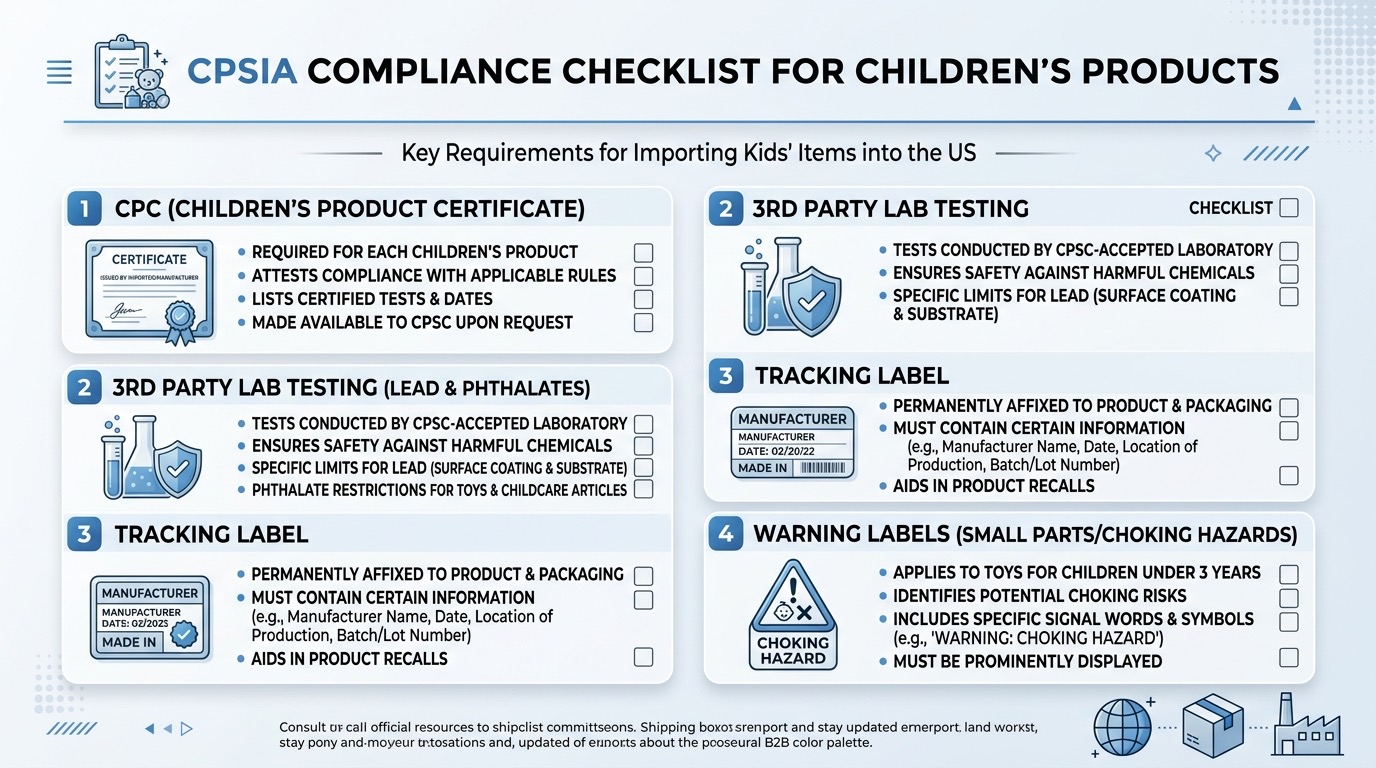
CPSIA sets strict limits on lead content in both substrate materials and surface coatings, along with limits on specific phthalates in plasticized components. These limits apply broadly across children’s products — toys, furniture, clothing, and more — not just toys specifically, which surprises some first-time importers sourcing children’s apparel or furniture who assume CPSIA only covers toys.
Test effettuati da terzi e il CPC
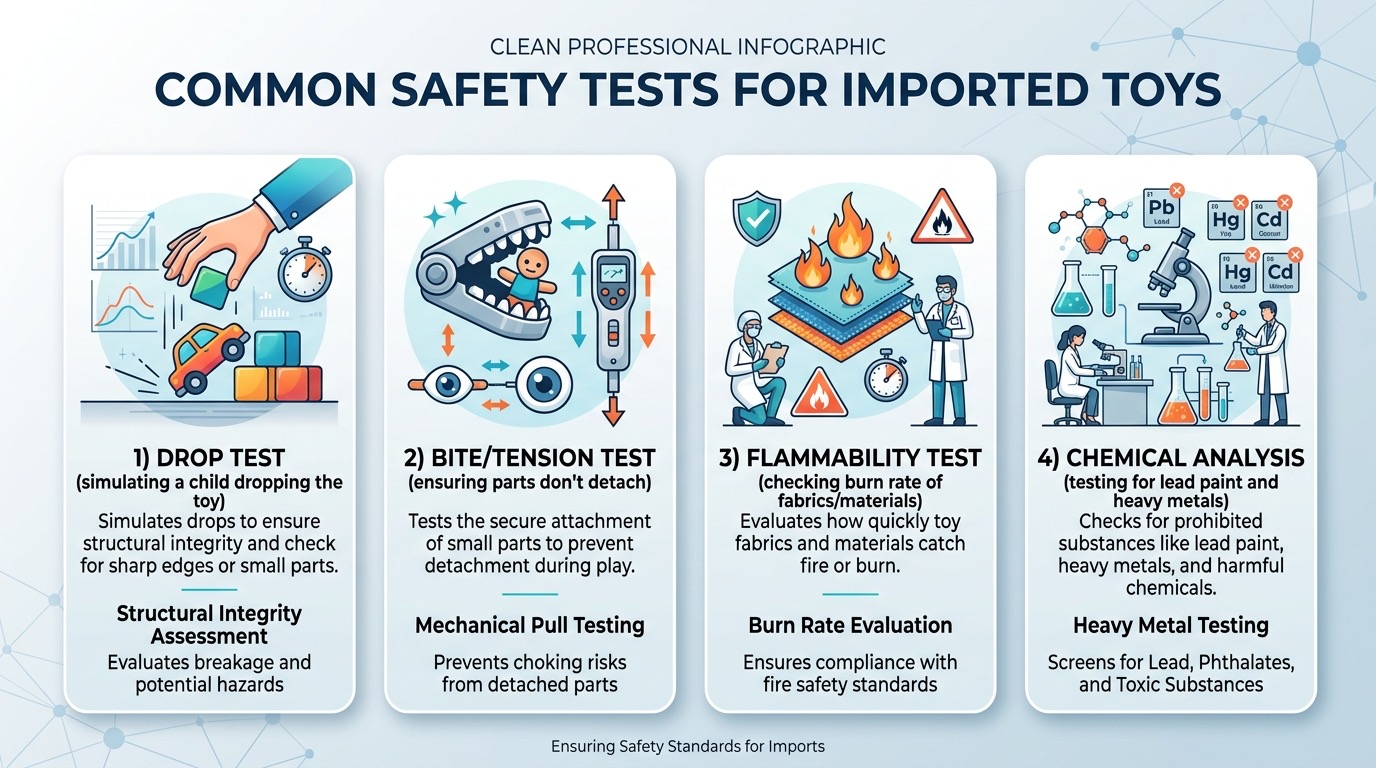
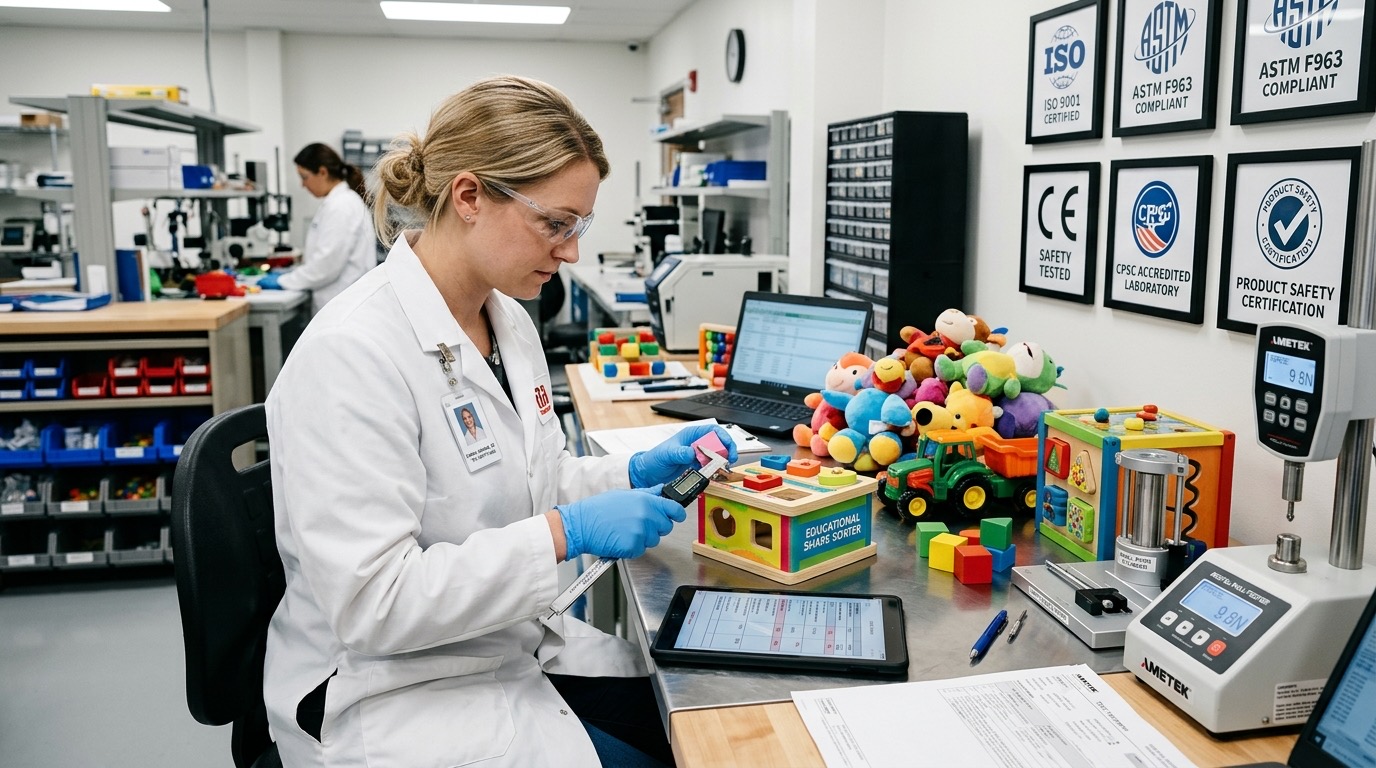
Children’s products generally require third-party testing by a CPSC-accepted lab, resulting in a Children’s Product Certificate (CPC) that must accompany the product and be available on request to CPSC or customs. This testing must be conducted on your specific product, not a generic category certification — a different colored plastic or a different fabric dye can change lead or phthalate content meaningfully.
Etichette di tracciabilità: un requisito spesso trascurato
CPSIA requires permanent tracking labels on children’s products and packaging, including manufacturer info, production location and date, and batch/run number — this becomes critical if a recall is ever needed, allowing precise identification of affected units. Many first-time importers focus entirely on the lead/phthalate testing and overlook this labeling requirement, which is itself a separate compliance violation if missing.
Domande frequenti
La CPSIA si applica solo ai giocattoli?
No, si applica in generale ai prodotti progettati o destinati principalmente ai bambini di età pari o inferiore a 12 anni, compresi mobili, abbigliamento e altre categorie, non solo specificatamente ai giocattoli.
Posso utilizzare un rapporto di prova generico relativo alla categoria al posto di effettuare i test sul mio prodotto specifico?
No, CPSIA testing must be conducted on your specific product configuration — color, material, and component changes can all affect lead and phthalate content and require separate testing.
Quali informazioni deve contenere un'etichetta di tracciabilità CPSIA?
Identità del produttore o del distributore con marchio proprio, sede e data di produzione, nonché un numero di lotto o di serie che consenta di identificare una specifica serie di produzione qualora si rendesse necessario un richiamo.