ある輸入業者が苦い経験から学んだ3万4000ドルの教訓
In early 2023, a California-based furniture retailer placed a $140,000 order with a Guangdong factory. The factory quoted CIF Los Angeles — the buyer nodded, signed, and wired the deposit.
3か月後、40フィートのコンテナがロサンゼルス港に到着したが、その中の23個に目に見える損傷があった。買い手はクレームを申し立てた。そこで、本当の問題が浮上した。CIF見積書に記載されていた貨物保険は、中国のサプライヤーが国内の保険会社を通じて手配した最低限の保険契約であり、1品目あたりの補償上限は500ドルに設定されていたのだ。買い手の実際の損失額は34,000ドルだったが、回収できたのは4,200ドルにとどまった。
根本的な原因は工場にはなかった。運送会社にもなかった。それは、買い手が最後まで完全に理解していなかった、たった2語の貿易用語だったのだ。
Incoterms — short for International Commercial Terms — are published by the International Chamber of Commerce (ICC) and revised periodically (the current version is Incoterms® 2020). They define who pays for shipping, who handles customs, and — critically — exactly where risk transfers from the seller to the buyer. Get them wrong and a single shipment can erase months of margin.
このガイドでは、中国の輸入業者にとって最も重要な7つのインコタームズについて解説し、各条件にかかる実際のコストを提示するとともに、お客様の状況に応じてどの条件を選ぶべきかを具体的にご案内します。
インコタームズが、多くの買い手が認識している以上に重要な理由
多くの購入ガイドでは、インコタームズについて2段落ほど触れただけで、次の話題に移ってしまいます。これは問題です。なぜなら、間違った条件を選べば、次のような事態を招く可能性があるからです:
- 貨物が海上輸送中の間、保険の適用外のままにしておく
- 現地に拠点がない場合、中国の輸出通関手続きの責任を負っていただくことになります
- 貨物コストの管理とフォワーダーの選定をサプライヤーに委ねてください
- 自国で税務や付加価値税(VAT)に関する問題を引き起こす
インコタームズ2020の公式規則は11種類あります。そのうち、中国との貿易で一般的に使用されるのは7種類です。残りの4種類(FAS、CPT、CIP、DPU)は時折見られますが、工場から港までの標準的な運賃交渉で取り上げられることはほとんどありません。このガイドでは、実際に遭遇する可能性が高い7種類に焦点を当てています。
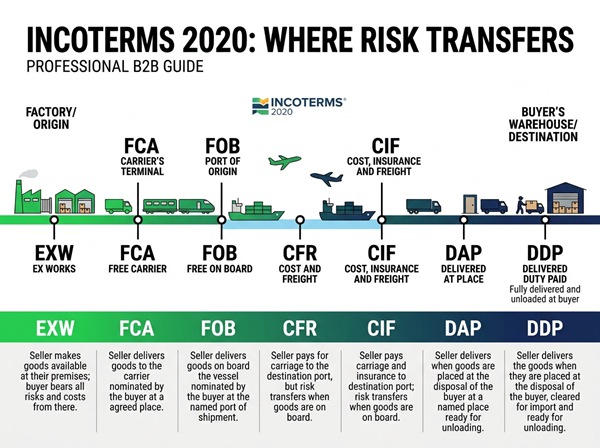
The 7 Key Incoterms for China Importers — Explained Simply
EXW — Ex Works
リスクの移転: 工場の正門(または指定された敷地)にて
港までの内陸輸送を手配するのは誰か: 購入者
中国の輸出通関は誰が担当するのか: 購入者
海上運賃は誰が支払うのか: 購入者
貨物の保険を引き受けるのは誰か: 買い手(全額)
EXW is the maximum-responsibility option for the buyer. The seller’s job ends the moment goods are ready at their facility. You arrange every leg from the factory floor to your warehouse door — inland trucking, export documentation, port handling, ocean freight, import customs, final delivery.
多くの購入者が見落としがちなポイント: EXW条件では、技術的には中国側の輸出通関手続きの責任は貴社にあります。中国に認可を受けた通関業者やフォワーダーがいない場合は、それらを手配する必要があります。多くの工場が有料でこの手配を「手伝って」くれますが、その場合、正式な契約なしに工場が貴社の代理人として行動することになり、法的にグレーゾーンに陥ることになります。
実際のコストへの影響: A shipment from a factory in Dongguan to the Port of Shenzhen for a 20′ container typically adds $180–$350 in local trucking on top of the EXW factory price. Add export documentation handling (often $80–$150 through a forwarder), and you’re looking at $260–$500 before the cargo even reaches the vessel.
こんな方に最適: 中国に定評のあるフォワーダーと提携しており、運送業者の選定や輸送ルートの決定を完全に自社で管理したいと考えている、経験豊富な輸入業者。
以下の場合は避けてください: 輸入業務に不慣れな場合、中国のフォワーダーとの取引関係がない場合、あるいは注文量が少なく、その複雑さを考慮するとわずかなコスト削減の価値がない場合などです。
FCA — Free Carrier
リスクの移転: 商品が、指定された場所で買い手が指定した運送業者に引き渡された場合
中国の輸出通関は誰が担当するのか: 売り手
海上運賃は誰が支払うのか: 購入者
貨物の保険を引き受けるのは誰か: 購入者
FCA is the ICC’s recommended alternative to EXW for buyers who want the seller to handle export customs but still want control over the main carriage. In Incoterms 2020, FCA was updated specifically to accommodate Letter of Credit (L/C) requirements — a key change for buyers who use documentary credit.
実務上、FCAがEXWよりも優先されることが多い理由: FCAの場合、輸出通関手続きは売り手が担当します。これは重要なポイントです。中国での輸出申告には、認可を受けた通関登録業者の関与が必要であり、海外の買い手が自らこれを処理しようとすると、手続き上の手間が増えます。FCAを利用すれば、その手間を省きつつ、自らがフォワーダーを選定し、海上運賃を直接交渉することも可能です。
こんな方に最適: 信用状(L/C)を利用する買い手、売り手に輸出通関手続きを委託しつつも、海上輸送や航空輸送の手配を自ら管理したい買い手。
FOB — Free On Board
リスクの移転: 指定された積出港で貨物が船舶に積み込まれたとき
中国の輸出通関は誰が担当するのか: 売り手
海上運賃は誰が支払うのか: 購入者
貨物の保険を引き受けるのは誰か: 買い手(商品が船積みされた後)
FOB is the most commonly used Incoterm in China sourcing — and also the most frequently misunderstood. Under FOB, the seller handles everything up to and including loading the goods onto the ship at the named Chinese port. From that point, the buyer bears all risk.
FOBに関するよくある誤解: 多くの買い手(および一部の工場)は、「FOB」とは、貨物が目的地の港で船のレールを越えるまで、売り手が責任を負うことを意味すると考えています。これは2010年以前の解釈です。インコタームズ2010および2020では、貨物が原産地の港で船に積み込まれた時点でリスクが移転します。
FOBの実際のコストは次の通りです: You’ll negotiate ocean freight directly with your forwarder. As of mid-2025, FCL (full container load) rates from major Chinese ports (Shanghai, Shenzhen, Ningbo) to the US West Coast have ranged from $1,800–$3,200 per 20′ container depending on market conditions. LCL (less-than-container-load) rates run approximately $60–$120 per CBM.
こんな方に最適: 中国からFCL輸送を注文する輸入業者のほとんどが、FOB条件を採用しています。FOBでは、輸出通関手続きは売手が担当しますが、運賃と保険は買い手が管理します。これは、交渉の起点となる基本条件です。
注: FOBは、厳密には海上輸送または内陸水路輸送にのみ適用されます。航空輸送や複合一貫輸送の場合、厳密にはFCAが適切な代替条件となりますが、多くの運送請求書では依然として慣例的に「FOB」と記載されています。
CFR — Cost and Freight
リスクの移転: 指定された積出港で貨物が船舶に積み込まれたとき
中国の輸出通関は誰が担当するのか: 売り手
海上運賃は誰が支払うのか: 売り手(指定の仕向港宛て)
貨物の保険を引き受けるのは誰か: 買い手(運賃は売り手が負担するものの、リスクは出荷地で移転する)
CFR creates one of the most counterintuitive situations in international trade: the seller pays for ocean freight, but the buyer bears the risk during that ocean leg. The cargo is sailing on a vessel the seller selected, paid for, and has a relationship with — but if anything happens en route, it’s your problem.
つまり、たとえ売り手が輸送の手配を担当している場合でも、海上貨物保険は別途ご自身で手配する必要があります。
こんな方に最適: サプライヤーが運送会社と強固な関係を築いており、貴社よりも有利な運賃を交渉できる場合。中国との取引においては、FOBやCIFに比べてあまり一般的ではありません。
CIF — Cost, Insurance, and Freight
リスクの移転: 指定された積出港で貨物が船舶に積み込まれたとき
中国の輸出通関は誰が担当するのか: 売り手
海上運賃は誰が支払うのか: 売り手(指定の仕向港宛て)
貨物保険の手配を行うのは誰か: 売り手
適用要件: Minimum only — 110% of invoice value under Institute Cargo Clauses (C)
CIF is where many importers get burned, exactly like the furniture retailer in our opening story. The seller arranges cargo insurance, which sounds convenient. But the ICC’s minimum requirement for CIF insurance is Institute Cargo Clauses (C) — the most basic, most restricted coverage available. It covers catastrophic total losses (sinking, fire, major collision) but excludes theft, pilferage, water damage from rain, and most partial losses.
保険の空白期間: Most professional cargo insurance policies use Institute Cargo Clauses (A), which is “all-risks” coverage. The premium difference between (A) and (C) on a $100,000 shipment is typically $150–$400 — but the coverage difference is enormous. Under CIF, your supplier chooses (C) to minimize their cost. You have no control over the policy, the insurer, or the claims process.
2つ目のCIFトラップ: 運送の手配と費用負担は売り手が担当するため、通常、売り手が希望する運送業者や輸送ルートを選択します。貨物がすでに船積みされてからでないと、その詳細がわからない場合もあります。
こんな方に最適: 保険や輸送管理上の問題よりも簡便性が優先される、小規模または低額の試作注文の場合です。5,000ドル分のサンプルを注文する場合は、CIFで問題ありません。しかし、200,000ドル分の電子機器を注文する場合は、そうはいきません。
もしサプライヤーがCIFを主張する場合は: 契約書には、保険が「Institute Cargo Clauses (A)」であり、「(C)」ではないこと、また、保険会社が自国で実際に保険金請求を行える会社であることを明記してください。
DAP — Delivered at Place
リスクの移転: 指定された仕向地において、買主による荷下ろしの準備が整った時点で
中国の輸出通関は誰が担当するのか: 売り手
海上運賃は誰が支払うのか: 売り手
輸入通関は誰が担当しますか: 購入者
輸入関税や税金は誰が支払うのか: 購入者
DAPとは、売り手がお客様の玄関先(または指定の倉庫)まで商品を配送しますが、輸入通関手続きはお客様が行い、到着時に発生するすべての関税や税金を支払うことを意味します。売り手の責任の範囲という点では、FOBやCIFに比べて大幅な進歩と言えます。
輸入関税の徴収時期に関する問題: DAPの場合、通関手続きを急いでいる間、商品は倉庫の外のトラックに積まれたままになります。実際には、船舶が到着する前に、輸入通関業者を手配し、ISF(米国における輸入者セキュリティ申告)をすでに提出しておく必要があります。DAPにおける通関の遅延は、買い手の責任と費用負担となります。
こんな方に最適: 信頼できる輸入ブローカーはいるものの、国際輸送の手配は行いたくないというバイヤー。独自の輸送体制を構築している中国の工場から発注するDTC(ダイレクト・トゥ・コンシューマー)ブランドの間で、このようなケースがますます増えています。
DDP — Delivered Duty Paid
リスクの移転: 指定された仕向地において、買主による荷下ろしの準備が整った時点で
中国の輸出通関は誰が担当するのか: 売り手
海上運賃は誰が支払うのか: 売り手
輸入通関は誰が担当しますか: 売り手
輸入関税や税金は誰が支払うのか: 売り手
VAT/GSTの納税義務者は誰か: 売り手
DDPは、売り手にとって責任範囲が最も広い条件です。商品が関税を支払った状態でお客様の元へ届くまで、あらゆる費用とリスクは供給者が負担します。これは、特に関税手続きを避けたいと考えている新規の輸入業者にとっては、理想的な条件のように思えます。
DDPが見た目よりもリスクが高い理由:
いずれにせよ、関税法遵守はあなたの法的責任です。 In most countries, the importer of record (that’s you, legally) bears responsibility for accurate customs declarations. If the seller mis-declares the goods or undervalues them to reduce duties, you can face fines and seizure — even though you didn’t arrange the customs filing. You have no visibility into how the seller is clearing your goods.
DDPは、しばしば関税詐欺を意味します。 Some Chinese suppliers who offer DDP use informal channels — “gray customs clearance” — to avoid duties and taxes. This is illegal. Goods cleared this way can be seized without compensation, and you can be held liable.
価格の透明性が失われてしまいます。 販売者は、すべての費用(運賃、保険、通関手数料、関税)を単一の価格にまとめています。これらの費用について、精査したり交渉したりすることはできません。利益率は不透明になってしまいます。
輸入時の付加価値税に関する問題。 EUおよび英国では、DDP条件は、仕入税額控除を受ける必要がある買い手にとって、VATの会計処理上の混乱を招いています。多くのEUの買い手は、「DDP VAT unpaid」という表記を用いて、DDP条件からVATを明確に除外しています。
こんな方に最適: リスクの極めて低いごく少量の注文を行う、まったくの初心者の方。あるいは、輸入通関手続きが極めて複雑であり、かつサプライヤーが実績のある合法的な通関業者を確保している国のバイヤー。
以下の場合は推奨されません: 定期的な大規模な輸入、高額な輸入関税が課される国、あるいはコンプライアンスのために監査証跡となる書類が必要な状況など。
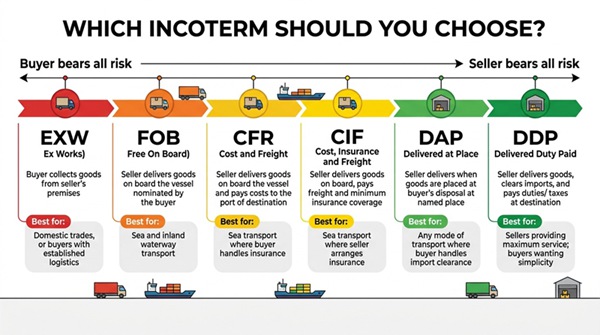
適切なインコタームズの選び方:意思決定の枠組み
どのような質問をすべきかが分かれば、これはそれほど複雑なことではありません:
ステップ1:中国からの輸入について、どの程度の経験をお持ちですか?
– First order, no forwarder relationship → Start with CIF for simplicity, but specify ICC (A) insurance in writing
– 1–3 years, have a forwarder → Use FOB. Standard, transparent, you control freight
– 3+ years, established operations → FOB or FCA depending on shipment mode
ステップ2:お荷物のサイズと価値はどのくらいですか?
– Under $10,000 or sample orders → CIF or DDP acceptable
– $10,000–$100,000 → FOB strongly recommended
– Over $100,000 → FOB minimum; consider FCA if using L/C
ステップ3:どの交通手段を選ぶか?
– Ocean FCL or LCL → FOB is the standard choice
– Air freight → FCA (technically correct; FOB doesn’t apply to air)
– Express courier (DHL, FedEx) → DAP or DDP as specified by courier terms
ステップ4:中国に拠点を置くフォワーダーはいますか?
– Yes → FOB or FCA give you maximum control
– No → CIF removes the freight-selection burden, but at the cost of insurance control
ステップ5:信用状をご利用ですか?
– Yes → FCA (updated in Incoterms 2020 to support on-board B/L requirements under L/C)
– No → FOB works fine
注文額が30,000ドルを超えるFCL海上輸送を注文するほとんどの輸入業者については: FOBこそが答えです. これにより、売り手が手配する輸出通関、運賃や保険の完全な管理、そしてコストの透明性が確保されます。このツールをうまく使いこなせるようになれば、キャリアの大半で活用することになるでしょう。
インコタームズ条項のチェックリスト:契約書でこれを確実に盛り込む
インコタームズを指定するだけでは不十分です。発注書や販売契約書には、以下の内容を記載する必要があります:
- 正式名称およびバージョン: “FOB Shanghai, Incoterms® 2020” — not just “FOB”
- 地名または港名: Exact port or location (e.g., “FOB Port of Shenzhen, Incoterms® 2020”)
- 保険条件(CIFの場合): 「保険は『Institute Cargo Clauses (A)』に基づき、[保険会社名]を通じて契約し、船舶の出航前に買主に保険証券を交付すること」
- 運送業者の指定(FOBの場合): ご利用のフォワーダーを指定し、サプライヤーが工場指定の運送業者ではなく、そのフォワーダーを通じて手配を行うことを確認してください。
- 通関業者(EXWの場合): 中国で認可を受けた通関業者の名称を記入してください
発注書契約条項の完全なテンプレートについては、当社の 中国調達エージェントガイド インコタームズの規定に加え、支払条件や品質要件を網羅した、ダウンロード可能な発注書チェックリストが含まれています。
中国の輸入業者がインコタームズに関して犯しがちな間違い
間違いその1:保険条項を明記せずに「CIF」を受け入れること
前述の通り、ICC(C)の補償範囲は、ほとんどの貨物種別においてほとんど役に立ちません。必ず書面でICC(A)を指定してください。
間違いその2:中国のフォワーダーを利用せずにEXW条件を採用すること
輸出申告手続きを行うには、中国国内の認可を受けた事業体が必要です。それがない場合、違法に事業を行っているか、あるいは販売業者に非公式の代理人として行動してもらうことに頼ることになります。
間違いその3:ポートや場所を指定していない
“FOB China” is not a valid Incoterm. “FOB Port of Ningbo, Incoterms® 2020” is. The named place matters for insurance claims, dispute resolution, and cost allocation.
間違いその4:運賃の支払時点とリスク移転の時点を混同すること
CFRおよびCIFでは、売主が運賃を負担しますが、リスクの移転は出荷地で行われます。多くの買い手は、売主が輸送を「手配」したため、海上輸送中はリスクがカバーされていると誤解しています。しかし、実際にはそうではありません。
間違いその5:通関上の影響を理解せずにDDPを受け入れること
If your goods are being cleared through gray channels, you’re the one facing penalties — not the factory.
中国からの初めての輸入を計画されているなら、当社のガイドをご覧ください。 中国からの輸入方法 covers the full process including forwarder selection, customs bonds, and duty calculation — the practical context you need before these Incoterm choices become real.
出荷前検査とインコタームズ
One area where Incoterm selection directly affects inspection logistics is pre-shipment quality control. Under EXW and FCA, you (as the buyer) arrange inspection before the seller hands goods to the carrier — which is logistically straightforward since the goods are still at the factory. Under FOB and CIF, goods are typically inspected before loading at the Chinese port.
重要なポイント:インコタームズの種類にかかわらず、リスクが貴社に移転する前に検査を行う必要があります。FOBの場合、それは貴社が 中国における出荷前検査 before goods are loaded onto the vessel. After that point, the cargo is your risk — and any defects discovered at the destination port are much harder (and more expensive) to remediate.
FOBとCIF:比較・解説
| 因子 | FOB | CIF |
|---|---|---|
| 輸出通関 | 売り手 | 売り手 |
| 海上輸送の管理 | 購入者 | 売り手 |
| 運賃の可視性 | 全文 | 価格に含まれている |
| 保険管理 | 購入者 | 売り手 |
| 保険の補償範囲 | 購入者が指定する | ICC (C) のみ(最低条件) |
| リスク移転時点 | 出発港での積み込み | 出発港での積み込み |
| こんな場合に最適 | ほとんどの輸入業者は3万ドル以上 | 少量・サンプル注文 |
| サプライヤーに関連するギャンブルリスク | Low | (運賃上乗せ)の引き上げ |
The risk transfer point is identical for FOB and CIF. The difference is who pays for freight and insurance — and therefore who controls both.
手探りなしで中国から調達する準備はできていますか?
Getting your Incoterms right is one piece of the puzzle — but there are dozens of other variables that determine whether a China sourcing project succeeds or fails. Supplier verification, quality control, payment terms, logistics timing — each one carries risk if handled without experience.
調達プロジェクトの進め方について専門的なサポートをご希望の場合は、当社のチームが、サプライヤーの選定から最終納品に至るまでの調達サイクル全般にわたり、輸入業者様をサポートいたします。 お問い合わせ お客様のご要望について詳しくお伺いいたします。
Last updated: August 2025. Incoterms® is a registered trademark of the International Chamber of Commerce. All terms referenced are from Incoterms® 2020.