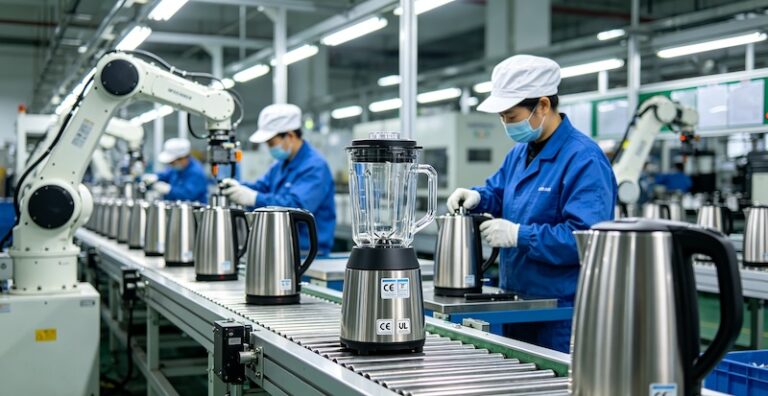
The global toy market is booming, and China remains the undisputed leader in toy manufacturing. However, when you source toys from China, safety must be your number one priority. Toys are subject to the strictest safety regulations of any consumer product category. Failing to comply with these standards can result in seized shipments, hefty fines, devastating product recalls, and severe legal liability.
To successfully navigate the complexities of toy sourcing with SourcePilot Global, you must understand the mandatory safety certifications required for your target market.
The Critical Importance of Toy Safety Certifications
Unlike generic products, toys are designed for children—a highly vulnerable demographic. Safety regulations are designed to prevent choking hazards, exposure to toxic chemicals (like lead and phthalates), flammability risks, and sharp edges.
When you import toys, you are legally considered the manufacturer in the eyes of the law in most Western countries. It is your responsibility, not the Chinese factory’s, to ensure the product meets all local safety standards.
Key Certifications for the US Market
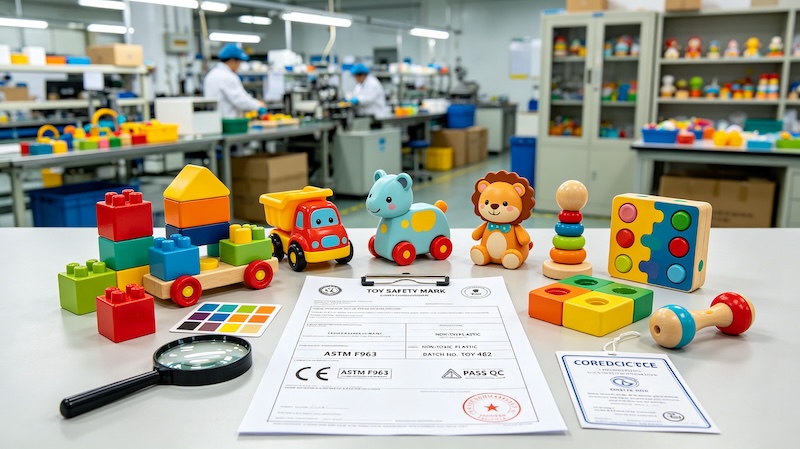
If you are importing toys into the United States, compliance with the Consumer Product Safety Commission (CPSC) is non-negotiable.
1. ASTM F963
This is the standard consumer safety specification for toy safety in the US. It is a comprehensive standard that covers physical and mechanical properties, flammability, and heavy metal content (such as lead paint). Every toy intended for children under 12 must pass ASTM F963 testing at a CPSC-accepted third-party laboratory.
2. CPSIA (Consumer Product Safety Improvement Act)
CPSIA sets strict limits on lead and phthalates in children’s products. It also requires that all toys have permanent tracking labels affixed to the product and its packaging.
3. Children’s Product Certificate (CPC)
The CPC is a document drafted by you (the importer) certifying that your toy complies with all applicable safety rules (like ASTM F963 and CPSIA). You must base this certificate on passing test results from a CPSC-approved lab. US Customs will routinely request your CPC before allowing goods into the country.
Key Certifications for the European Market
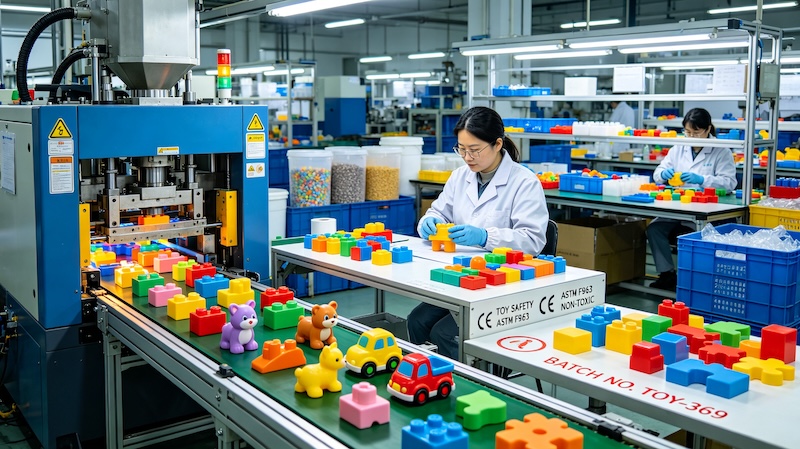
The European Union has equally stringent regulations for toy safety.
1. EN71 Standard
EN71 is the European equivalent of ASTM F963. It consists of multiple parts, including:
* EN71-1: Mechanical and physical properties
* EN71-2: Flammability
* EN71-3: Migration of certain elements (heavy metals)
2. REACH Regulation
REACH deals with the registration, evaluation, authorization, and restriction of chemicals. Toys imported into the EU must strictly comply with REACH limits on dangerous chemicals like phthalates, cadmium, and azo dyes.
3. CE Marking
The CE mark is a mandatory conformity marking for products sold in the European Economic Area (EEA). By affixing the CE mark to your toy, you declare that the product meets all applicable EU safety, health, and environmental protection requirements (including EN71 and REACH).
Steps to Ensure Safety Compliance When Sourcing Toys
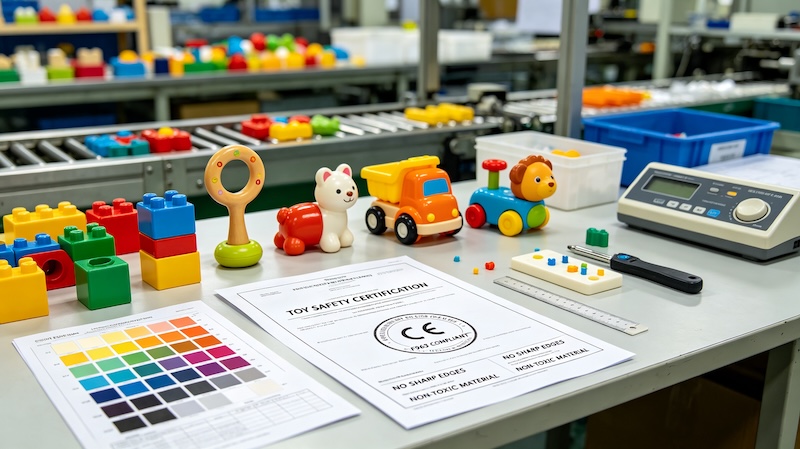
To safely source toys from China, follow this structured approach:
- Verify Factory Credentials: Do not trust a factory’s word that their toys are “FDA approved” (the FDA doesn’t regulate toys) or “CE certified.” Ask to see actual test reports from reputable third-party labs like SGS, Intertek, or TUV.
- Design for Safety: Involve safety considerations during the product design phase. Avoid small detachable parts for toddler toys and specify non-toxic paints in your Bill of Materials (BOM).
- Conduct Independent Testing: Never rely solely on tests the factory provides, as these can be forged or outdated. Always send a pre-production sample to an accredited lab to run the required ASTM or EN71 tests yourself.
- Pre-Shipment Inspections: Hire an inspection agency to check the goods before they leave the factory to ensure mass production matches the safety-tested sample.
Sourcing toys can be highly profitable, but it requires meticulous attention to detail. Partnering with experienced sourcing professionals like SourcePilot Global can help you navigate the testing labs and compliance documentation, ensuring your toys reach the market safely and legally.
Frequently Asked Questions
What is the most important safety certification for toys imported to the US?
The most critical standard is ASTM F963, coupled with the CPSIA regulations. Importers must issue a Children’s Product Certificate (CPC) based on third-party testing.
What does CE marking mean for toys sourced from China?
The CE marking indicates that a toy complies with all applicable European Union safety directives, primarily the EN71 standard and REACH chemical regulations.
Can I rely on the Chinese factory’s safety test reports?
No. While they can indicate a factory’s capability, importers should always conduct independent third-party testing at accredited labs to ensure the specific production run is compliant.