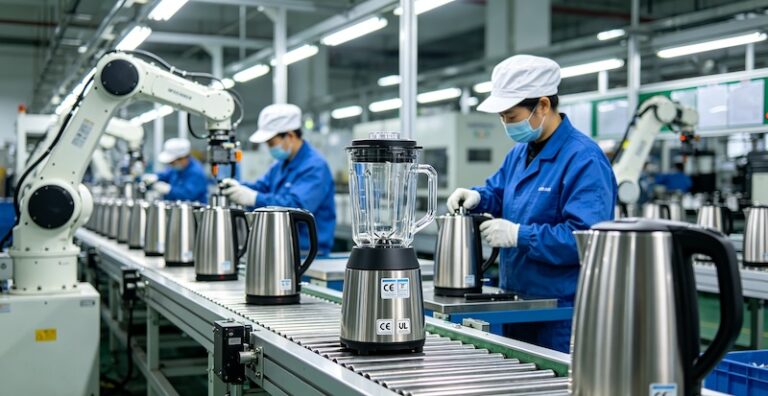
As we navigate 2026, the global supply chain landscape continues to evolve. For decades, China has been the undisputed “factory of the world.” However, rising costs, geopolitical tensions, and the desire for supply chain diversification have led many businesses to explore alternatives like Vietnam and India. This strategy, often referred to as “China Plus One,” is no longer a buzzword—it’s a critical component of global sourcing.
If you are evaluating your global sourcing strategy for 2026, comparing China, Vietnam, and India is essential. Let’s dive into the strengths, weaknesses, and ideal use cases for each country to determine which is the best fit for your manufacturing needs.
1. Sourcing from China: The Established Powerhouse
Despite the rise of alternative manufacturing hubs, China remains a dominant force in global sourcing. Its manufacturing ecosystem is unmatched in terms of scale and integration.
Pros of Sourcing from China
- Comprehensive Supply Chain Ecosystem: From raw materials to final assembly, China has deep, integrated supply chains. You can source almost any component locally, which significantly reduces lead times.
- Unmatched Infrastructure: With world-class ports, expansive high-speed rail networks, and efficient logistics, moving goods out of China is incredibly fast.
- High-Tech and Complex Manufacturing: China has moved up the value chain. It is no longer just for cheap plastic goods; it is the premier destination for complex electronics, automotive parts, and high-tech machinery.
- Skilled Labor Force: The Chinese workforce is highly skilled and experienced in modern manufacturing techniques.
Cons of Sourcing from China
- Rising Costs: Labor and operational costs in China have steadily increased, eroding the cost advantage it once held over other developing nations.
- Geopolitical Risks: Tariffs, trade wars (especially with the US), and shifting diplomatic relations pose ongoing risks to supply chain stability.
2. Sourcing from Vietnam: The Rapidly Growing Alternative
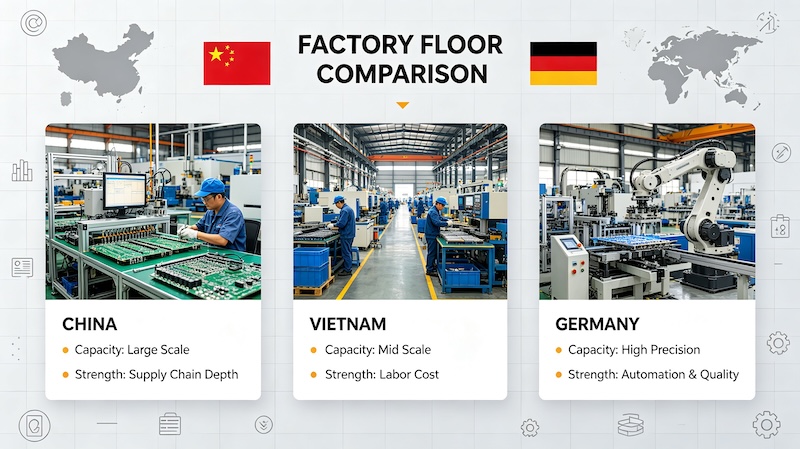
Vietnam has emerged as the primary beneficiary of the “China Plus One” strategy. Its proximity to China makes it an ideal alternative for companies looking to diversify without completely leaving the Asian market.
Pros of Sourcing from Vietnam
- Lower Labor Costs: Vietnam offers significantly lower labor costs compared to China, making it highly attractive for labor-intensive industries like textiles, footwear, and basic electronics assembly.
- Proximity to China: Being next door to China allows Vietnamese factories to easily import raw materials and components from Chinese suppliers if they aren’t available locally.
- Favorable Trade Agreements: Vietnam is a party to numerous free trade agreements (FTAs), including the CPTPP and the EU-Vietnam FTA, offering tariff advantages for many Western markets.
Cons of Sourcing from Vietnam
- Capacity Constraints: Vietnam is much smaller than China. As more companies move there, factories are quickly reaching capacity, leading to longer lead times and selective order acceptance.
- Less Developed Infrastructure: While improving, Vietnam’s ports and road networks are not as efficient or expansive as China’s, which can cause logistical bottlenecks.
- Fragmented Supply Chain: Unlike China, Vietnam relies heavily on imported raw materials (often from China), which can extend production timelines and increase vulnerability to supply shocks.
3. Sourcing from India: The Giant with Massive Potential
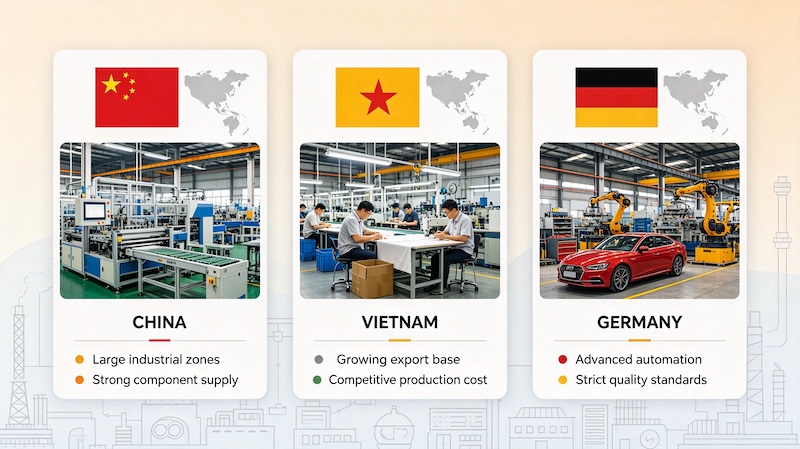
India is heavily investing in becoming a global manufacturing hub through initiatives like “Make in India.” With its massive population, it offers unparalleled scale.
Pros of Sourcing from India
- Vast Labor Pool and Low Costs: India has an enormous workforce, keeping labor costs extremely competitive.
- Strong Capabilities in Specific Sectors: India excels in pharmaceuticals, chemicals, textiles, and increasingly, software-driven hardware and basic electronics.
- English Proficiency: English is widely spoken in business contexts, which can make communication smoother compared to dealing with factories in rural China or Vietnam.
- Domestic Market Potential: Sourcing in India also provides a foothold in one of the world’s largest and fastest-growing consumer markets.
Cons of Sourcing from India
- Bureaucracy and Red Tape: Despite reforms, navigating Indian regulations, taxes, and state-level compliance can be complex and time-consuming.
- Inconsistent Infrastructure: Infrastructure quality varies wildly across different states. While some areas have modern facilities, others suffer from poor roads and inconsistent power supply.
- Quality Control Challenges: Maintaining consistent quality can be challenging and often requires more rigorous on-site oversight compared to established Chinese factories.
Conclusion: Which Should You Choose?
The decision of where to source in 2026 depends entirely on your product, volume, and risk tolerance:
- Choose China if: You are manufacturing complex, high-tech products, require rapid scaling, need deep supply chain integration, and can absorb higher labor costs.
- Choose Vietnam if: You are producing labor-intensive goods (like apparel or furniture), want to diversify away from China but still rely on its raw materials, and are targeting markets with favorable FTAs.
- Choose India if: You are sourcing pharmaceuticals, chemicals, or textiles, require massive scale with very low labor costs, and have the resources to navigate a complex regulatory environment.
For many businesses, the answer in 2026 isn’t a single country, but a diversified approach that leverages the unique strengths of each region.
Frequently Asked Questions
Why is Vietnam a popular alternative to China for sourcing?
Vietnam is a popular alternative due to lower labor costs, its geographical proximity to China (allowing for easy import of raw materials), and favorable free trade agreements with Western markets.
What are the main drawbacks of sourcing from India?
The main challenges of sourcing from India include complex bureaucracy, inconsistent infrastructure across different states, and the need for rigorous on-site quality control.
Is China still a good option for global sourcing in 2026?
Yes, China remains a highly viable option, especially for complex, high-tech products. It offers an unmatched, deeply integrated supply chain ecosystem and world-class infrastructure, despite rising labor costs.