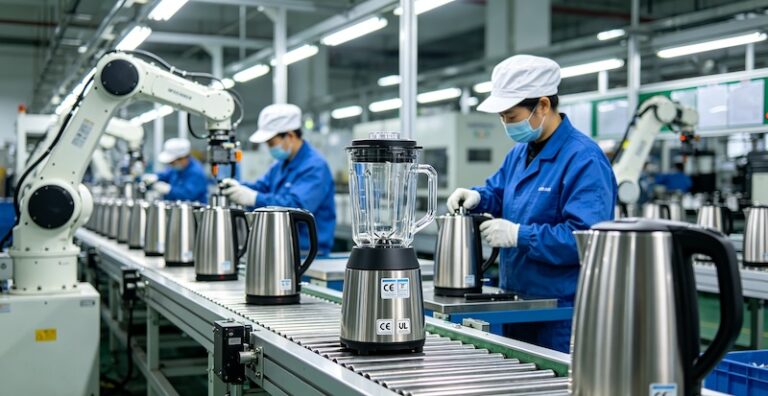
The beauty and cosmetics industry is booming, and sourcing products from China offers excellent opportunities for private label brands and retailers to maximize margins. However, when you source cosmetics from China, navigating strict international regulations like FDA rules and EU cosmetic directives is absolutely critical. Failing to comply can result in seized shipments, heavy fines, or severe damage to your brand’s reputation.
In this comprehensive guide, we will break down the crucial regulatory frameworks, identify ingredient red flags, and provide actionable steps for sourcing safe, high-quality cosmetics from Chinese manufacturers.
Understanding the Regulatory Landscape
When you import beauty products, you become the responsible party in the eyes of regulatory bodies. It is not the Chinese manufacturer’s responsibility to ensure compliance in your target market—it is yours.
FDA Rules for the US Market
For those looking to source cosmetics China FDA compliance is non-negotiable. The Food and Drug Administration (FDA) regulates cosmetics in the United States under the Federal Food, Drug, and Cosmetic Act (FD&C Act) and the Fair Packaging and Labeling Act (FPLA).
Recently, the Modernization of Cosmetics Regulation Act of 2022 (MoCRA) significantly updated FDA rules for cosmetics. Key requirements include:
* Facility Registration and Product Listing: Manufacturers must register their facilities, and brands must list their cosmetic products and ingredients with the FDA.
* Safety Substantiation: You must maintain records demonstrating that your products are safe for consumers.
* Adverse Event Reporting: Companies must report serious adverse events related to their cosmetic products to the FDA within 15 days.
* Labeling Requirements: Labels must be truthful, not misleading, and include the name and address of the manufacturer or distributor, net quantity, and ingredient declaration.
Note: If a cosmetic product also makes therapeutic claims (e.g., treating acne or reducing wrinkles), it is classified as an Over-The-Counter (OTC) drug and faces much stricter FDA regulations.
EU Regulations for the European Market
The European Union has some of the strictest cosmetics regulations in the world under the EU Cosmetics Regulation (EC) No 1223/2009. If you plan to sell in Europe, you must ensure:
* Responsible Person (RP): You must designate an RP located within the EU to ensure compliance.
* Product Information File (PIF): A detailed PIF must be kept for every product, containing a Cosmetic Product Safety Report (CPSR).
* CPNP Registration: Before placing a product on the market, it must be registered on the Cosmetic Products Notification Portal (CPNP).
* Banned Substances: The EU has banned over 1,600 ingredients from use in cosmetics. Always cross-reference your manufacturer’s ingredient list with the EU’s Annex II (list of prohibited substances).
Ingredient Red Flags When Sourcing from China
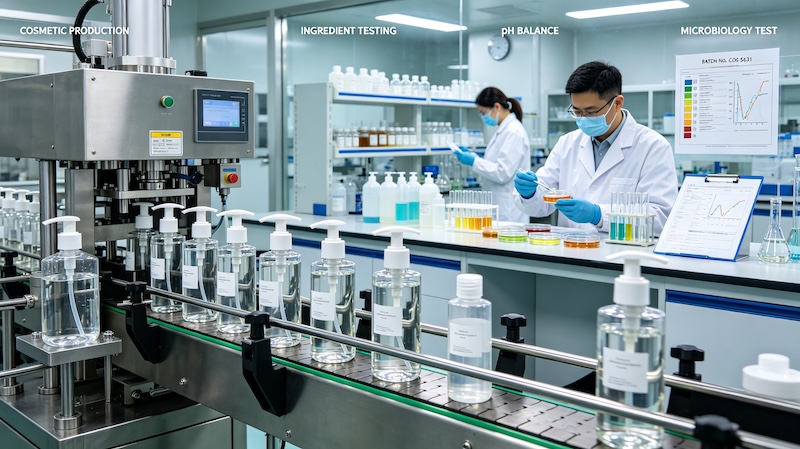
To safely source cosmetics from China, you must rigorously scrutinize the formulation. Be on the lookout for these common ingredient red flags:
1. Heavy Metals
Contamination with heavy metals like lead, arsenic, mercury, and cadmium is a major risk, particularly in color cosmetics. Ensure your supplier provides testing reports from third-party laboratories verifying that heavy metal levels fall within FDA or EU acceptable limits.
2. Banned Preservatives and Parabens
While some parabens are safe in small quantities, others like Isopropylparaben and Isobutylparaben are banned in the EU. Be wary of unlisted or broadly defined preservatives, and demand an exact INCI (International Nomenclature of Cosmetic Ingredients) list.
3. Phthalates
Often used in fragrances to make scents last longer, certain phthalates (like DBP and DEHP) are banned in the EU and heavily scrutinized by the FDA due to potential health risks.
4. PFAS (Forever Chemicals)
Per- and polyfluoroalkyl substances (PFAS) are sometimes used for water resistance in makeup. These are facing increasing bans in the US (at the state level) and the EU. Ensure your formulations are PFAS-free.
How to Vet Cosmetic Manufacturers in China
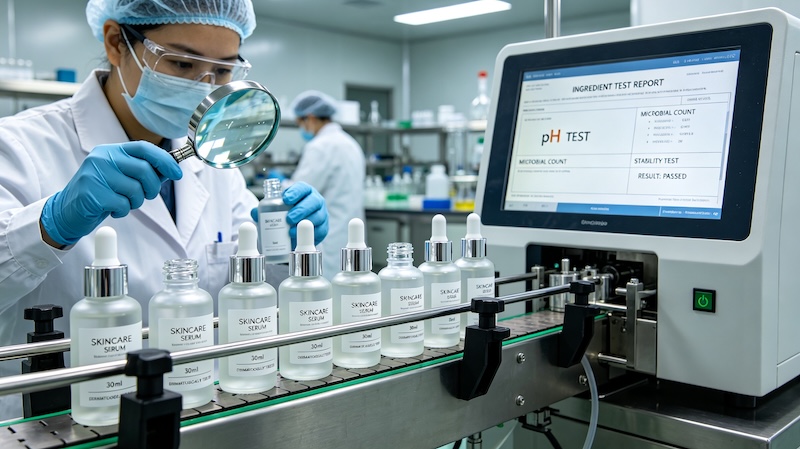
Choosing the right partner is the most important step in successfully sourcing cosmetics.
Verify Certifications
A legitimate cosmetics manufacturer should hold international certifications. Look for ISO 22716, which outlines Good Manufacturing Practices (GMP) specifically for the cosmetics industry. Additionally, check for GMPC (Good Manufacturing Practice of Cosmetics) certification for both the US and EU standards.
Request Third-Party Testing
Never rely solely on the factory’s internal testing. Always use an accredited third-party laboratory (such as SGS, Intertek, or TÜV Rheinland) to test product samples for safety, stability, microbiology, and heavy metals before mass production begins.
Audit the Factory
If possible, conduct a factory audit or hire a local sourcing agent to visit the facility. You need to ensure the manufacturing environment is clean, controlled, and strictly adheres to hygiene protocols to prevent contamination.
Conclusion
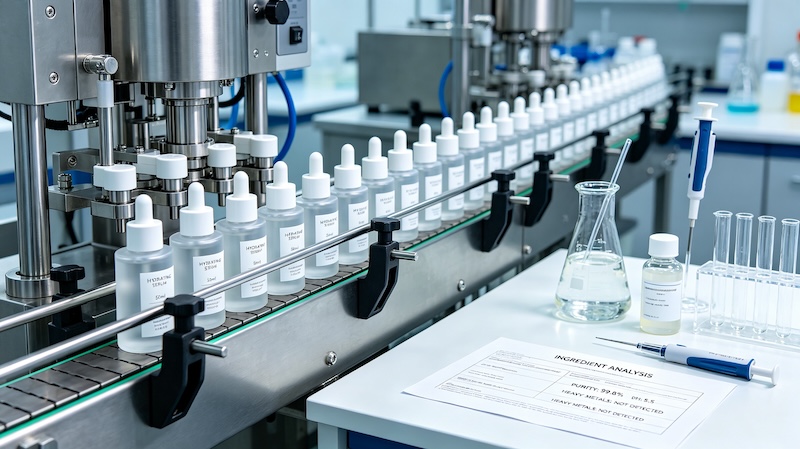
Sourcing cosmetics from China can be highly profitable, provided you prioritize safety and compliance. By understanding FDA rules, adhering to EU regulations, watching out for ingredient red flags, and thoroughly vetting your suppliers, you can build a successful, trusted beauty brand. Always remember that when it comes to cosmetics, cutting corners on compliance is never worth the risk.
Frequently Asked Questions
What are the FDA rules when I source cosmetics from China?
When you source cosmetics from China, you must comply with FDA rules under the MoCRA regulations. This includes facility registration, product and ingredient listing, maintaining safety substantiation records, reporting adverse events, and adhering to strict labeling requirements.
What ingredient red flags should I look for in Chinese cosmetics?
Key ingredient red flags include heavy metals (lead, mercury, arsenic), banned parabens and preservatives, restricted phthalates used in fragrances, and PFAS (forever chemicals). Always demand a full INCI list and third-party lab testing.
How can I verify a cosmetic manufacturer in China?
Verify the manufacturer holds ISO 22716 (GMP for cosmetics) and GMPC certifications. Additionally, require third-party laboratory testing for heavy metals and microbiology, and conduct a factory audit to ensure hygienic manufacturing environments.