قام مشترٍ في أستراليا بتحويل مبلغ 38,000 دولار إلى «مصنع» في قوانغدونغ كان قد عثر عليه من خلال إعلان على جوجل. كان الموقع الإلكتروني يبدو احترافيًّا. وكانت الردود عبر البريد الإلكتروني سريعة. كما كانت صور المنتجات ممتازة. وبعد ثلاثة أسابيع من إتمام عملية الدفع، توقف الموقع عن العمل وأصبح عنوان البريد الإلكتروني يرسل رسائل تفيد بعدم إمكانية التسليم.
ولم يتم استرداد المال أبدًا.
This is not a rare story. It plays out with different dollar amounts, different product categories, different countries — but the same underlying mechanics. And in almost every case, at least three or four of the red flags below were present before the payment was made. The buyer just didn’t know what to look for.
يقدم لك هذا المقال تلك القائمة.

كيف تعمل عمليات الاحتيال في مجال التوريد من الصين في الواقع
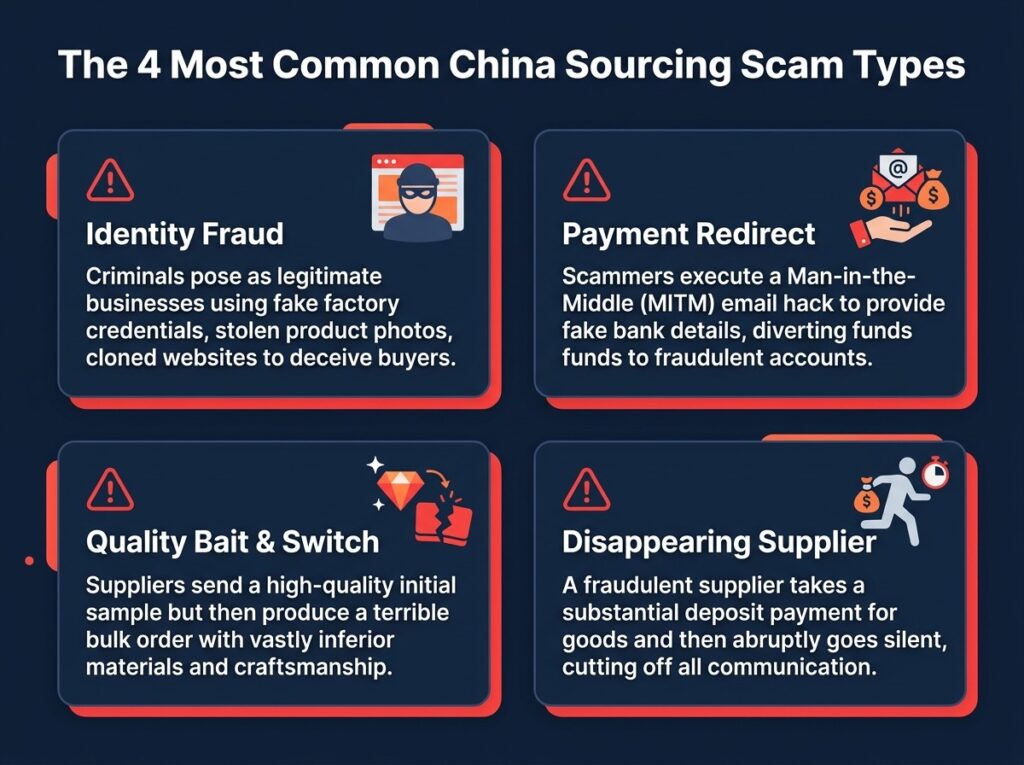
Before the red flags, a short map of how these scams are structured — because understanding the mechanism makes the warning signs easier to recognize.
الاحتيال المتعلق بالهوية is the most common category for new buyers. A fraudulent operator creates a fake company identity — cloned website, stolen product photos, fabricated business registration documents — and presents as a legitimate factory. They’re skilled at appearing real because they’ve studied what legitimate factories look like.
إعادة توجيه الدفع (هجوم الوسيط) targets existing supplier relationships. A fraudster monitors email traffic between a buyer and supplier — sometimes by compromising one party’s email account — and intercepts a payment request, substituting different bank account details. The buyer thinks they’re paying their usual supplier. They’re not.
حيلة «الإغراء والخداع» is technically legal fraud. The sample is genuine — excellent quality, exactly what was agreed. The bulk order is produced with cheaper materials, lower quality components, or reduced specifications. By the time the goods arrive and are inspected, the supplier has been paid in full.
المورد المختفي وهذه هي الطريقة الأكثر صراحة. يتم استلام الدفعة، لكن البضائع لا يتم شحنها أبدًا، ويصبح المورد غير قابل للاتصال. أحيانًا يكون المورد مزيفًا تمامًا؛ وأحيانًا تكون شركة حقيقية قبلت طلبات أكثر مما تستطيع تلبيةه، واختارت إعطاء الأولوية لطلبات أخرى.
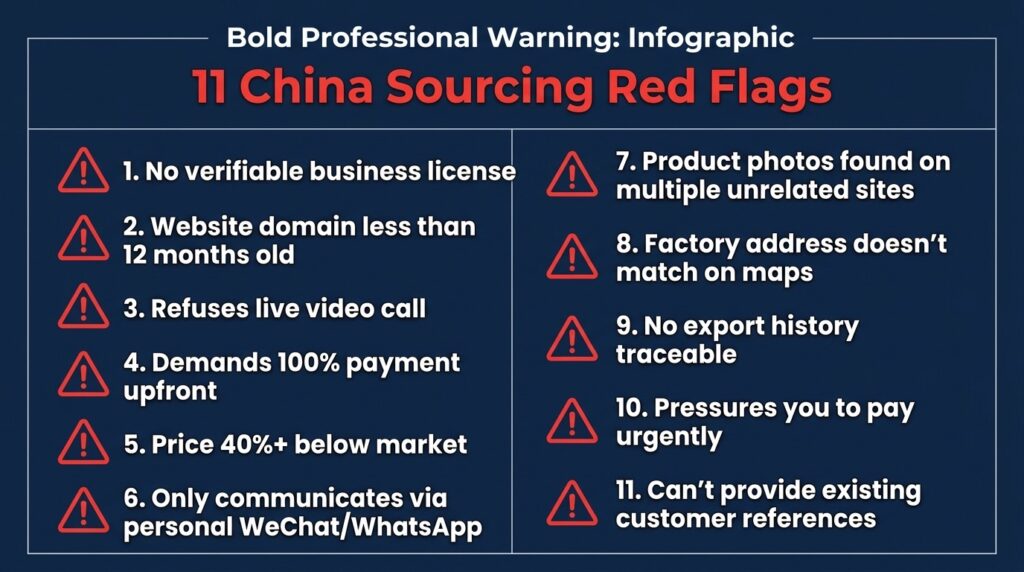
The 11 Red Flags — Explained
🚩 Red Flag #1: No Verifiable Business License
Every legitimate Chinese business has a business license registered with the State Administration for Market Regulation (SAMR). The license number — a unique 18-digit Unified Social Credit Code — can be verified in seconds on China’s public business registry.
المورد الذي لا يستطيع أو يرفض تقديم رخصة نشاطه التجاري، أو الذي لا يظهر رقم رخصته نتائج صالحة في قواعد البيانات الرسمية، لا يُعتبر شركة مسجلة بشكل قانوني. وهذا مؤشر يستوجب الاستبعاد، وليس مجرد تحذير.
ما يجب فعله: اطلب صورة رخصة النشاط التجاري وتحقق بنفسك من الرمز المكون من 18 رقمًا على gsxt.samr.gov.cn أو عبر موقع «تيانيانشا».
🚩 Red Flag #2: Website Domain Registered Less Than 12 Months Ago
تقوم العمليات الاحتيالية بإنشاء مواقع ويب ذات مظهر احترافي بسرعة. يستغرق البحث في قاعدة بيانات WHOIS عن نطاق المورد 30 ثانية، ويُظهر لك تاريخ تسجيله.
A factory claiming 8 years of operation with a website domain registered 4 months ago is a fundamental inconsistency. Real factories with multi-year track records either have older domains or have good explanations for recent website rebuilds (redesign, new branding, etc.) — and those explanations are verifiable.
ما يجب فعله: بحث WHOIS [supplierdomain.com] أو استخدم lookup.icann.org للتحقق من تاريخ تسجيل النطاق.
🚩 Red Flag #3: Refuses or Consistently Delays a Live Video Call
In 2026, declining a live video call from a potential business partner is commercially abnormal. Every legitimate factory we’ve worked with has accommodated video calls — production floor tours, product reviews, team introductions.
الأسباب التي تدفع المورد المحتال إلى الرفض: عدم امتلاكه مصنعًا يمكنه إظهاره، أو أنه يعمل من موقع مختلف عما يدعي، أو أن «ممثله» لا يعمل في الواقع لدى الشركة التي استعار هويتها.
انتبه لهذه المراوغات المحددة: «اتصالنا بالإنترنت غير مناسب لمكالمات الفيديو»، «مدير مصنعنا مسافر»، «سنرسل لك مقطع فيديو بدلاً من ذلك». يمكن تفهم تأجيل واحد، أما نمط التهرب المتكرر فلا يمكن تفهمه.
🚩 Red Flag #4: Demands 100% Payment Upfront
Standard payment terms in Chinese manufacturing are 30% deposit to begin production, 70% balance before shipment (confirmed by a pre-shipment inspection). Some first-order situations involve 50/50 splits. Payment in full before any work begins — for a new relationship — is outside normal commercial practice.
السيناريوهات الوحيدة المبررة لطلب دفعات مقدمة أعلى هي: رسوم الأدوات المخصصة (التي تُدفع بشكل منفصل ومخصص لإنشاء القوالب)، أو الطلبات الصغيرة جدًّا التي يكون فيها نظام الدفعة المقدمة/الرصيد غير عملي من الناحية الإدارية. وفي كلتا الحالتين، يكون التفسير محددًا ومنطقيًّا.
يُعد الطلب العام على دفع 100% مقدمًا من مورد لم تعمل معه من قبل بمثابة تحذير هام.
🚩 Red Flag #5: Price Is More Than 40% Below Market Average
There’s a manufacturing cost floor — the minimum it takes to produce a product at acceptable quality given current material and labor costs. Prices far below that floor are only possible in three ways: the product is non-compliant (substandard materials, missing certifications), it’s bait (the bulk order quality will be nothing like what was quoted), or it’s fraud.
Before contacting suppliers, do basic price research: Alibaba range, 1688 range, competitor retail pricing. If one supplier is quoting 40–60% below every other comparable option, treat that as a warning, not a bargain.
🚩 Red Flag #6: Communicates Only Via Personal WeChat or WhatsApp
Legitimate businesses have company email addresses, registered phone numbers, and verifiable contact information. A supplier who insists on communicating exclusively through a personal messaging app has no organizational infrastructure — and no paper trail that connects them to a registered business entity.
وهذا أمر مهم لسبب محدد: فإذا حدث خطأ ما، فإن الدليل الوحيد الذي لديك هو محادثة على «واتساب» مع حساب شخصي يمكن حذفه في أي وقت. فلا يوجد خادم بريد إلكتروني تابع للشركة، ولا سجل عناوين IP مرتبط بشركة مسجلة، ولا أي شيء يربط المحادثة بكيان يمكنك مقاضاته.
🚩 Red Flag #7: Product Photos Appear on Multiple Unrelated Supplier Websites
قم بالبحث العكسي عن الصور لكل صورة يرسلها إليك مورد جديد. يمكن لأدوات مثل «صور جوجل» أو «TinEye» أو «صور ياندكس» القيام بذلك في ثوانٍ معدودة.
If the same product photos appear on multiple supplier websites — or, worse, on stock photo sites — the supplier does not produce that product themselves. They’ve taken photos from a real factory’s catalogue or a generic image database and are presenting them as evidence of their own production capability.
🚩 Red Flag #8: Factory Address Doesn’t Check Out on Maps
اطلب العنوان الفعلي للمصنع وابحث عنه على خرائط جوجل وخرائط بايدو وخدمة «جوجل ستريت فيو». فالمصنع الذي يدعي أن لديه 200 عامل ومساحة إنتاج تبلغ 5,000 متر مربع يجب أن يظهر كمنشأة صناعية، وليس كمبنى سكني أو قطعة أرض خالية.
تحقق أيضًا مما يلي: هل يتطابق العنوان الوارد في رخصة العمل مع العنوان الذي قدموه لك؟ إن وجود أي تباينات في هذا الصدد يستدعي توضيحًا.
If a supplier claims the address doesn’t show on Maps because “it’s a new industrial zone,” that’s verifiable — new industrial zones in China appear in official planning documents and local government announcements.
🚩 Red Flag #9: No Export History Is Traceable
بيانات الاستيراد الصادرة عن الجمارك الأمريكية متاحة للجمهور ويمكن البحث فيها عبر أدوات مثل ImportYeti وPanjiva والخدمات المماثلة. ومن المفترض أن يظهر المورد الذي يدعي امتلاكه خبرة تمتد لسنوات في مجال التصدير إلى الولايات المتحدة في هذه القاعدة البيانات مع وجود سجل شحنات على الأقل.
If a supplier claims 5 years of US market experience but has no traceable US Customs records — and can’t name verifiable US clients — their stated export experience is either fabricated or dramatically overstated.
لا ينطبق هذا على الموردين الذين لم يقوموا فعليًّا بالتصدير إلى الولايات المتحدة؛ قم بتعديل بحثك ليشمل الأسواق الرئيسية التي يزعمون أنها تستهدفها.
🚩 Red Flag #10: Creates Artificial Urgency Around Payment
"هذا السعر ساري المفعول حتى يوم الجمعة فقط." "نحتاج إلى دفع عربون اليوم لحجز موعد الإنتاج الخاص بك." "هناك مشترٍ آخر مستعد لتسلم هذا الطلب إذا لم تقم بالتأكيد."
يُعد ضغط الوقت آلية تقليدية للتحايل على إجراءات العناية الواجبة. فالمورد الذي يطلب منك التحرك بسرعة أكبر مما تسمح به عملية التحقق هو مورد يدرك أنه لن يجتاز عملية التحقق.
Legitimate factories run full production schedules and genuinely do have limited slots — but they manage these professionally, with reasonable timelines. Manufactured urgency designed to prevent you from checking references or running a license verification is a deliberate tactic.
🚩 Red Flag #11: Can’t Provide Verifiable Customer References
المورد الذي يتمتع بخبرة حقيقية في مجال التصدير تمتد لعدة سنوات لديه عملاء استلموا بضائعهم، ويمكنهم تأكيد هذه العلاقة، ويكونون على استعداد للتحدث لفترة وجيزة مع مشترٍ محتمل. وهذه ممارسة تجارية معتادة في كل قطاع.
A supplier who can’t provide references — or who provides names and contact details that don’t check out — has something to hide about their actual track record. This doesn’t guarantee fraud, but it does mean you have no independent evidence that anyone has successfully completed a transaction with them.
اطلب اثنين أو ثلاثة من المراجع من أسواق مشابهة لسوقك. اتصل بهم مباشرةً. واسألهم: هل وصلت البضائع كما هو موصوف؟ هل كانت هناك مشكلات تتعلق بالجودة؟ كيف تعامل المورد مع المشكلات؟
ثلاث حالات حقيقية: كيف بدا النمط عند النظر إليها بأثر رجعي
These are composite cases based on real situations — details altered to protect buyer privacy.
Case 1 — The $42,000 Textile Order (Identity Fraud)
A UK clothing brand sourced a new knitwear supplier through a Google search. The website was convincing. The supplier provided a business license — which turned out to be for a different company in a different province. Red flags present: domain registered 7 months earlier (Flag #2), no verifiable export history (Flag #9), slight mismatch between business license company name and the trading name used in emails (Flag #1). The 30% deposit was paid. The goods never shipped.
Case 2 — The $78,000 Payment Redirect (MITM Fraud)
A German importer with a 3-year relationship with a Guangzhou packaging factory received an email — appearing to come from their regular supplier contact — stating that their bank account details had changed due to a “corporate restructuring.” The new account was in Hong Kong. The importer paid the balance on a $78,000 order. The real factory never received it. Red flag: the payment details change wasn’t confirmed via phone call to the factory’s registered number (Flag #6 variant — the buyer’s due diligence lapsed because the relationship felt established).
Case 3 — The $19,000 Bait and Switch (Quality Fraud)
A US e-commerce seller sourced silicone kitchen products from a Shenzhen manufacturer. Sample: excellent. Bulk order: different material thickness, changed colorants, packaging that didn’t match the agreed spec. By the time the goods arrived at their Amazon warehouse, 30% were rejected on arrival scanning. The supplier acknowledged “some quality variation” and offered a 5% discount on the next order. No pre-shipment inspection had been arranged (Flag missing — not a red flag from the supplier, but a gap in buyer process).
ماذا تفعل إذا لاحظت وجود عدة علامات
علم واحد: قم بإجراء مزيد من التحريات قبل المضي قدمًا. اطلب توضيحات. تحقق من الأمر بنفسك.
رايتان: لا تدفع حتى يتم توضيح جميع المشكلات بأدلة يمكن التحقق منها، وليس بمجرد تفسير من المورد.
ثلاثة أعلام أو أكثر: أوقف عملية الشراء. فتوافُق هذه المؤشرات يشير إلى نمط معين، وليس مجرد مصادفة. انتقل إلى المورد التالي في قائمتك.
تكلفة الانسحاب من مورد احتيالي تبلغ صفرًا. أما تكلفة الاستمرار في التعامل معه، فقد تصل إلى كل ما دفعته حتى الآن، بالإضافة إلى أسابيع من الاضطراب في سلسلة التوريد.
Related guide → كيفية التحقق من موثوقية المورد الصيني قبل الدفع (7 خطوات)
النمط الذي يجعل عمليات الاحتيال ممكنة
يستمر الاحتيال في مجال التوريد من الصين لأنه يستغل ميلين إنسانيين للغاية: الإثارة التي تثيرها الصفقة المربحة، والتردد في التباطؤ عندما تبدو الأمور تسير على ما يرام.
Fraudulent suppliers are often better at the early relationship — faster responses, more agreeable on terms, more forthcoming with photos and documents — than legitimate factories. This isn’t accidental. They’re optimized for the conversion, not the long-term relationship.
العلامات الإحدى عشرة المذكورة أعلاه هي أنماط تظهر عندما يكون سلوك المورد موجَّهًا نحو الدفع الذي تقدمه أنت بدلاً من المنتج الذي تشتريه. وهذا هو ما تبحث عنه.
If you’d like support verifying a specific supplier before you commit — business license checks, export data review, local reputation research — يمكن لفريقنا مساعدتكم.
Next in this series → فحص ما قبل الشحن في الصين: ما الذي يتم فحصه ولماذا يوفر عليك آلاف
تستند الحالات المذكورة في هذا المقال إلى مواقف حقيقية مركبة، مع تغيير التفاصيل التي قد تكشف عن هوية الأطراف المعنية. والأرقام المالية الواردة هي أرقام تقريبية.