Last Updated: August 2026 | Reading Time: ~12 minutes
The most common misconception about starting an e-commerce brand is that you need to invent a new product. You don’t. Most successful Amazon FBA and Shopify brands don’t design their products from scratch; they use a model called “private labeling.”
Private labeling means you take an existing product manufactured by a factory in China, apply your own branding and custom packaging, and sell it as your own. It offers a massive shortcut to market while allowing you to build brand equity. Here is exactly how to do it.
1. White Label vs. Private Label vs. Custom Molding
Before you start, you must understand the difference in manufacturing models.
White Label
The factory produces a generic product. You buy it as-is, maybe stick a barcode on it, and sell it. You have zero brand equity, and you compete purely on price.
Private Label
The factory produces an existing product, but you add your logo to the product (via laser engraving, silk printing, etc.) and design custom packaging. You are selling a generic product, but the customer experience is branded. This is the sweet spot for 90% of new e-commerce sellers.
Custom Molding (OEM)
You design a completely new product. The factory has to create new steel molds (tooling) to manufacture it. This can cost anywhere from $2,000 to $50,000 upfront just for the mold, before a single product is made. Do not do this for your first product.
2. The 4-Step Private Label Process
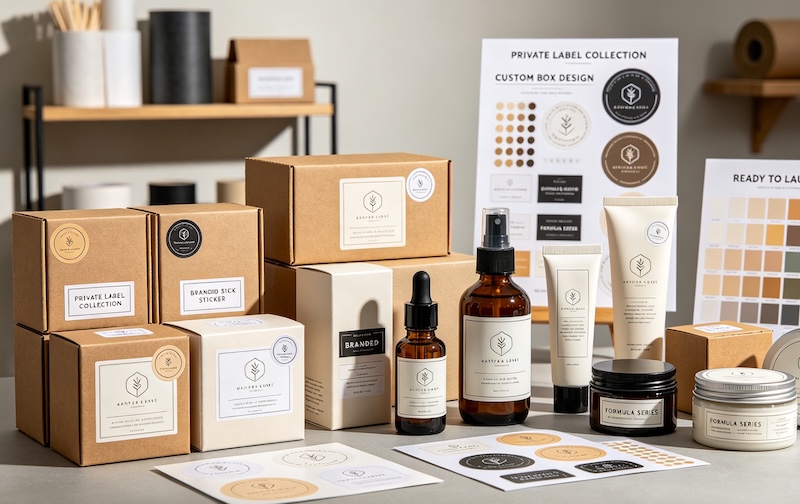
If you have decided on private labeling, follow this process to minimize risk.
Step 1: Source the Generic Product
Find factories on Alibaba or 1688 that already manufacture the product you want. Look for suppliers who have been in business for 5+ years and specialize only in that category. If a supplier sells both yoga mats and phone cases, they are a trading company, not a factory.
Step 2: Sample Evaluation
Order generic samples from your top three suppliers. Do not ask for your logo on the samples yet—it takes too long and costs too much. Just evaluate the raw quality of the product.
Step 3: Logo Application and Packaging
Once you select the best supplier, negotiate the cost of applying your logo. Most factories require an MOQ (Minimum Order Quantity) of 500-1,000 units to do this for free or cheaply.
Simultaneously, ask the supplier for their packaging “dieline” (the 2D template of their box). Send this to your graphic designer to create custom artwork, then send it back to the factory to print.
Step 4: The Golden Sample
Before mass production begins, pay for a “Golden Sample.” This is one single unit of the product, with your logo on it, inside your custom printed packaging. This is your final proof. If you approve this, the factory will produce 1,000 exact copies.
3. Where Things Go Wrong
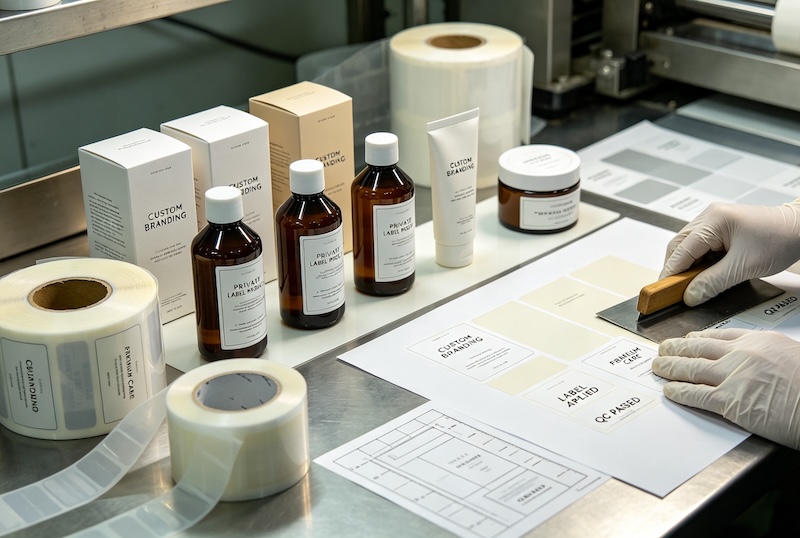
Assuming the Logo is Easy
Putting a logo on a flat, plastic surface is easy. Putting a logo on curved silicone or textured fabric is hard and often looks terrible. Always confirm the application method (silk screen, heat transfer, embroidery, laser engraving) and ask for photos of other clients’ logos on the same material.
Ignoring Certifications
If you private label a phone charger, you are legally the brand owner. If it catches fire, you are liable. You must ensure the generic product already holds the necessary certifications (UL, CE, FCC, RoHS) for your target market.
Frequently Asked Questions
Q: Can I private label a patented product?
A: Absolutely not. Just because a Chinese factory is willing to sell it to you does not mean it is legal to sell in the US or Europe. If a generic product looks exactly like a famous brand’s product, run a patent search before ordering.
Q: How much does it cost to start a private label brand?
A: Excluding marketing, you can usually launch a simple private label product for $3,000 to $6,000. This covers the inventory (500 units), custom packaging, sample costs, and initial shipping.
Q: What if I can’t meet the MOQ for private labeling?
A: If the factory demands 1,000 units for custom packaging, but you only want 200 units, ask if you can buy 1,000 custom boxes but only 200 products. The factory keeps the remaining 800 empty boxes for your future orders.
Summary: What to Take Away
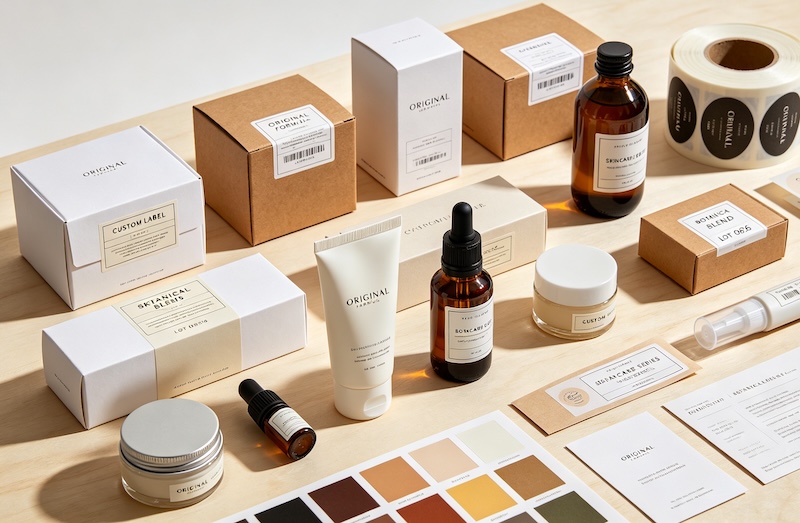
Private labeling is the most efficient way to build an e-commerce brand. Find a high-quality existing product, invest heavily in the unboxing experience through custom packaging, and always verify product certifications.
If you need help finding reliable manufacturers for your new private label brand, contact our sourcing team.
Further reading → Custom Packaging from China: A Complete Guide