Glassware is unforgiving to source poorly — a great product at a great price is worthless if 15% of it arrives broken. Packaging strategy matters as much as the glass itself when sourcing from China.
Glass Types and Their Durability Trade-offs

Soda-lime glass is the standard, affordable option for most drinkware; borosilicate glass costs more but resists thermal shock and is a common choice for products marketed as oven-safe or hot/cold beverage safe. Tempered glass adds impact resistance for products like glass food storage containers.
Packaging Methods That Actually Reduce Breakage

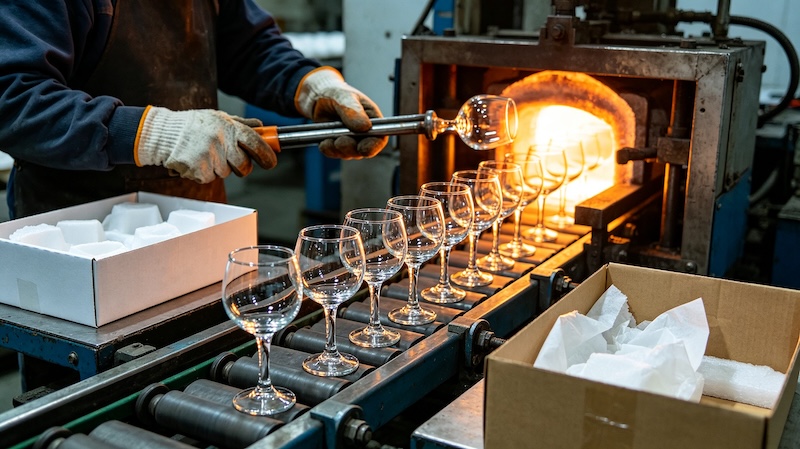
Individual molded pulp trays or die-cut foam inserts consistently outperform loose bubble wrap for glassware, since they prevent items from shifting and colliding during transit. Double-wall corrugated master cartons add another layer of protection for ocean freight, where cartons get stacked and jostled repeatedly.
Ask your factory for their standard breakage rate on your specific glass type and container size — thin-walled or unusually shaped glassware (stemware, tall vases) breaks at meaningfully higher rates than short tumblers.
Negotiating Breakage Allowances
It’s standard practice to negotiate a breakage allowance (commonly 1-3%) into your purchase agreement, where the factory either replaces or credits units beyond a normal breakage threshold if you can document damage on arrival with photos.
Frequently Asked Questions
What’s a normal breakage rate to expect for glassware shipments?
Typically 1-3% depending on glass type and shape, with simpler shapes like tumblers on the lower end and delicate items like stemware on the higher end.
Is borosilicate glass worth the extra cost?
If your product will be marketed as heat-resistant or used with hot liquids/oven exposure, yes — soda-lime glass can crack under thermal stress that borosilicate handles fine.
Should I negotiate a breakage allowance into my purchase order?
Yes, this is standard practice and protects you from bearing 100% of the cost when normal transit breakage occurs, as long as you document it properly on arrival.