Children’s products face the strictest compliance regime of almost any consumer category in the US, under CPSIA (Consumer Product Safety Improvement Act), and the consequences of non-compliance — recalls, fines, import refusal — are correspondingly severe.
鉛およびフタル酸エステルの含有量基準
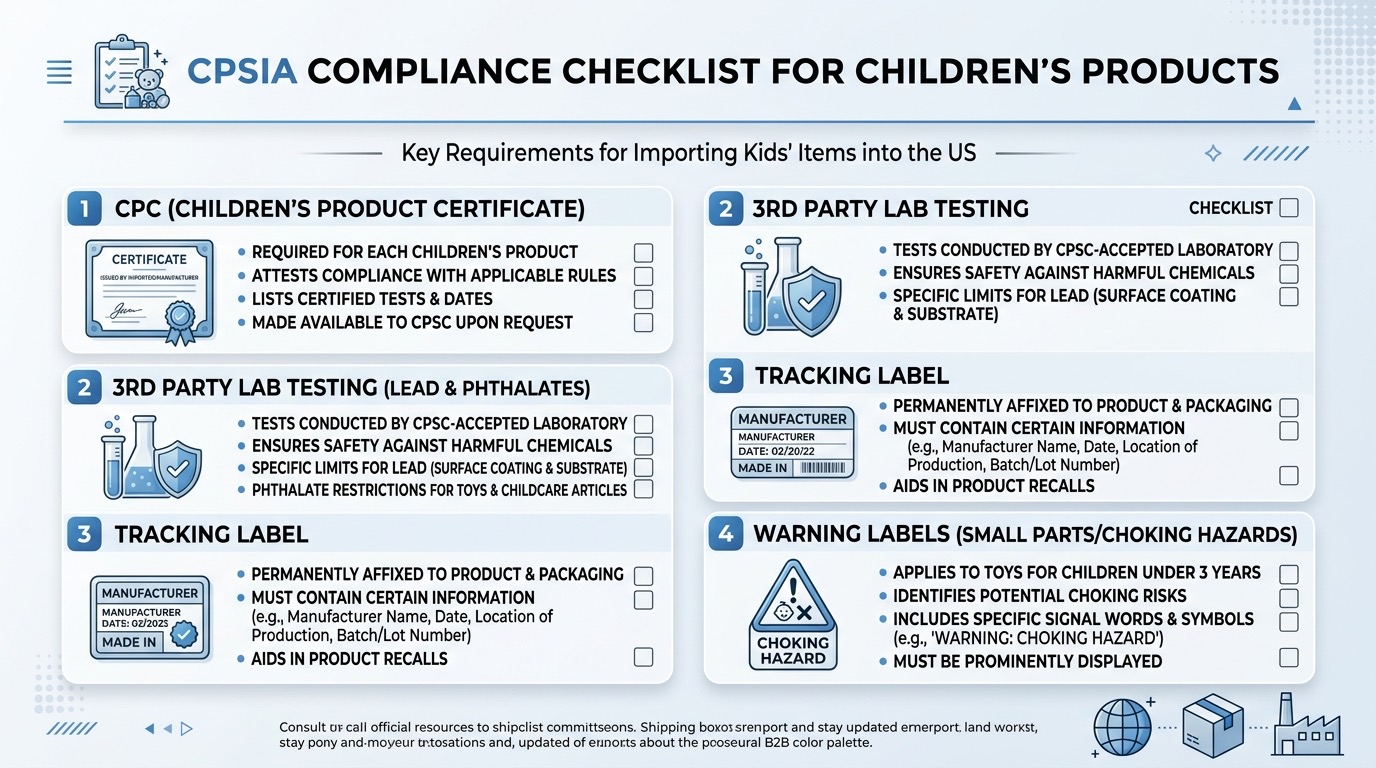
CPSIA sets strict limits on lead content in both substrate materials and surface coatings, along with limits on specific phthalates in plasticized components. These limits apply broadly across children’s products — toys, furniture, clothing, and more — not just toys specifically, which surprises some first-time importers sourcing children’s apparel or furniture who assume CPSIA only covers toys.
第三者による試験とCPC
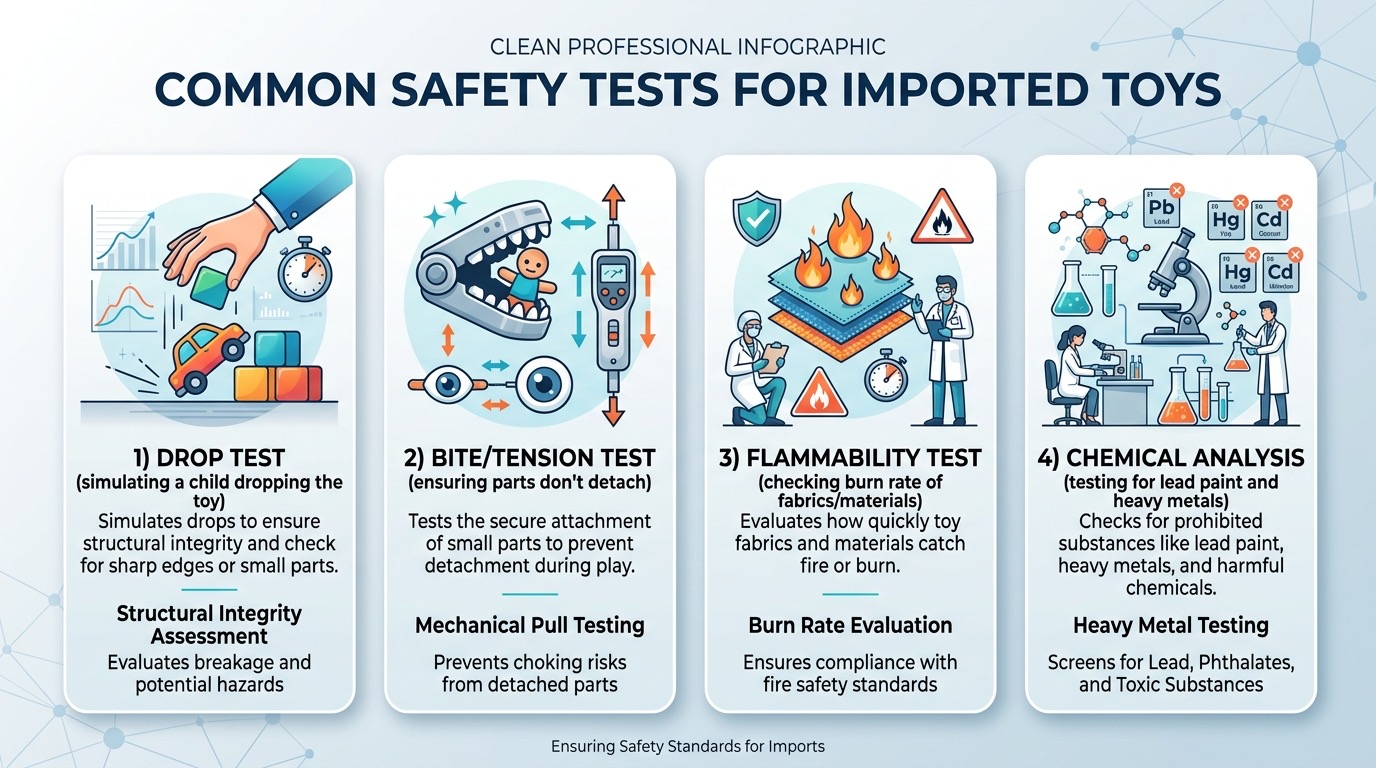
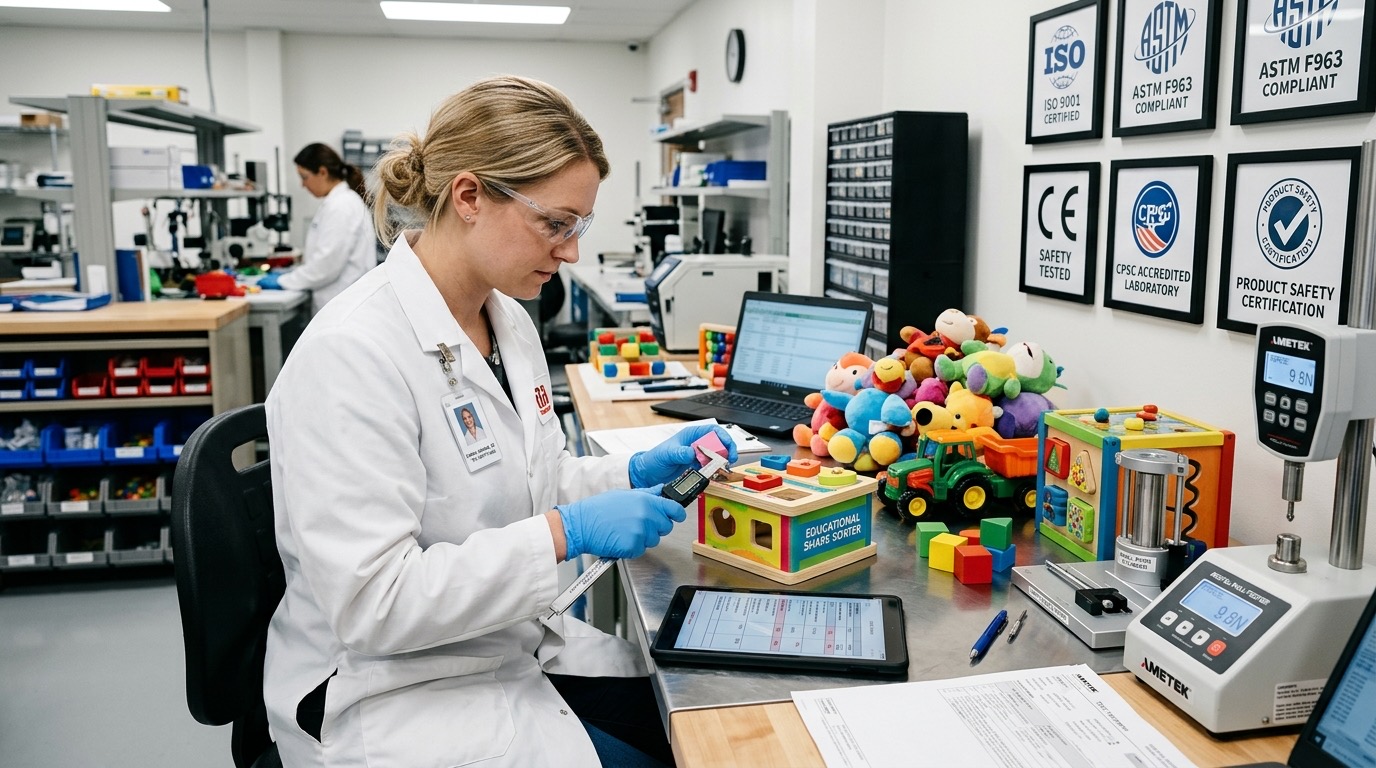
Children’s products generally require third-party testing by a CPSC-accepted lab, resulting in a Children’s Product Certificate (CPC) that must accompany the product and be available on request to CPSC or customs. This testing must be conducted on your specific product, not a generic category certification — a different colored plastic or a different fabric dye can change lead or phthalate content meaningfully.
追跡ラベル:見落とされがちな要件
CPSIA requires permanent tracking labels on children’s products and packaging, including manufacturer info, production location and date, and batch/run number — this becomes critical if a recall is ever needed, allowing precise identification of affected units. Many first-time importers focus entirely on the lead/phthalate testing and overlook this labeling requirement, which is itself a separate compliance violation if missing.
よくある質問
CPSIAは玩具にのみ適用されるのでしょうか?
いいえ、これはおもちゃに限らず、主に12歳以下の子供向けに設計または意図された製品全般に広く適用されます。これには家具、衣類、その他のカテゴリーも含まれます。
特定の製品をテストする代わりに、汎用的なカテゴリのテストレポートを使用することはできますか?
No, CPSIA testing must be conducted on your specific product configuration — color, material, and component changes can all affect lead and phthalate content and require separate testing.
CPSIA追跡ラベルには、どのような情報を記載しなければならないのでしょうか?
製造業者またはプライベートブランド販売業者の名称、所在地、製造年月日、およびリコールが必要となった場合に特定の製造ロットを特定するのに十分なロット番号または製造番号。