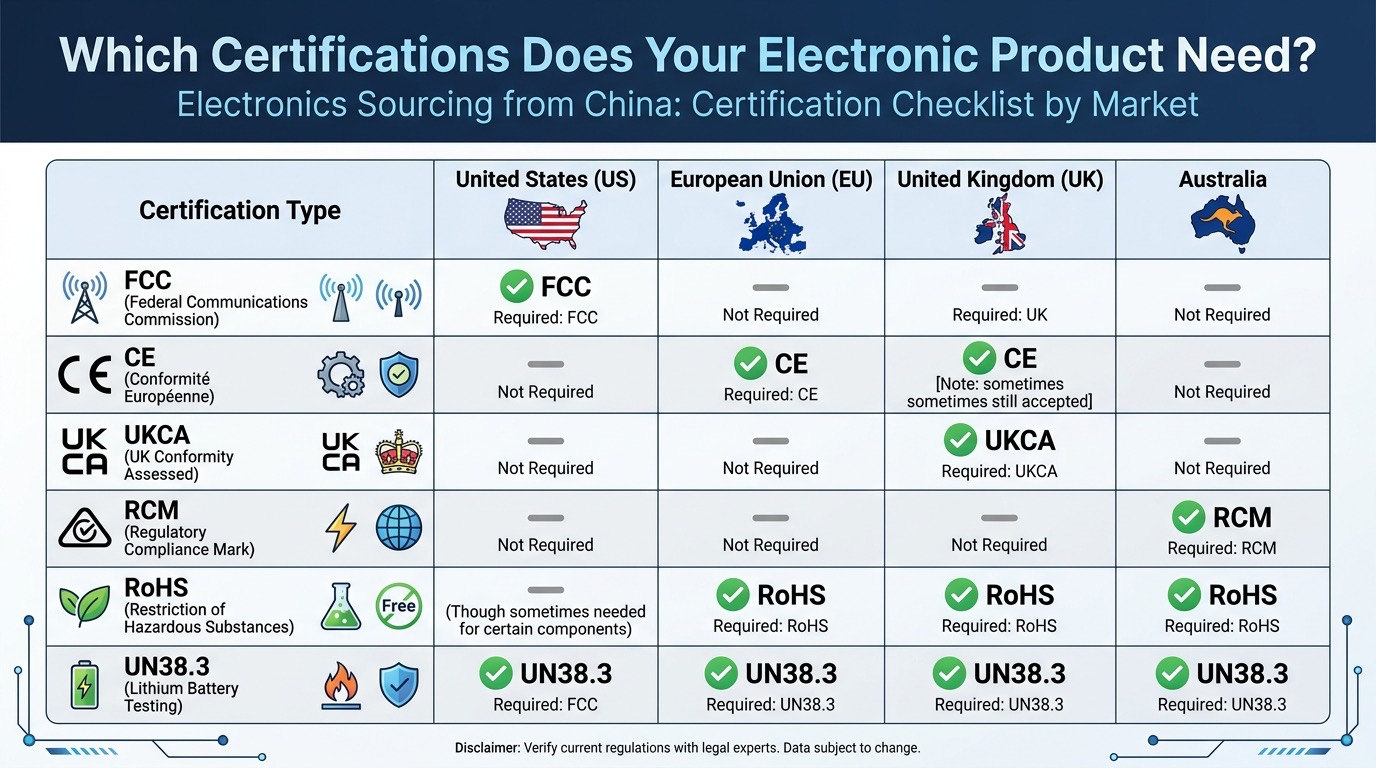
RoHS(有害物質の使用制限)は、EU域内で販売される電子・電気製品に対して最も一貫して求められる認証の一つであり、現地の法律で厳格に義務付けられていない地域であっても、他の地域のバイヤーからもますますその取得が期待されるようになっています。
RoHSが実際に規制しているもの
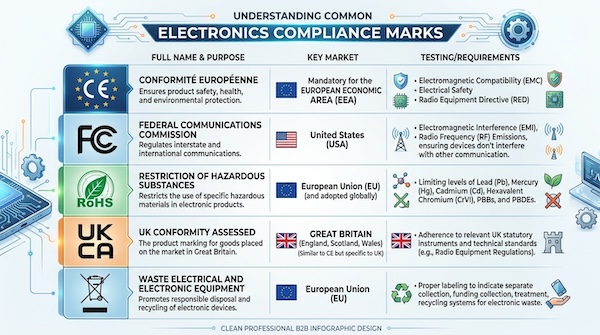
RoHS limits the presence of specific hazardous substances — lead, mercury, cadmium, hexavalent chromium, and several brominated flame retardants and phthalates — in electrical and electronic equipment, above set threshold concentrations. It applies to virtually all EEE (electrical and electronic equipment) sold in the EU, from consumer electronics to cables and chargers.
RoHS準拠の検証方法
Compliance is typically verified through XRF (X-ray fluorescence) screening for a fast initial check, followed by full lab testing (via methods like ICP-OES) for definitive substance concentration measurement if the XRF screen raises any concern. Most established Chinese electronics factories exporting to the EU will already have RoHS test reports for their standard components — ask for the specific report covering your exact product configuration, since component substitutions can affect compliance.
保管しておくべき書類
Maintain RoHS test reports and a Declaration of Conformity for each product, and note that RoHS compliance needs re-verification any time a factory substitutes a component supplier or material, even if the visible product design doesn’t change — hidden substitutions (like a different cable insulation supplier) are a real, if underappreciated, compliance risk.
よくある質問
RoHS準拠は、EUで販売される製品にのみ求められるものですか?
これはEUの要件ですが、多くの購入者やマーケットプレイス、さらにはEU域外の規制当局でさえも、RoHS準拠を一般的な安全基準として期待したり、参照したりする傾向が強まっており、EU市場をはるかに超えた実用的な要件となっています。
特定の製品について、自社工場のRoHSに関する一般的な認証を適用することは可能でしょうか?
Only if it specifically covers your exact product configuration and components — a general company-level RoHS statement doesn’t guarantee every product variant complies, especially after component changes.
XRFスクリーニングとRoHSの完全な実験室試験にはどのような違いがありますか?
XRFは、迅速かつ非破壊的な初期スクリーニング手法です。一方、ICP-OESなどの本格的な実験室試験は、より正確で法的に立証可能な物質濃度結果を提供し、通常、閾値に近い結果を確認するために用いられます。