A US-based outdoor furniture brand placed a $65,000 order with a Fujian manufacturer they’d worked with for two years. No quality checks beyond a pre-shipment inspection were arranged — the relationship felt established, the factory’s track record was solid. When the container arrived, 18% of the chairs had a powder-coating adhesion failure: the coating peeled under standard UV exposure testing. The defect traced back to a raw material supplier change made three weeks into production.
The pre-shipment inspection had caught correct dimensions, acceptable finish, and proper packaging. It hadn’t caught the material substitution — because material verification wasn’t in the inspection brief.
修理費用:11,700ドル。遅延期間:11週間。2社の主要小売バイヤーとの関係:悪化。
This guide exists so you understand what a complete quality control program looks like — not just the inspection at the end, but the entire system that prevents that furniture story from happening to your business.
品質問題が発生する理由:その真の原因
Most buyers blame quality failures on “bad factories.” That’s rarely the full story. In practice, quality problems in Chinese manufacturing come from four sources — and three of them are under your control:
1. 原材料の代替 (最も一般的な)
Factories manage their own material supply chains. When their usual supplier raises prices, runs out of stock, or is replaced by their purchasing team, a substitute goes in. If your spec sheet doesn’t define materials precisely, the factory isn’t technically violating any agreement — they’re using “similar” materials.
2. 生産現場の人員構成の変化
経験豊富な現場作業員は、複雑な組立作業を低不良率でこなします。中国の製造業、特に広東省では離職率が高くなっています。3月に経験豊富な作業員が担当した注文も、8月には経験の浅い作業員が担当することになりかねません。注文の品質は、どの工場を選んだかだけでなく、そのラインに誰が配置されているかによっても左右されます。
3. 生産上のプレッシャーとスケジュールの逼迫
When factories are at capacity or facing shipping deadlines, QC steps get shortened. Drying time gets reduced. Curing cycles get compressed. Assembly checks get skipped. This happens at legitimate factories with good intentions — not just at bad ones.
4. 仕様の不整合 (購入者の責任)
If your spec sheet doesn’t define material grade, color tolerance, dimensional tolerance, and testing requirements — the factory fills in those gaps with whatever is expedient. Vague specifications produce vague outcomes.
Understanding these causes shapes the quality system you build. You’re not just catching defects at the end — you’re closing the gaps that allow defects to form in the first place.
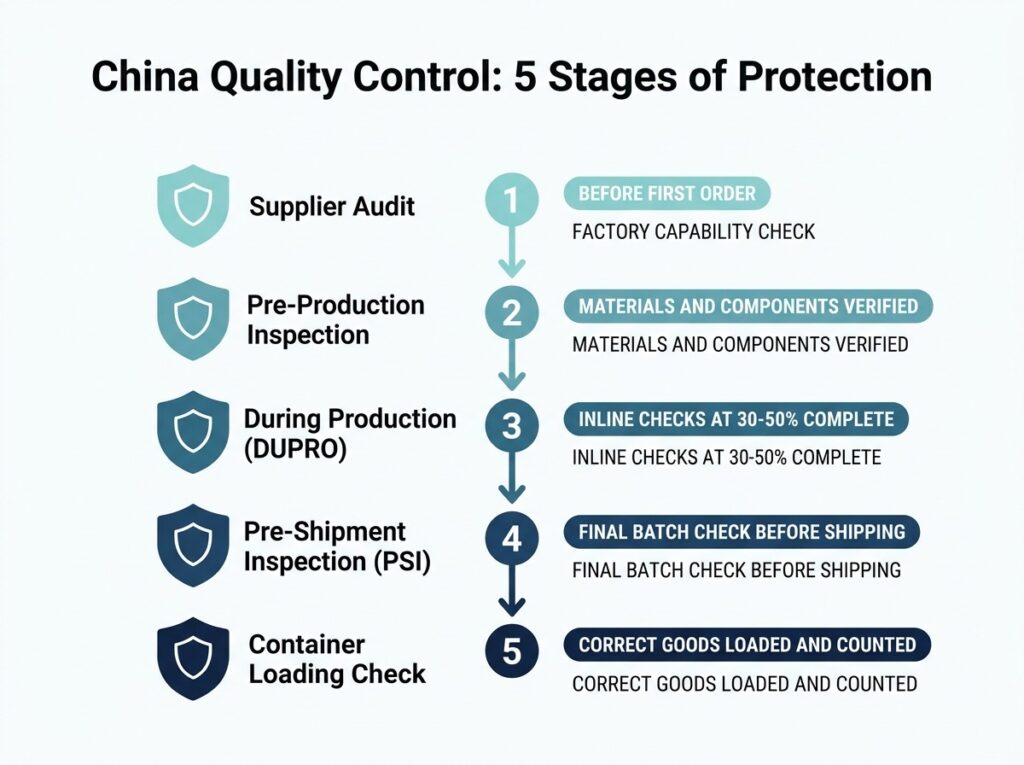
5段階の品質管理システム
Stage 1: Supplier Audit — Before the First Order
A supplier audit is a structured assessment of a factory’s production capabilities, quality management systems, and operational processes — conducted before you place your first order.
対象範囲:
— 工場の規模、設備、生産能力
— 品質管理体制(社内品質管理チーム、試験機器、ISO認証)
— 従業員管理および研修システム
— 外注の慣行(その工場はすべての生産を自社内で行っているか?)
— 社会的コンプライアンスおよび労働慣行
監査の種類:
– 自己評価アンケート: 最も安価だが、信頼性は最も低い。メーカー側が独自に回答を記入している。
– 文書の確認: 資格、免許、および品質管理に関する書類を遠隔で審査します。
– 第三者監査: 独立した監査機関(QIMA、SGS、ビューロー・ベリタス)が現地評価を実施します。検証済みの情報を得られるのは、この形式のみです。
費用: $200–$500 for a standard third-party audit.
使用タイミング: Every new factory before a first meaningful order. For small trial orders ($1,000–$3,000), a full audit may not be cost-effective — substitute with thorough documentation review and a video call production floor tour.
Stage 2: Pre-Production Inspection (PPI) — Before Production Starts
試作前の検査では、1台も生産される前に、工場に適切な材料、部品、および生産体制が整っていることを確認します。
チェック対象:
— 原材料および部品は、承認済みの仕様に適合しています
— 生産設備は、お客様の製品要件に適しています
— 工場内の品質管理(QC)プロセスが理解され、適切に運用されている
— 工場の生産能力を考慮すれば、この生産スケジュールは現実的である
その重要性:
PPIは、材料の代替がバッチ全体に影響を及ぼす前にそれを発見できる唯一の段階です。生産が50%完了してしまうと、手直しには多額の費用がかかり、工程の再調整も業務に支障をきたします。生産開始前に材料の問題を発見すれば、検査費用以外のコストは一切かかりません。
費用: $150–$250 for a standard PPI.
こんな方に最適: 初回注文、特注品、素材に厳格な要件が求められる製品(食品接触用、電子機器、子供向け製品)、および素材費が単価の大部分を占める注文。
Stage 3: During Production Inspection (DUPRO) — Mid-Production
A DUPRO inspection (also called a During Production Inspection or DPI) takes place when 30–50% of your order is complete. The inspector examines finished units that have come off the production line and can still be reworked while production continues.
チェック対象:
— 承認済みサンプルに基づいて最初に生産された製品
— 現在のペースでの製造不良率(最終ロットまで外挿)
— 部分組み立て済みユニットの製造品質
— すでに進行中の場合は、包装工程
その重要性:
A defect found at DUPRO affects 30–50% of your order. The same defect found at PSI affects 100% of your order. The earlier you catch a problem, the cheaper it is to fix.
費用: $180–$280 for a standard DUPRO.
こんな方に最適: 大量注文(2,000個以上)、特注品、手直しコストが高くなる恐れのある注文、新規工場への初回注文。
Stage 4: Pre-Shipment Inspection (PSI) — After Production, Before Shipment
最も一般的に行われる検査の種類です。PSIとは、生産が100%完了した後、出荷のための積み込みが行われる前に実施される包括的な最終検査のことです。
PSIの手順、AQL基準、および検査会社の選定に関する詳細な内訳については、当社の専用ページをご覧ください。 出荷前検査 ガイド.
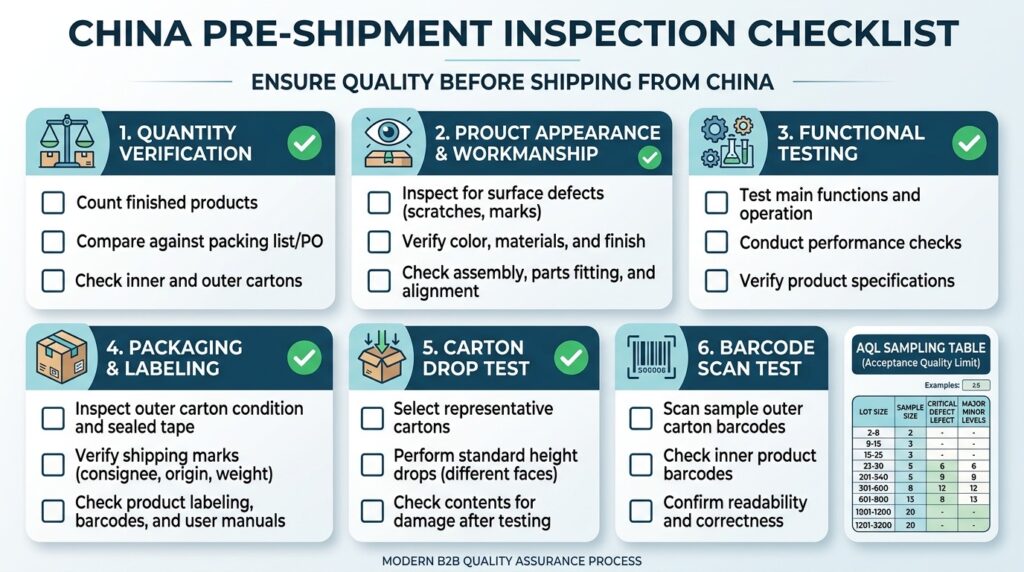
PSIの主要な要素:
— 発注書に基づく数量の集計
— 外観および仕上がり検査(AQLサンプリング)
— 仕様書に基づく寸法検査
— 機能テスト
— 包装および表示の審査
— 段ボール落下試験
費用: $200–$320 for a standard one-day PSI.
タイミング: Book 5–7 business days before intended shipment date.
Stage 5: Container Loading Supervision (CLS) — During Loading
コンテナ積載検査では、貨物が輸送用コンテナに実際に積み込まれる際、検査員が工場に立ち会う必要があります。
検証対象:
— 正しい商品(PSI認証済みのロットに合致するもの)が積み込まれています
— 積載数量は梱包明細書と一致しています
— 積み込み前のコンテナの状態は清潔で、構造的にも問題がないこと
— 商品は輸送中に適切に固定・保護されています
— コンテナの封印番号が記録される
その重要性:
Substitution fraud — where approved goods are swapped for inferior goods during loading — does occur, particularly when payment has been fully released before shipment. Container loading supervision is the last physical checkpoint before your goods leave China.
費用: $150–$220 for a standard CLS.
こんな方に最適: 高額な貨物、新規サプライヤーへの初回発注、PSI検査で境界線上の結果が出た注文、および商品を受け取る前に全額を支払うようなあらゆる状況。
実際に役立つ製品仕様書の書き方
The single most impactful thing a buyer can do for quality — before spending a dollar on inspections — is write a precise product specification sheet.
有用な仕様書には次のように定義されています:
| 要素 | 曖昧(役に立たない) | 正確(効果的) |
|---|---|---|
| 素材 | 「ステンレス鋼」 | “SUS 304 stainless steel, 1.2mm thickness ±0.05mm” |
| 色 | 「ダークブルー」 | “Pantone 2767 C, ΔE tolerance ≤1.5” |
| 重量 | 「約250g」 | “250g ±5g” |
| 機能 | 「正しく動作しなければならない」 | 「スイッチの定格は最低10,000サイクル、電圧範囲は100~240V」 |
| パッケージ | 「標準梱包」 | 「個別ポリ袋+6個入り内箱+24個入りマスターカートン、最低3層段ボール」 |
「ゴールデン・サンプル」: Once you’ve approved a production sample that meets all specifications, photograph it comprehensively (all angles, details, measurements visible), label it, and store it. Send a copy to your inspection company. The Golden Sample becomes the physical standard against which all production units are compared — more reliable than written specifications alone because it captures qualities that words can’t fully describe (surface texture, color depth, assembly feel).
AQL基準:適切なレベルの選定
AQL(許容品質水準)は、検査対象となる数量や、どの程度の欠陥率で不合格となるかを決定するものです。AQLに関する主な決定事項は以下の通りです:
お客様の製品には、どの欠陥レベルが適用されますか?
| 製品タイプ | 推奨専攻 AQL | 推奨クリティカルAQL |
|---|---|---|
| 一般消費財 | 2.5 | 0 |
| 食品用/子供用製品 | 1.5 | 0 |
| エレクトロニクス/安全性が極めて重要な分野 | 1.0 | 0 |
| 低価格の日用品 | 4.0 | 0 |
Critical defects (safety hazards, fundamental failure) always carry AQL 0 — a single critical defect in the sample triggers rejection. Major defects (functional problems, high customer return risk) typically run at AQL 2.5 for general consumer goods. Minor defects (cosmetic issues unlikely to cause returns) often run at AQL 4.0.
実用例: At AQL 2.5 for a 5,000-unit shipment, your inspector checks 200 units. If they find more than 14 major defects in those 200 units, the batch fails. The math works out to roughly a 7% defect rate triggering rejection — protecting your business from batches that would generate significant customer returns.
品質管理コスト計画
最初から、品質管理(QC)コストを単価ベースの採算計算に組み込んでおきましょう:
| QC段階 | 費用 | 1単位あたりの影響(5,000単位の注文) |
|---|---|---|
| サプライヤー監査 | $300 | $0.06 |
| 生産前検査 | $200 | $0.04 |
| DUPRO | $230 | $0.046 |
| 出荷前検査 | $270 | $0.054 |
| コンテナへの積み込み | $180 | $0.036 |
| 5段階の完全プログラム | ~$1,180 | 1単位あたり約0.24ドル |
On a product selling at $25 retail, $0.24 in QC cost represents less than 1% of retail price — a straightforward investment compared to the cost of a quality failure.
少量の注文の場合、5つの段階すべてが必要というわけではありません。実用的な最低限の要件は以下の通りです:
— どの工場でも最初の注文: サプライヤー監査 + PSI
— リピート注文(商品は変更なし): PSIのみ
— 大量注文または特注の初回注文: PPI + DUPRO + PSI
— 非常に高価な製品、または取り扱いに注意が必要な製品: 5段階の完全プログラム
検査に不合格となった場合:その後にすべきこと
A failed inspection isn’t the end of the road — it’s information you now have, at a point when you can still act on it.
故障の種類を評価する:
工場での再加工が可能な欠陥(推奨):
Surface defects, labeling errors, packaging issues, and some assembly problems can often be fixed at the factory. Request rework, set a clear deadline, and book a re-inspection (additional cost of $200–$300). Only release final payment after a passing re-inspection report.
生産工程での手直しを必要とする欠陥:
Material failures, dimensional errors beyond tolerance, and functional failures often require partial or full reproduction. This is expensive (additional production costs, timeline delay) but the alternative — accepting defective goods — is typically worse.
根本的で解決不可能な欠陥:
If the factory cannot or will not produce goods to your specification, you may need to terminate the order. Whether you can recover your deposit depends on your purchase agreement — another reason to have a clear written contract before production begins.
解決策の交渉:
— 写真や検査報告書を用いて、不具合を明確に記録する
— 商業的影響(返品コスト、再梱包コスト、廃棄コスト)を定量化する
— 具体的なスケジュールを含む具体的な決議案を提案する
— 残りの支払いを支払う前に、合意内容を文書化してください
Related guide → 支払い前に中国のサプライヤーを検証する方法(7つのステップ)
品質管理パートナーの選定
ほとんどの輸入業者にとって、現実的な選択肢は、大手国際検査会社と、それに代わる現地の検査会社のいずれかを選ぶことになります:
| 会社 | 強み | おすすめ |
|---|---|---|
| QIMA | オンライン予約、迅速な対応、透明性のある価格設定 | 一般用途、初めて購入される方 |
| SGS | 世界的な評価、幅広い認証対応能力 | クライアントやプラットフォームが特にSGSを指定する場合 |
| ビューロー・ベリタス | コンプライアンス試験と検査の両方に強みを持つ | 規制上の認証が必要な製品 |
| インターテック | 消費財分野の専門知識 | 小売向け製品 |
| 中国の現地代理店 | Lower cost ($120–$180/day) | 定期発注を行う経験豊富なバイヤー |
初回注文や高額な貨物の場合は、国際的に認定された業者を利用してください。こうした業者の報告書は、紛争解決や保険金請求において法的効力を持っていますが、地元の業者の報告書には通常、そのような効力はありません。
もしあなたが 中国調達エージェント, they can often coordinate inspections on your behalf — including briefing inspectors on your specific requirements and following up on defect resolution with the factory directly.
サプライチェーンに品質を「組み込む」――単なる「後付け」ではない
The buyers who consistently get good quality from China aren’t the ones who run the most inspections — they’re the ones who’ve built quality expectations into every stage of the supplier relationship.
これは、次のような意味です:
— 生産開始前の詳細な仕様確定
— 欠陥の定義に関する明確な説明
— 最終段階だけでなく、適切な段階ごとに検査を行う
— 制作期間を通じて影響力を維持できる支払い条件
— 問題が発生した際(「もし」ではなく「いつ」発生するか)の、文書化された対応手順
品質管理はコストセンターではありません。顧客からの返品、否定的なレビュー、供給の途絶が実際の財務的影響をもたらすビジネスにおいて、品質管理こそが、持続可能な中国からの調達体制と、多額のコストを伴う試行錯誤との違いを分ける重要な要素なのです。
お客様の具体的な製品カテゴリーや受注量に適した品質管理プログラムの策定についてサポートをご希望の場合は、 当社の調達チームは、貴社のカテゴリーにおける直接的な経験に基づき、アドバイスをご提供いたします.
Quality control cost ranges in this article reflect 2025–2026 pricing from major international inspection companies operating in China. Specific pricing varies by location, product complexity, and inspection duration.