You’ve found a supplier on Alibaba who checks every box — good photos, fast replies, reasonable MOQ, and a price that looks competitive. There’s one thing you probably haven’t confirmed yet: are you actually talking to the people who make the product, or to a middleman who’s going to place your order with someone else?
この違いは、多くのバイヤーが認識している以上に重要です。商社が必ずしも悪い選択肢というわけではなく、工場が必ずしも正しい選択肢というわけではありません。しかし、相手がどちらであるかを把握しておくことで、交渉の進め方や、どのようなリスクにさらされるか、そして価格、カスタマイズ、リードタイムについて現実的に何を期待できるかといった点が変わってきます。
このガイドでは、実際の違いを詳しく解説し、相手となるサプライヤーのタイプを見極めるための5つの具体的な方法を紹介するとともに、どのような状況でどのアプローチが適しているかを説明します。
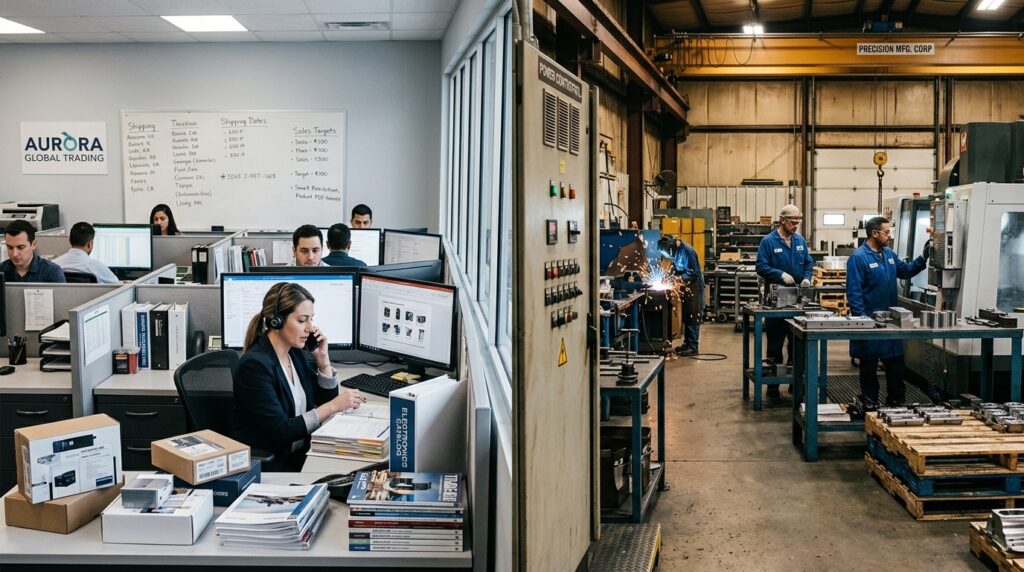
中国の商社とは何ですか?
A trading company — sometimes called a “sourcing company” or “export company” — doesn’t manufacture anything itself. It buys finished goods from factories (often multiple factories across different product categories) and resells them to overseas buyers, typically with a markup of 10–30%.
一部の商社は、電子機器や金物といった単一のカテゴリーに特化して事業を展開しています。一方、まったく関連性のないカテゴリーにまたがり、数千ものSKUを取り扱う幅広い品揃えを持つ商社もあります。後者のケースは、ほぼ間違いなく危険信号と言えます。3,000種類もの異なる製品について、単一の事業体制で真の意味での品質管理を行うことは不可能だからです。
Trading companies typically hold inventory or work on a made-to-order basis, placing your order with their supplier network after you’ve confirmed. They handle documentation, export procedures, and often provide English-speaking sales staff — which is precisely why many buyers gravitate toward them.
工場(製造業者)とは何か?
工場とは、実際に生産が行われる施設のことです。労働者、機械、原材料、生産ラインがすべて一つの屋根の下に集まっています。工場に注文を入れるということは、製品を製造する人々と直接取引をすることになります。
中国の製造エコシステムにおいて、「工場」という言葉は幅広い範囲を網羅しています。広東省にある小規模な工房では、20人の従業員が1つの製品ラインを生産しており、カスタマイズの余地はごく限られているかもしれません。浙江省の中規模メーカーでは、500人の従業員が3つの製品カテゴリーを扱い、完全なOEM/ODM能力を備えているかもしれません。江蘇省にある大規模な施設では、グローバルブランドに製品を供給しており、ISO認証、社内の試験所、専任の輸出部門を備えているかもしれません。
The common thread: the factory controls the production process. That means you have direct leverage over quality, lead times, and product specifications — when you know how to use it.
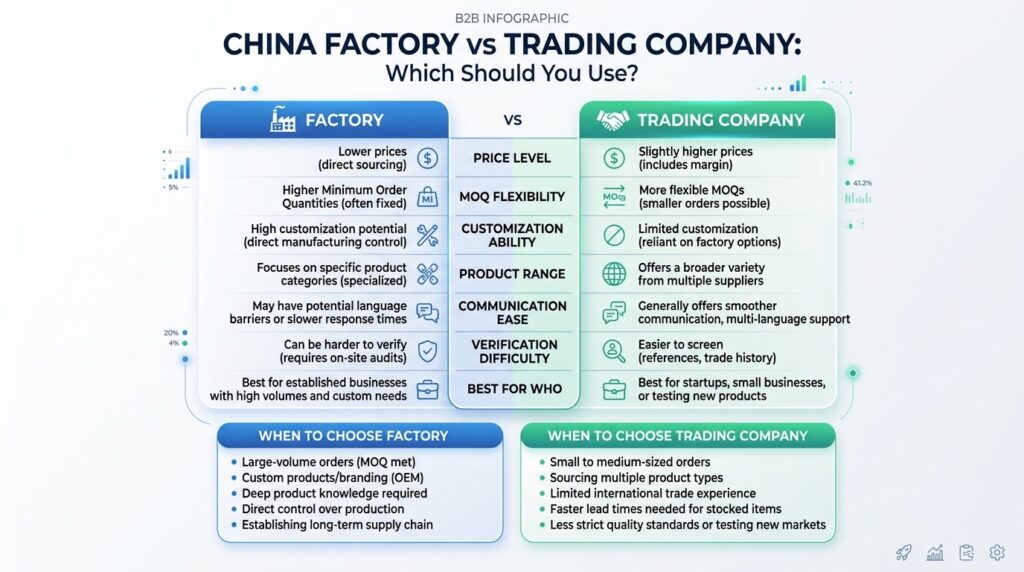
実際に重要な7つの違い
1. 価格
This is the most obvious difference, but the gap is often misunderstood. Trading companies typically add 15–25% on top of factory price. For high-volume orders, that markup is significant — the difference between $4.20 and $5.00 per unit doesn’t sound dramatic until you’re ordering 50,000 pieces.
とはいえ、サプライヤーとの強固な関係や大量購入力を誇る一部の商社は、小規模な工場が名もなき海外の買い手に提示する価格に匹敵する競争力のある価格を提示できる場合もあります。工場からの直接購入が必ずしも最も安いとは限らないことを念頭に置いてください。
2. MOQ(最小注文数量)
Factories set their MOQ based on production economics — minimum batch sizes to justify setup costs, raw material procurement, and machine changeovers. For most manufactured goods, factory MOQs range from 500 to 5,000 units depending on complexity.
商社は、複数の買い手からの注文をまとめて工場の最低発注数量を満たすことができるため、多くの場合、より低い最低発注数量(MOQ)を設定しています。例えば、ある商品の必要数量が200個であるのに対し、工場の最低発注数量が1,000個の場合、商社を利用するのが現実的な唯一の選択肢となるかもしれません。
3. カスタマイズ
Factories have direct control over tooling, molds, materials, and processes. If you want your logo engraved, a specific color mixed, a modified dimension, or a new component sourced — all of that is negotiable directly with the production team.
商社はカスタマイズ依頼を工場に伝える必要がありますが、その過程で「伝言ゲーム」のような問題が生じます。詳細が失われ、実現可能性の評価が曖昧になり、カスタマイズにかかるコストには上乗せが加わります。複雑なOEMやODMプロジェクトの場合、こうしたコミュニケーションの齟齬が深刻な問題を引き起こす可能性があります。
4. 品質管理
工場側は、生産ラインに第三者検査員を配置させたり、品質管理部門への立ち入りを許可したり、原材料や工程中の検査報告書を提供したりすることが可能です。これにより、現場で何が起きているかを直接把握することができます。
商社は、工場の品質管理プロセスを管理することはできません。検査を依頼することはできますが、それを強制することはできません。独自の品質管理スタッフを雇用して、それなりの品質管理を行っている商社もあれば、工場から出荷された製品を単に再梱包するだけの商社もあります。
5. リードタイム
工場に発注する場合、生産枠は工場の現在の生産能力と受注状況に基づいて割り当てられます。リードタイムは工場側の都合で決まるものであり、工場側が直接管理しています。
When you order through a trading company, there’s an extra step: they place your order with the factory, which may already have a queue. Add 3–7 days for the order relay process. For time-sensitive orders, this matters.
6. コミュニケーション
Many people assume factories are harder to communicate with than trading companies because of language barriers. That’s often true for smaller factories. But mid-size and larger factories increasingly have dedicated export sales teams with strong English speakers — sometimes better than what trading companies offer.
商社との取引における真のコミュニケーション上のリスクは、技術的な正確性にあります。生産能力、許容誤差、材料仕様、あるいはコンプライアンス認証について尋ねても、商社の営業担当者は実際にはその答えを知らない場合があります。
7. 文書化およびコンプライアンス
工場からは、原材料の認証書、自社試験所による試験報告書、適合証明書、実際の生産に適用されるISO認証書といった、第一者による文書を入手できます。規制対象市場(CE、FCC、REACH、RoHS)向けのコンプライアンス関連文書が必要な場合、その情報源は工場となります。
Trading companies can provide these documents too — but they’re passing along what the factory gave them. If there’s a compliance issue after import, tracing responsibility back to the actual producer becomes more complicated.
直接比較表
| 寸法 | 商社 | 工場 |
|---|---|---|
| 価格 | 15–30% markup over factory cost | 直接製造原価 |
| MOQ | 多くの場合、より安価(注文をまとめて処理できる) | (生産最低数量)の引き上げ |
| カスタマイズ | 数量限定、工場経由で販売 | OEM/ODMの全サービスに対応 |
| 品質管理 | 間接的;視界が限られている | 直接アクセスと制御 |
| リードタイム | Longer (add 3–7+ days for relay) | 実際の生産スケジュールに基づく |
| コミュニケーション | 英語は流暢だが、技術面では苦手 | 技術的な深み、英語力のばらつき |
| ドキュメント | 中古(工場出荷品) | ファーストパーティ、追跡可能 |
相手が実際に誰なのかを見分ける方法(5つの方法)
アリババのサプライヤーの多くは、自社について曖昧な表現でアピールしています。たとえ出品情報に「メーカー」と記載されていても、その言葉は広義に使われていることがよくあります。以下に、その真偽を確認する方法をご紹介します。
方法 1:営業許可証を確認する
Ask for the supplier’s business license (营业执照). The registered business scope (经营范围) will show what activities the company is legally registered to conduct.
- If it includes 生产 (production) or 制造 (manufacturing): factory or manufacturing entity
- If it only lists 贸易 (trade) or 销售 (sales): trading company
正規のサプライヤーは、この書類を快く提示してくれます。提示を渋る場合は、何かしらの兆候です。中国の営業許可証の見方と確認方法については、当社の 完全ガイド.
方法 2:工場のビデオ見学を申し込む
Ask for a live video walkthrough of the production facility for your specific product category. A factory will almost always accommodate this — it’s a selling point. During the call, ask them to show you the production line, raw material storage, and QC station for your product.
商社は、断ってくるか、ありきたりな映像を見せるか、あるいは自社のものではない施設への見学を手配してくるでしょう。案内してくれる担当者が、その設備の機能を実際に理解しているかどうか、注意深く見極める必要があります。
方法 3:取り扱い商品ラインナップを確認する
A factory is deeply specialized. Genuine manufacturers typically offer 20–80 variations within a tightly defined category and can discuss tooling costs, cycle times, and material trade-offs in detail.
If a supplier’s catalog spans plastic toys, industrial fans, kitchen appliances, and LED lighting — they’re almost certainly a trading company sourcing from multiple factories. When you ask technical questions about each category and get equally fluent answers, that pattern is a strong signal.
方法 4:通常とは異なる仕様のサンプルを依頼する
Ask for a sample with a specific, slightly unusual specification — a particular Pantone color, a non-standard dimension, a specific material grade — and ask the supplier to explain the technical process involved.
A factory answers directly and can often get you a sample through their normal tooling process. A trading company needs to “check with the factory” — resulting in vague answers, longer timelines, and oddly rounded pricing.
方法 5:中国のプラットフォームでの相互参照
Search the company name or address on 1688.com or use Chinese business intelligence tools like Tianyancha (天眼查) or Qichacha (企查查). Factories often appear on 1688 as domestic suppliers, where you can see their actual wholesale pricing and buyer base.
A business lookup will show registration type, registered capital, and business scope — a trading company with ¥300,000 in registered capital claiming to be a “major manufacturer” for a $5M product category is an inconsistency worth questioning.
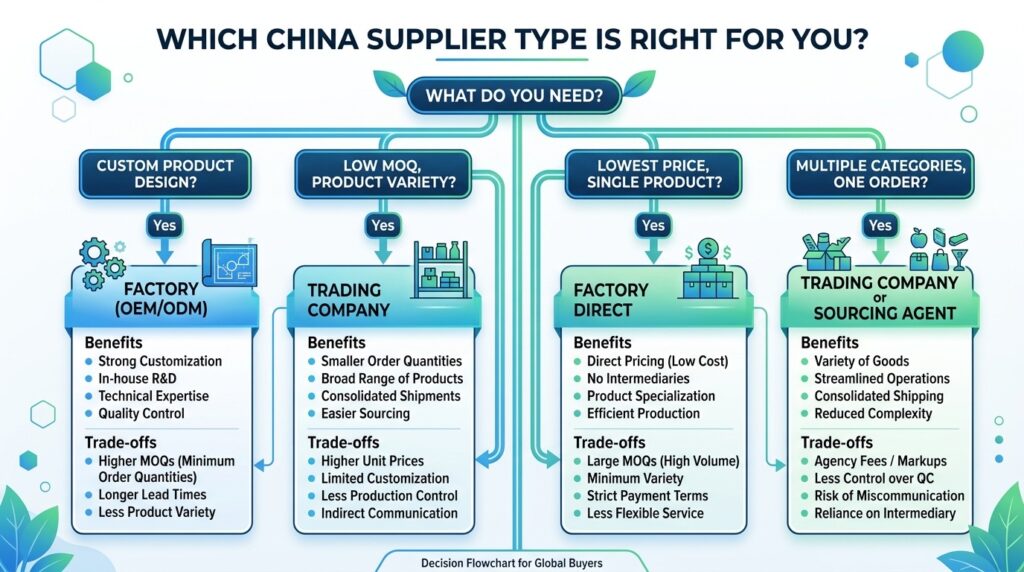
商社を活用するのが理にかなっている場合
商社は不当に悪評を浴びることが多い。多くの調達案件において、商社こそが賢明な選択である。
新しい製品カテゴリーのテストを行っています。 市場需要をテストするために300ユニットが必要だとしても、工場側はおそらくその注文を引き受けてくれないでしょう。一方、商社なら引き受けてくれますし、物流の手配も行ってくれます。
異なる工場から複数の製品が必要です。 Rather than managing four factory relationships, a trading company can be a single point of contact for a multi-SKU order. This consolidates logistics and reduces paperwork — at a cost.
貴社は、シンプルな、カスタマイズされていない製品を調達しようとしています。 標準仕様の汎用商品については、商社のマージンを支払っても、その分の手間が省けるというメリットがあるかもしれません。
御社の販売数量では、工場との取引関係を築くには不十分です。 工場は最大の顧客を優先します。年間5,000ドルの注文しかしていない場合、優先対象にはなりません。あなたのような数十人のバイヤーからの注文をまとめて発注する商社の方が、あなたが単独で注文するよりも工場から手厚い対応を受けることができます。
工場に直接依頼する必要がある場合
現在、商品をカスタマイズしています。 Any OEM or ODM work — custom molds, branded packaging built into production, unique specifications — requires the factory. Trading companies can’t reliably manage complex customization.
大規模な調達を行っています。 Once you’re ordering above $50,000–$100,000 annually from a single supplier category, the markup becomes a real cost. At that volume, factories will take you seriously.
コンプライアンスに関する書類が必要です。 規制対象カテゴリー(電子機器、子供向け製品、医療機器、食品接触製品)については、実際の生産に遡及可能な工場直送の試験報告書が必要となります。
品質管理は極めて重要です。 第三者検査機関の検査員に施設を訪問してもらう場合は、工場への直接の立ち入りが必要となります。仲介者を通じた検査では、実質的な検査は不可能です。
グレーゾーン:工場を所有している商社もある
中国での調達の実情は、単純な二分法では説明しきれないほど複雑です。一部の大手商社は、工場の株式を一部保有していたり、独占的な供給契約を結んでいたりして、工場に匹敵するほどの支配力を有しています。また、一部の工場では、輸出業務を扱うために独立した貿易会社を設立しています。
いずれにせよ、重要な質問は変わりません。メーカー自身が作成した製造文書を提示できるか? 工場に立ち入ることができるか? 「工場に確認する」と繰り返すことなく、技術的な質問に答えられるか?
あらゆる種類のサプライヤーを審査するための詳細な手順については、当社のガイドをご覧ください。 支払い前に中国のサプライヤーを審査する方法.
If you want help confirming whether a specific supplier is a factory or trading company — including business license verification and background checks — 当社のチームが、標準的な調達サポートの一環として、これを代行いたします。.