Last Updated: July 2026
When you hire a third-party inspection company in China, they don’t look at every single product in your 10,000-unit order. That would take weeks and cost a fortune. Instead, they use a statistical sampling method known as AQL (Acceptable Quality Limit).
If you don’t understand how AQL works, you are flying blind. You might reject a perfectly good shipment, or worse, accept a shipment full of defective products that will destroy your Amazon listing.
Here is a straightforward guide to understanding AQL inspections in China and how to set the right standard for your brand.
What is AQL?
AQL stands for Acceptable Quality Limit. It is an internationally recognized standard (ISO 2859-1) used to measure the quality of a production batch.
It answers two questions:
1. How many units should the inspector randomly pull from the total order? (The Sample Size).
2. How many defective units are allowed in that sample before the entire order is rejected? (The Acceptable Limit).
Understanding the AQL Defect Types
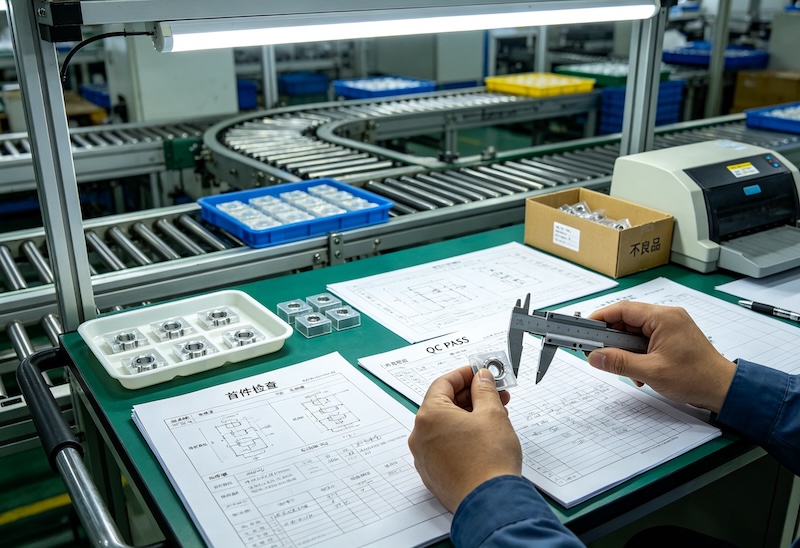
During an inspection, defects are categorized into three levels:
1. Critical Defects (AQL 0.0)
- What it means: A defect that poses a safety hazard to the user or completely violates customs regulations.
- Example: Exposed electrical wiring on a hair dryer; a sharp needle left inside a plush toy.
- The Rule: The tolerance for critical defects is zero. If even one critical defect is found in the sample, the entire shipment is rejected immediately.
2. Major Defects (AQL 2.5)
- What it means: A defect that makes the product unsellable or highly likely to be returned by a customer. The product fails its primary function.
- Example: A zipper that won’t close on a backpack; a Bluetooth speaker that won’t turn on.
- The Rule: The industry standard allows for a 2.5% failure rate in the sample size.
3. Minor Defects (AQL 4.0)
- What it means: A cosmetic issue that does not affect the function of the product. The user might notice it, but they probably won’t return it.
- Example: A small scratch on the bottom of a ceramic mug; a slightly loose thread on a t-shirt hem.
- The Rule: The industry standard allows for a 4.0% failure rate in the sample size.
How to Read an AQL Chart

When you book an inspection, you must choose an “Inspection Level” (usually Level II, the general standard). Based on your total order quantity, the AQL chart tells the inspector how many units to pull.
Example Scenario:
– You order 5,000 yoga mats.
– Using General Inspection Level II, the AQL chart dictates a sample size of 200 units (Code Letter L).
– You set your AQL limits at 0 Critical / 2.5 Major / 4.0 Minor.
Looking at the AQL table for a sample size of 200:
– Major Defect Limit: 10 allowed, 11 rejects the order.
– Minor Defect Limit: 14 allowed, 15 rejects the order.
If the inspector finds 9 Major defects and 12 Minor defects, the inspection PASSES. If they find 11 Major defects, it FAILS, and the factory must rework the entire batch of 5,000 units.
How to Set the Right Standard for Your Product
The standard “0 / 2.5 / 4.0” is widely accepted, but it is not a one-size-fits-all rule. You should adjust your AQL based on your product category and brand positioning.
High-End or Luxury Goods
If you are selling premium apparel or luxury home goods, a 4.0 minor defect rate is too high. Your customers expect perfection.
– Recommendation: Tighten your AQL to 0 / 1.5 / 2.5.
Low-Cost Consumables
If you are selling cheap promotional items (like custom plastic keychains given away at a trade show), paying for rework over minor scratches will eat your profit margins.
– Recommendation: Loosen your AQL to 0 / 4.0 / 6.5.
Electronics and Medical Devices
For items where failure means a potential lawsuit, you must inspect a larger sample and tolerate fewer errors.
– Recommendation: Use Inspection Level III (a larger sample size) and set the AQL to 0 / 1.0 / 2.5.
The Golden Rule of AQL
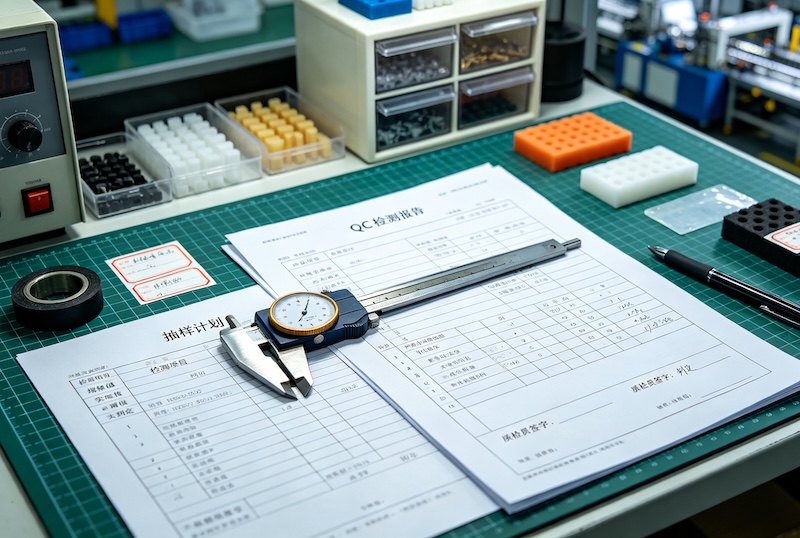
Never assume the factory understands your quality expectations. You must provide a “Defect Classification List” before production begins. For example, explicitly state: “A scratch longer than 2cm on the front panel is a MAJOR defect. A scratch shorter than 2cm on the back panel is a MINOR defect.”
Setting up a rigorous quality control framework is complex. SourcePilot Global manages AQL inspections and defect classifications for our clients, ensuring your products arrive flawless and ready to sell. Contact us to learn more.