Importing kitchenware from China can be a highly profitable venture, but it comes with a strict set of compliance requirements. For businesses targeting the US market, ensuring your products meet FDA food contact materials regulations is non-negotiable. At SourcePilot Global, we specialize in helping importers navigate these complex rules to ensure safe, legal, and seamless supply chain operations.
Understanding FDA Food Contact Materials Regulations
The US Food and Drug Administration (FDA) regulates any material intended to come into contact with food. This includes everything from spatulas and cutting boards to storage containers and packaging. The primary goal is to ensure that no harmful substances migrate from the kitchenware into the food, which could pose health risks to consumers.
What Qualifies as a Food Contact Substance (FCS)?
According to the FDA, a Food Contact Substance (FCS) is any substance intended for use as a component of materials used in manufacturing, packing, packaging, transporting, or holding food if such use is not intended to have a technical effect in such food. Common materials in kitchenware include:
* Plastics and Polymers: Must comply with specific FDA regulations outlining acceptable additives and monomers.
* Ceramics and Glass: Must be tested for lead and cadmium leaching.
* Metals (Stainless Steel, Aluminum): Must be of appropriate grades and free from harmful impurities.
* Silicone: A popular choice for modern kitchenware, requiring compliance with specific FDA standards for rubber articles.
Key Steps to Ensure Compliance When Importing
Navigating the FDA landscape requires diligence and proactive communication with your Chinese suppliers. Here is a step-by-step guide to ensuring your kitchenware is compliant:
1. Verify Supplier Credentials
Before placing an order, ensure your supplier has experience manufacturing for the US market. Ask for past FDA test reports and certificates of compliance. A reputable supplier will be familiar with the required standards and testing protocols.
2. Request Third-Party Testing
Never rely solely on the supplier’s word. Always engage an independent, accredited third-party testing laboratory (such as SGS, Intertek, or TUV) to test the products against FDA standards. The testing should evaluate:
* Extractable substances (e.g., BPA, phthalates)
* Heavy metals (e.g., lead, cadmium)
* Overall migration limits
3. Obtain a Declaration of Compliance (DoC)
A Declaration of Compliance is a document provided by the manufacturer stating that the product complies with applicable FDA regulations. It should detail the materials used, the specific FDA regulations they comply with, and reference the supporting test reports.
4. Understand State-Level Regulations
In addition to federal FDA regulations, be aware of state-level laws. For example, California’s Proposition 65 requires warnings for products containing chemicals known to cause cancer or reproductive toxicity. Ensure your kitchenware does not contain restricted substances that would trigger these warnings.
Common Pitfalls to Avoid
Many importers face delays or product rejections due to avoidable mistakes. Watch out for these common pitfalls:
* Assuming all “Food Grade” labels are equal: The term “food grade” is not universally regulated. Always demand specific FDA compliance documentation.
* Skipping batch testing: Manufacturing processes can change. It is crucial to test new batches periodically, not just the initial sample.
* Ignoring packaging: The packaging itself must also comply with FDA regulations if it comes into direct contact with the kitchenware.
How SourcePilot Global Can Help
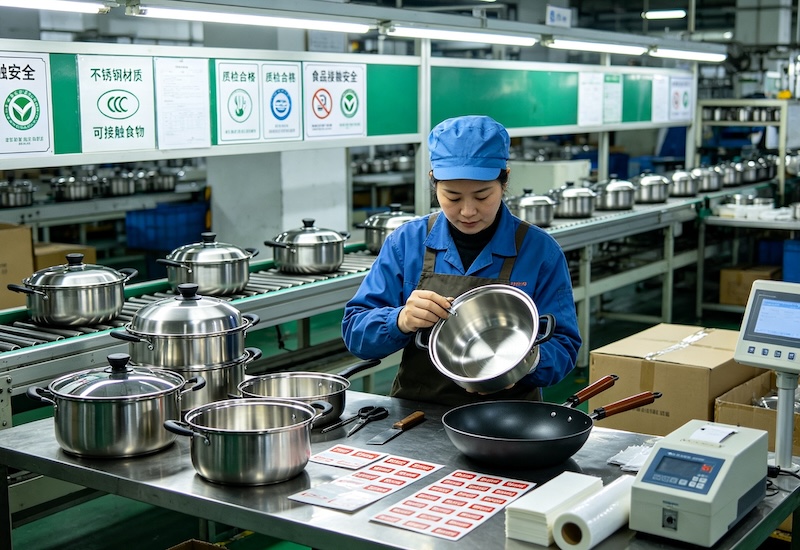
At SourcePilot Global, we take the stress out of importing kitchenware from China. Our on-the-ground team conducts rigorous factory audits, manages third-party testing, and ensures all documentation meets FDA standards before your shipment leaves the port. By partnering with us, you safeguard your brand reputation and ensure a smooth customs clearance process.
Frequently Asked Questions
What happens if my kitchenware fails FDA testing at customs?
If your shipment fails to prove FDA compliance, customs can detain, reject, or even destroy the goods. You may also face fines and damage to your importer record.
Do I need to register my kitchenware facility with the FDA?
Generally, if you are importing finished kitchenware (like spatulas or bowls), the manufacturing facility in China does not need to register with the FDA as a food facility. However, the importer must ensure the products comply with material regulations.
How much does FDA testing cost for kitchenware?
Testing costs vary widely depending on the material, the number of components, and the laboratory used. Prices typically range from $200 to $800 per product. It is a necessary investment to ensure legal compliance.