The global transition to renewable energy has accelerated the demand for solar panels and related equipment. China dominates the global solar supply chain, manufacturing over 80% of the world’s solar panels. For businesses looking to enter or expand in the solar industry, sourcing from China is often the most viable and cost-effective option. However, navigating the market requires a strategic approach focused on certifications, factory capabilities, and rigorous quality assurance.
The Chinese Solar Manufacturing Landscape
China’s dominance in the solar sector is driven by massive economies of scale, integrated supply chains, and significant government support. The manufacturing landscape is largely concentrated in a few key provinces:
- Jiangsu Province: The undisputed heart of China’s solar industry. Cities like Wuxi, Changzhou, and Suzhou host massive production bases for ingots, wafers, cells, and finished modules.
- Zhejiang Province: A major hub for both solar panels and, increasingly, solar inverters and mounting structures.
- Anhui Province: Rapidly emerging as a major manufacturing center for solar glass and module assembly.
Tier 1 vs. Tier 2 Solar Panel Manufacturers
When sourcing solar panels, you will frequently encounter the “Tier” classification system (often associated with BloombergNEF). It’s crucial to understand what this means:
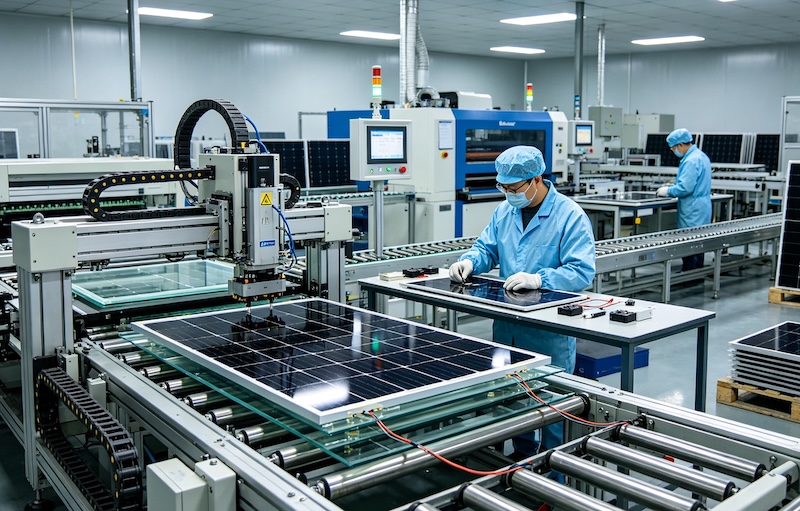
- Tier 1 Manufacturers: These are large, vertically integrated, and highly bankable manufacturers. They have supplied projects financed by multiple banks and invest heavily in R&D and advanced automated production lines. Examples include Jinko Solar, Trina Solar, and LONGi. While slightly more expensive, they offer lower risk and better warranty reliability.
- Tier 2/3 Manufacturers: These are smaller to medium-sized factories. They often buy cells from Tier 1 suppliers and assemble the panels. They can offer better pricing but carry higher risks regarding long-term warranty support and consistent quality control.
Crucial Certifications for Solar Panels and Inverters
Certifications are paramount in the solar industry, ensuring safety, performance, and eligibility for government incentives in your target market.
For Solar Panels
- IEC 61215: The core standard for the design qualification and type approval of crystalline silicon terrestrial photovoltaic (PV) modules.
- IEC 61730: The standard for PV module safety qualification.
- UL 1703 / UL 61730 (USA): The safety standard for flat-plate photovoltaic modules and panels for the North American market.
- TÜV Rheinland / TÜV SÜD: Reputable independent testing laboratories that issue these certifications. Look for their mark.
For Solar Inverters
- UL 1741 (USA): The standard for Inverters, Converters, Controllers and Interconnection System Equipment for Use With Distributed Energy Resources.
- IEEE 1547 (USA): Standard for Interconnecting Distributed Resources with Electric Power Systems.
- CE Mark (Europe): Mandatory for inverters sold within the European Economic Area.
- AS 4777 (Australia): Standard for grid connection of energy systems via inverters.
Step-by-Step Guide to Sourcing Solar Inverters
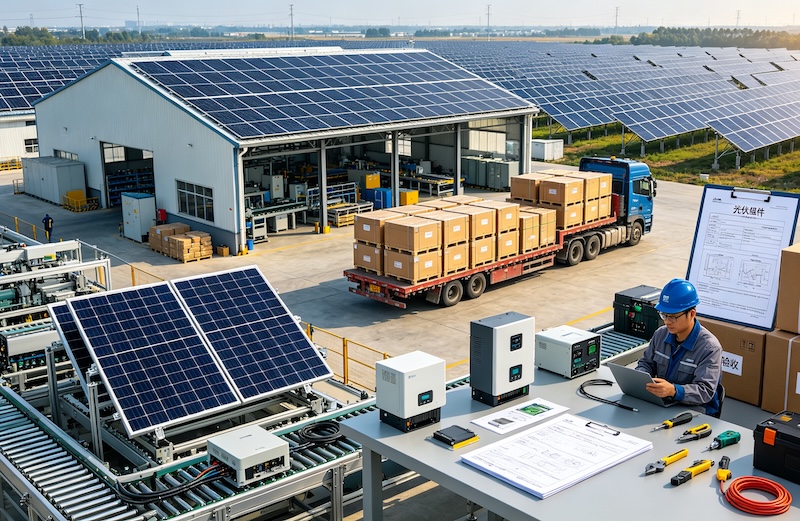
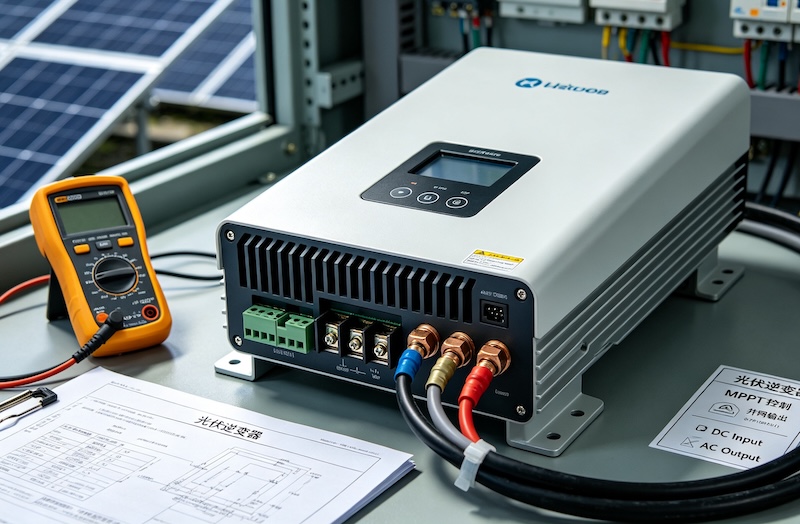
Inverters are the “brains” of a solar system, converting DC power to AC power. Sourcing reliable inverters is just as critical as sourcing good panels.
- Define Specifications: Determine if you need string inverters, microinverters, or hybrid (battery-ready) inverters. Specify required capacities and grid standards.
- Factory Audits: When dealing with inverter manufacturers (like Growatt, Sungrow, or GoodWe), a factory audit is essential. Focus on their R&D capabilities, component sourcing (e.g., do they use quality capacitors from reputable brands?), and testing procedures.
- Firmware and Software Support: Inverters rely heavily on software. Ensure the supplier offers robust monitoring apps and reliable firmware updates.
- After-Sales Service: Inverters have a higher failure rate than panels. Clarify warranty terms and ensure the supplier has a local service center or a clear process for RMA (Return Merchandise Authorization).
Frequently Asked Questions
What is the difference between Tier 1 and Tier 2 solar panels?
Tier 1 panels are produced by large, highly “bankable” manufacturers that are vertically integrated and invest heavily in R&D. Tier 2 manufacturers are typically smaller, may only assemble panels using purchased cells, and generally offer lower prices but carry slightly higher risk regarding long-term warranty support.
Are Chinese solar panels reliable?
Yes, Chinese solar panels, particularly those from Tier 1 manufacturers, are highly reliable and dominate global solar installations. They must pass the same rigorous international standards (like IEC and UL) as panels manufactured anywhere else.
What should I check before shipping solar panels from China?
Before shipping, you must conduct a Pre-Shipment Inspection (PSI). This includes checking for micro-cracks using Electroluminescence (EL) testing, verifying the flash test data to confirm power output, and checking the physical packaging and labeling.
Do I need to pay tariffs on Chinese solar panels?
This depends entirely on your target market. Many countries, including the US and India, have imposed anti-dumping or countervailing duties (tariffs) on Chinese solar products. Always consult with a customs broker before importing.