The landscape of international trade for UK businesses has fundamentally shifted over the last few years. While much of the Brexit conversation centered on trade with the EU, the regulatory overhaul has also heavily impacted direct imports from non-EU nations. For businesses relying on a China to UK import Brexit strategy, understanding the new customs rules, duty frameworks, and product compliance requirements is essential for a smooth and profitable supply chain in 2026.
If you are importing manufactured goods, textiles, electronics, or raw materials from China to the UK, here is a comprehensive breakdown of what you need to know.
1. The UK Global Tariff (UKGT) Explained
Following the exit from the EU, the UK replaced the EU’s Common External Tariff with its own UK Global Tariff (UKGT). This system applies to all goods imported into the UK unless an exception (such as a Free Trade Agreement) applies.
- Simplified Rates: The UKGT was designed to be simpler and generally lower than the old EU tariffs. Many administrative nuisance tariffs (tariffs under 2%) were scrapped.
- Checking Duty Rates: You must accurately classify your goods using Commodity Codes (HS Codes). The UK government’s online Trade Tariff tool is the most reliable way to check the specific duty rate and VAT requirements for your products originating from China.
Note: As of 2026, there is no Free Trade Agreement between the UK and China, meaning standard UKGT rates apply to Chinese imports.
2. EORI Numbers: The Essential Prerequisite
To import goods into the UK commercially, you must have an Economic Operators Registration and Identification (EORI) number that starts with ‘GB’.
- If you previously held an EORI number linked to an EU state, it is no longer valid for UK customs declarations.
- If you import goods into Northern Ireland, you may also require an EORI number starting with ‘XI’ due to the Northern Ireland Protocol.
3. Customs Declarations and Valuation
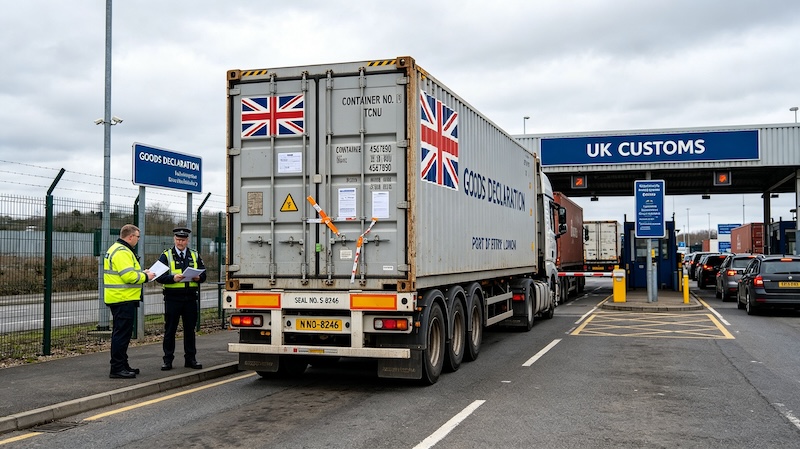
Post-Brexit, HMRC has tightened digital customs reporting.
- Customs Handling of Import and Export Freight (CHIEF) vs. CDS: The UK has fully transitioned from the old CHIEF system to the Customs Declaration Service (CDS). Ensure your freight forwarder or customs broker is fully integrated with CDS to avoid clearance delays at UK ports.
- Customs Valuation: Import duties and VAT are calculated based on the customs value of the goods. This is not just the price paid to the Chinese supplier; it also includes shipping costs, insurance, and any royalties or licensing fees up to the point of entry into the UK.
4. VAT on Imported Goods
Value Added Tax (VAT) rules saw significant changes aimed at leveling the playing field for UK retailers.
- Postponed VAT Accounting (PVA): This is one of the most beneficial post-Brexit changes for UK importers. Instead of paying import VAT upfront at the port (which negatively impacts cash flow), UK VAT-registered businesses can account for import VAT on their regular VAT return using PVA.
- Low-Value Consignments: The £15 Low-Value Consignment Relief (LVCR) was abolished. VAT is now collected at the point of sale for consignments valued at £135 or less, meaning overseas sellers or online marketplaces are responsible for charging the VAT. For B2B imports under £135, the UK business buyer accounts for the VAT via the reverse charge mechanism.
5. Product Compliance: CE vs. UKCA Marking
One of the most critical non-tariff barriers facing UK importers post-Brexit is product certification.
- UKCA Marking: The UK Conformity Assessed (UKCA) mark has replaced the EU’s CE mark for the Great Britain market (England, Wales, and Scotland).
- While the UK government extended the deadline allowing CE marked goods to be accepted in some sectors, many product categories—such as machinery, electronics, and toys—now strictly require the UKCA mark, complete with a UK Declaration of Conformity and a UK-based responsible person or importer file.
- Sourcing Implication: You must ensure your Chinese manufacturers are capable of producing goods compliant with UKCA standards and providing the necessary technical files. Many factories familiar only with CE standards may require guidance or third-party testing assistance.
6. How SourcePilot Global Can Help
Managing a China to UK import Brexit transition involves navigating complex red tape. Sourcing the right product is only half the battle; ensuring it legally enters the UK without unexpected costs is the other.
SourcePilot Global helps UK businesses by:
– Vetting Chinese suppliers to ensure they meet UKCA compliance standards.
– Managing logistics and providing accurate documentation for CDS clearance.
– Optimizing freight routes to minimize customs delays at major UK ports like Felixstowe or Southampton.
By staying updated on these rules, UK importers can maintain highly competitive supply chains despite the shifting regulatory landscape.
Frequently Asked Questions
Do I need a new EORI number to import from China to the UK after Brexit?
Yes, to import goods into Great Britain, you must have an EORI number starting with ‘GB’. EU EORI numbers are no longer valid for UK customs.
What is Postponed VAT Accounting (PVA)?
PVA allows UK VAT-registered businesses to declare and recover import VAT on their regular VAT return, rather than paying it upfront at the port when goods arrive from China.
Do goods from China need UKCA marking instead of CE marking?
Yes, for the Great Britain market, most manufactured goods (like electronics and machinery) now require the UKCA mark, though some specific grace periods for CE marks still exist depending on the product category.