Silicone is used across wildly different product categories — kitchenware, baby products, industrial seals, phone accessories — and the grade of silicone used matters enormously depending on whether the product will contact food or skin.
食品用シリコーンと工業用シリコーン
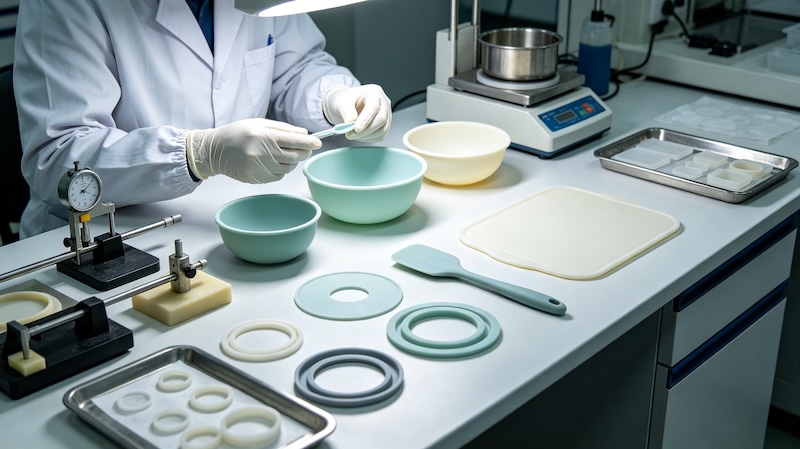
Food-grade silicone is manufactured to be free of fillers and additives that could leach into food, and is tested against FDA 21 CFR 177.2600 (US) or LFGB (Germany/EU) standards. Industrial-grade silicone is cheaper but may contain fillers or coloring agents not suitable for food or extended skin contact — using it in kitchenware or baby products is both a safety and compliance risk.
依頼すべき主要な検査
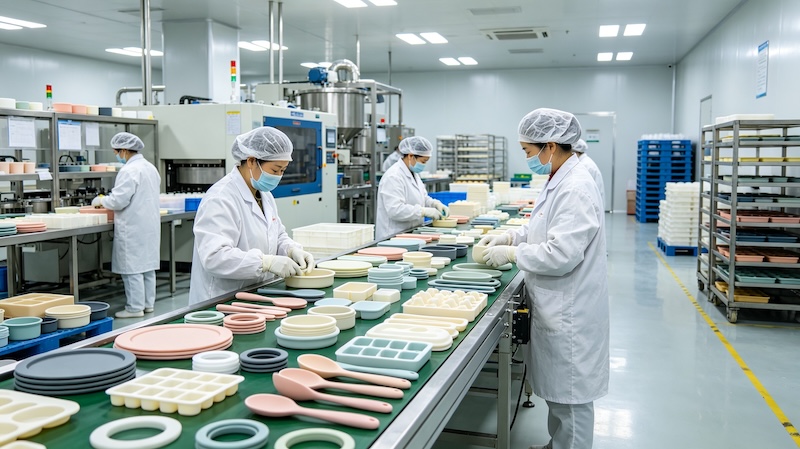
食品接触用シリコーン製品については、基材の認証に加え、移行試験(シリコーンから食品模擬物質へ何かが移行するかどうかを確認する試験)の実施を依頼してください。特にLFGB試験は厳格な基準とされており、ドイツ国外でも食品の安全性を証明する証拠として広く認められています。
一般的なシリコーン製品の分類と考慮事項
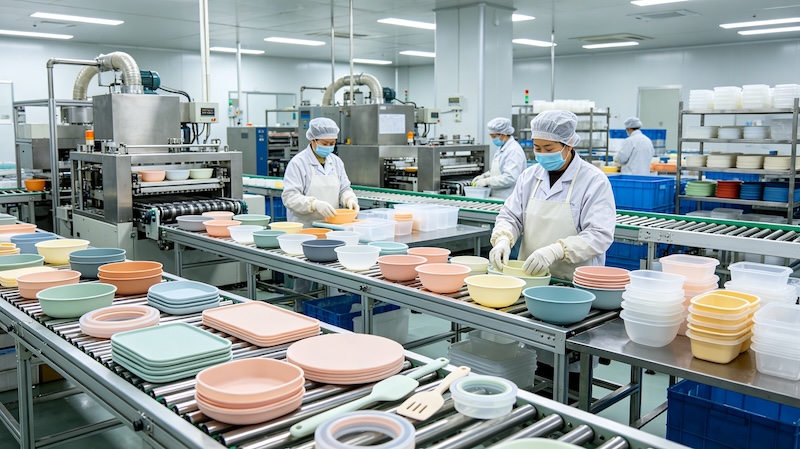
Baking mats and molds need high heat resistance (typically rated to 220-240°C) alongside food-grade certification. Baby products (teethers, bibs) need food-grade silicone plus additional scrutiny for phthalate-free and BPA-free claims. Industrial gaskets and seals prioritize durometer (hardness) specification and chemical resistance over food safety.
よくある質問
シリコーン製品が本当に食品用であるかどうか、どのように見分ければよいですか?
工場側からの一般的な「食品安全」という主張だけでなく、貴社の製品に固有の認証(FDA 21 CFR または LFGB)および移行試験報告書を要求してください。
LFGB認証は、ドイツ市場にのみ適用されるものなのでしょうか?
LFGB試験はもともとドイツの規格として始まったものですが、現在では国際的にも強力な食品安全基準として広く認知されており、ドイツ国外のバイヤーからも頻繁に要求されるようになっています。
食品用シリコーン製のオーブン用調理器具には、どの程度の耐熱性が必要ですか?
Typically 220-240°C is standard for oven-safe silicone bakeware; confirm the specific rating for your product’s intended use since some kitchen items don’t need oven-level heat resistance.