The Harmonized System (HS) code determines your duty rate, whether your product needs additional permits, and how customs treats your shipment at the border. Getting it wrong isn’t a minor paperwork issue — misclassification can mean unexpected duty bills, shipment holds, or penalties.
HSコードの構成
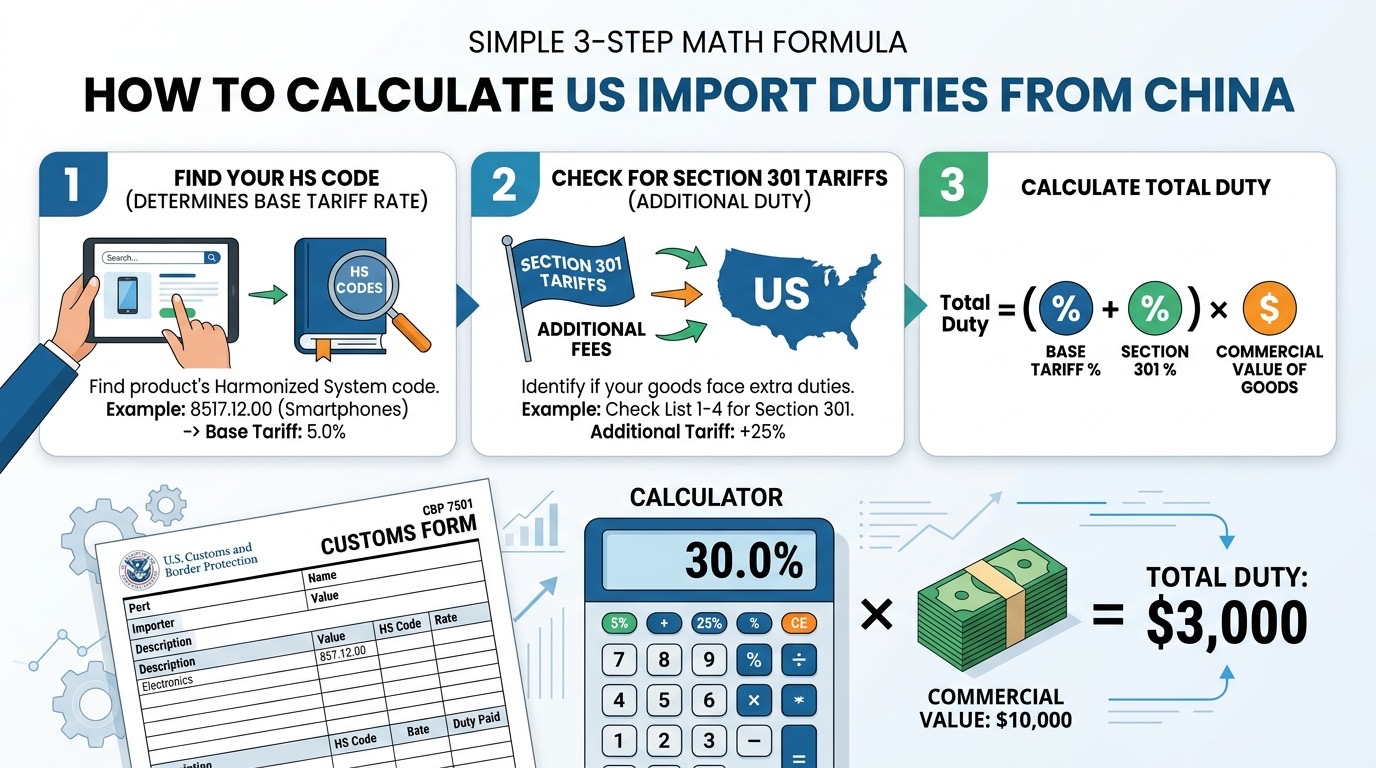
HSコードは国際的に6桁で標準化されていますが、各国ではより詳細な分類や関税の算定を行うために、さらに桁を追加しています(米国では10桁のHTSコードを使用しています)。最初の2桁は大分類を示し(例:42は皮革製品、85は電気機械)、それ以降の桁が加わるごとに分類がさらに細分化されます。
コードを正しく書くことがなぜ重要なのか
Two products that look nearly identical to a layperson can carry very different duty rates depending on precise material composition, function, or even minor construction details. A classic example: a bag classified as “leather” versus “textile with leather trim” can carry meaningfully different duty rates. Anti-dumping duties, when applicable, are also assigned at the HS code level, so misclassification can mean either overpaying or — more seriously — unknowingly evading duties you actually owe.
分類を正しく行う方法
公式のリソース(米国国際貿易委員会のHTS検索ツールなど)を利用して候補となるコードを特定しますが、真に曖昧な場合や取扱量が多い場合は、認可を受けた通関業者に正式な分類意見書の作成を依頼するか、税関に直接拘束力のある裁定を申請する価値があります。1年分の出荷に対して遡及的に課される関税に比べれば、初期費用はごくわずかです。
よくある質問
Who is responsible for HS code accuracy — me or my freight forwarder?
最終的には、たとえ通関業者やフォワーダーがコードを提案したとしても、正しい分類に対する法的責任を負うのは「登録輸入者」です。常に自ら分類内容を確認し、その内容を理解しておく必要があります。
間違ったHSコードを使用した場合、どうなりますか?
その結果、関税を過大に支払う(手間はかかりますが、還付請求によって取り戻すことは可能です)ことから、関税の過少納付に至るまでさまざまであり、後者の場合、監査で発覚すれば罰金や追徴関税の賦課につながる可能性があります。
本当に曖昧な分類について、どうすれば確信を持てるのでしょうか?
Request a binding ruling from your country’s customs authority (like CBP in the US) — this gives you a legally reliable classification for that specific product going forward.