When it comes to sourcing textiles and raw fabrics, one name stands out above the rest in China: Keqiao. Located in Shaoxing, Zhejiang province, the Keqiao Textile City (China Textile City) is the largest textile distribution center in the world. For garment manufacturers, fashion brands, and fabric wholesalers, Keqiao is an indispensable destination.
Navigating a market of this immense scale can be overwhelming. This guide by SourcePilot Global will provide you with the essential knowledge to successfully source raw fabrics from Keqiao.
An Overview of Keqiao Textile City
Keqiao Textile City is not just a single building; it is a sprawling complex encompassing multiple specialized market areas covering millions of square meters. It houses over 30,000 businesses trading thousands of different types of fabrics.
Understanding the layout is crucial for efficiency. The market is generally divided into several key districts:
- North Market: Known for cotton, linen, and blended fabrics. It’s a great place for casual wear and shirting materials.
- East Market: Focuses heavily on synthetic fabrics, polyester, suiting materials, and knits.
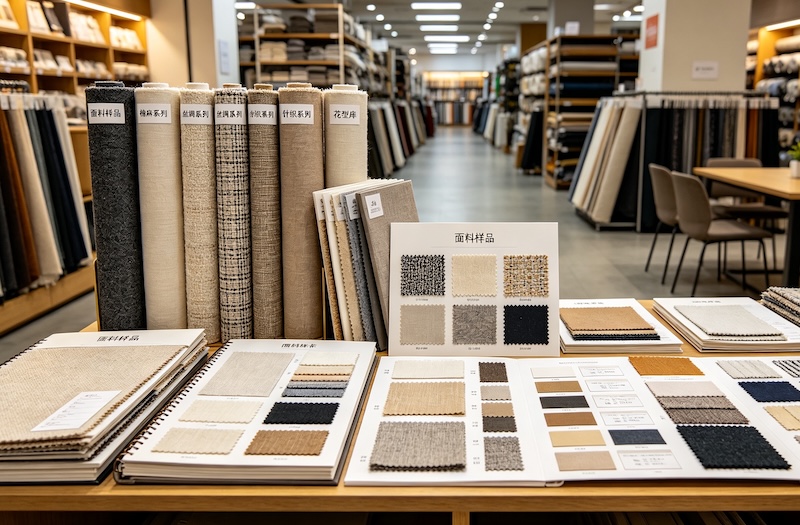
- South Market: The go-to area for home textiles, curtain fabrics, and upholstery.
- West Market: Features a mix of functional fabrics, denim, and specialized materials.
Types of Fabrics Available
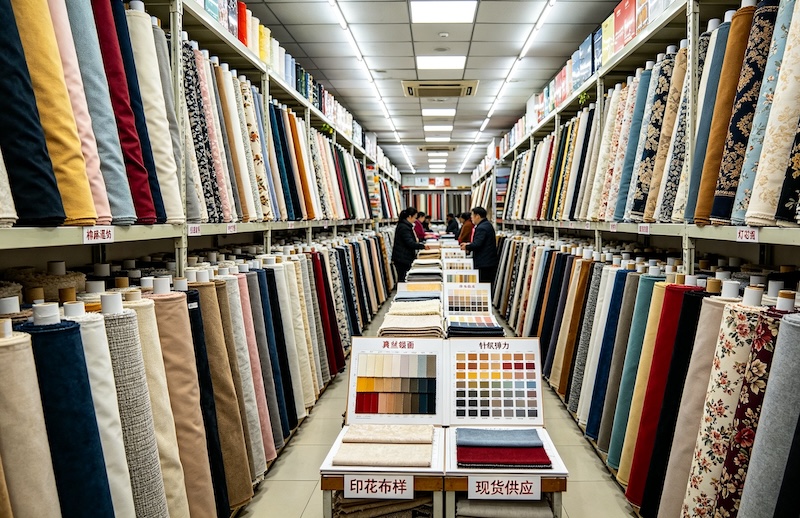
Whatever fabric you need, you will likely find it in Keqiao. The market is particularly strong in:
- Polyester and Synthetics: Keqiao is a global leader in synthetic textiles, offering everything from basic chiffon and satin to advanced moisture-wicking activewear fabrics.
- Cotton and Blends: A vast array of cotton fabrics, poplins, canvas, and various cotton-poly blends suitable for apparel.
- Knits: Jersey, rib-knit, French terry, and fleece in endless colors and weights.
- Printed Fabrics: Keqiao is home to advanced digital printing technology, allowing for quick turnaround times on custom and stock printed textiles.
- Sustainable Options: An increasing number of suppliers are offering recycled polyester (rPET), organic cotton, and eco-friendly dyeing processes to meet global demand.
Sourcing Strategies for International Buyers
1. Differentiate Between Factories and Trading Companies
Many stalls in Keqiao are trading companies rather than direct manufacturers. While trading companies offer a wider variety of in-stock items (ready goods) and lower Minimum Order Quantities (MOQs), working directly with a factory (often located in the surrounding industrial zones) is better for large volume, custom production, and better pricing.
2. Requesting Swatches and Hangers
When browsing, always ask for “hangers” (color cards) or swatches of fabrics you are interested in. Be sure to label each swatch clearly with the supplier’s stall number, fabric composition, weight (GSM), and price. It’s easy to lose track of who gave you what after visiting a dozen stalls.
3. Understanding Ready Goods vs. Made-to-Order
- Ready Goods (Stock): Fabrics that are already produced and sitting in warehouses. They have low MOQs (often just one roll) and fast delivery times but limited customization.
- Made-to-Order: Fabrics manufactured to your specific requirements (color, weight, finish). These have higher MOQs (typically 1,000 to 3,000 meters per color) and take 15 to 30 days to produce.
Quality Control and Logistics
Inspecting the Goods
Fabric quality can vary significantly. Common defects include color shading (inconsistent color across a roll or between batches), misprints, snags, and incorrect weight.
Before shipping, it is crucial to conduct a pre-shipment inspection using the 4-Point System (the standard method for grading fabric). Consider hiring a third-party inspection agency or sourcing partner to handle this on the ground.
Logistics and Shipping
Fabrics are heavy and voluminous. LCL (Less than Container Load) or FCL (Full Container Load) sea freight is the most common shipping method. Ensure your supplier packages the rolls in sturdy plastic tubing to prevent damage and moisture during transit.
Conclusion
The Keqiao Textile Market offers unparalleled variety and competitive pricing for raw fabrics. By going in prepared, understanding the distinction between stock and custom orders, and implementing rigorous quality control, you can secure high-quality materials for your production lines. Partnering with experts like SourcePilot Global can help you navigate this massive market, negotiate better terms, and ensure seamless delivery.
Frequently Asked Questions
1. Do I need to speak Chinese to navigate the Keqiao market?
While some larger suppliers have English-speaking staff, the vast majority of stall owners only speak Mandarin. Hiring a local translator or a professional sourcing agent is highly recommended to avoid miscommunication regarding specifications and prices.
2. What is the standard Minimum Order Quantity (MOQ) in Keqiao?
For “ready goods” (in-stock fabrics), the MOQ can be as low as one roll (usually 50 to 100 meters). For custom colors or made-to-order fabrics, the MOQ typically ranges from 1,000 to 3,000 meters per color.
3. Can I get custom prints made on fabrics in Keqiao?
Yes. Keqiao has excellent digital and screen-printing facilities. You can provide your own digital artwork, and suppliers can print it on various base fabrics. Digital printing generally allows for much lower MOQs compared to traditional screen printing.