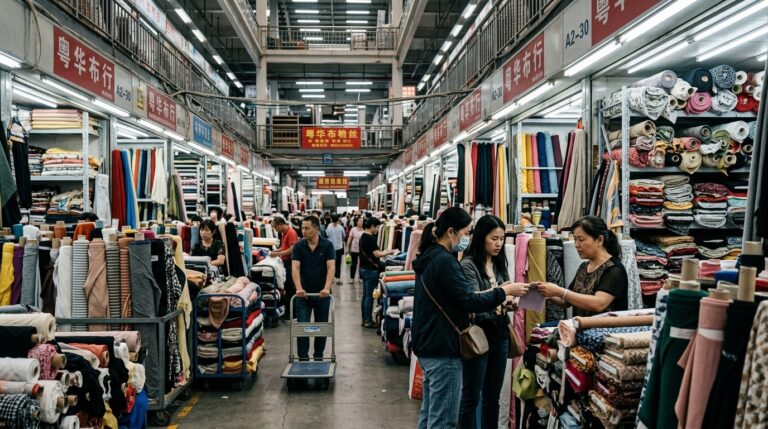
China has become one of the world’s largest manufacturing hubs for CNC machining. Thousands of factories produce precision metal and plastic components for industries including industrial automation, robotics, medical devices, automotive, and consumer electronics.
For buyers, however, having thousands of suppliers creates a different problem.
Finding a machine shop is relatively easy.
Finding one that consistently delivers accurate parts, communicates effectively, and can support long-term production is much harder.
Many sourcing issues don’t come from machining itself. They happen because the supplier’s capabilities don’t match the project’s technical requirements.
Understanding how to evaluate CNC machining manufacturers before placing an order can save considerable time, cost, and frustration later.
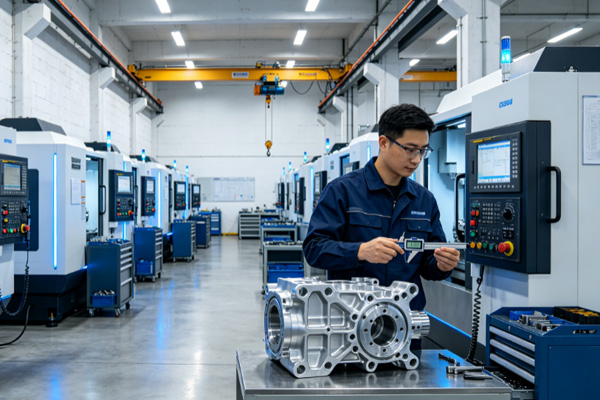
Know what type of CNC supplier you actually need
Not every machining company offers the same services.
Some specialize in rapid prototyping.
Others focus on low-volume production.
Larger manufacturers may be better suited for ongoing production programs with stable demand.
Before requesting quotations, define your own requirements first.
Consider questions such as:
- Is this a prototype or a production project?
- What materials will be machined?
- What tolerances are required?
- Are surface treatments needed?
- Will assembly be required after machining?
The clearer these answers are, the easier it becomes to identify suitable suppliers.
Evaluate technical capability before comparing prices
Price is usually one of the last things experienced procurement teams compare.
Technical capability comes first.
Ask suppliers about:
- Available CNC equipment
- Maximum machining dimensions
- Typical machining tolerances
- Materials regularly processed
- Surface finishing options
- Inspection equipment
A supplier that explains its manufacturing capability clearly is generally easier to work with than one that immediately offers the lowest quotation.
If you’re evaluating several suppliers at once, following a structured assessment process can reduce unnecessary risk. Our article on Supplier Audit Checklist explains which production capabilities are worth verifying before placing larger orders.
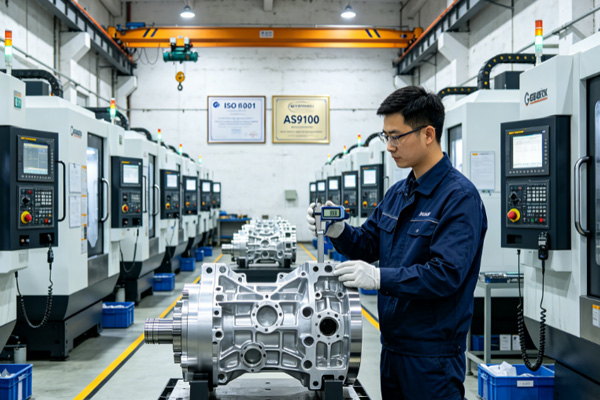
Look beyond the equipment list
Modern machining centers are important, but machines alone don’t guarantee quality.
A reliable supplier should also demonstrate:
Engineering support
Can engineers review drawings and identify manufacturability issues?
Early engineering feedback often prevents costly redesigns.
Process control
How are machining programs managed?
How are revisions controlled?
How is dimensional consistency maintained between production batches?
Quality inspection
Inspection should be integrated throughout production rather than performed only at the end.
This is one reason many buyers include independent inspections before shipment. Our guide on Quality Inspection in Manufacturing explains how inspections fit into the overall sourcing process.
Material sourcing matters more than many buyers expect
Even perfectly machined parts can fail if the raw material is incorrect.
Ask suppliers about:
- Material certifications
- Traceability
- Approved material suppliers
- Incoming inspection procedures
For industries such as medical devices, aerospace, or automotive, documentation may be just as important as machining accuracy.
Communication often predicts project success
One of the easiest ways to evaluate a supplier is simply by observing how they communicate.
Do they answer technical questions directly?
Do they request additional information when drawings are unclear?
Do they explain potential manufacturing challenges?
Professional communication usually reflects mature internal processes.
Companies that respond with thoughtful engineering questions are often easier to work with throughout production.
Visit the factory if the project justifies it
For strategic projects, nothing replaces seeing production in person.
During a visit, pay attention to:
- Shop floor organization
- Machine maintenance
- Material storage
- Inspection area
- Employee workflow
If an on-site visit isn’t practical, consider arranging a third-party audit before moving into production. Choosing between working directly with a manufacturer or another type of supplier is another consideration discussed in Factory vs Trading Company
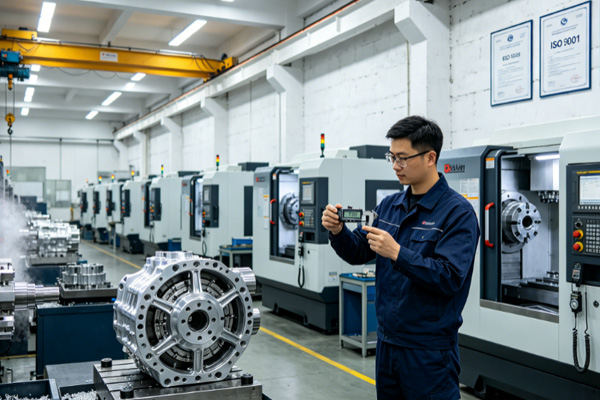
Start with a pilot order
Even after careful evaluation, avoid placing a large order immediately.
A pilot production run allows you to verify:
- Dimensional consistency
- Surface finish
- Packaging quality
- Communication efficiency
- Delivery performance
Successful sourcing relationships are usually built gradually rather than all at once.
Final Thoughts
Finding the right CNC machining manufacturer isn’t about locating the largest factory or negotiating the lowest unit price.
The goal is to build a supply chain that consistently delivers accurate parts, reliable lead times, and predictable quality.
Taking the time to evaluate technical capability, communication, and production systems before placing an order usually leads to stronger long-term partnerships and fewer manufacturing surprises.
For companies sourcing precision components from China, a structured supplier evaluation process remains one of the best investments they can make.