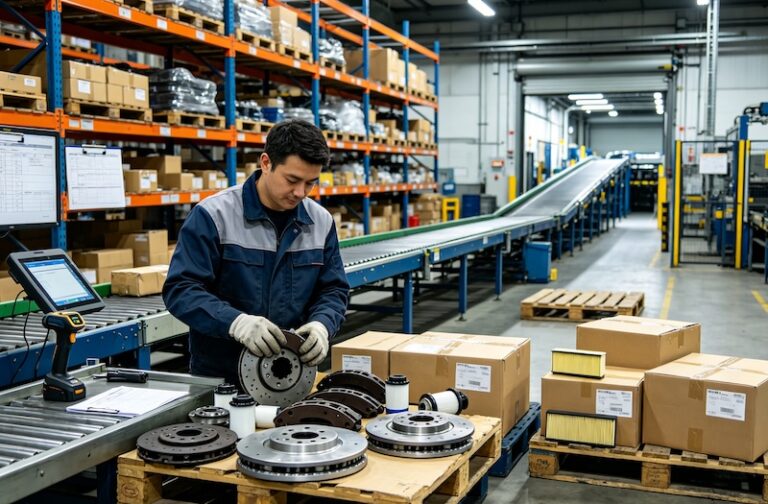
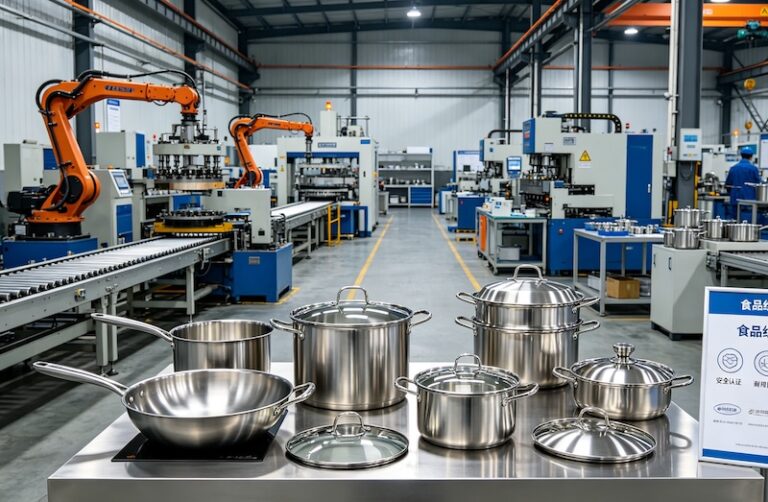
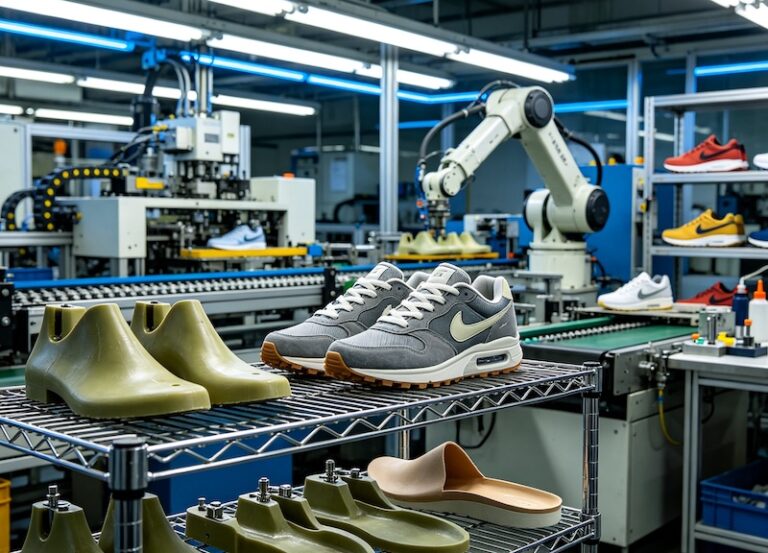
The first time most people try to import from China, they get stuck in the same spot: somewhere between “I found a supplier” and “I have no idea what happens next.”
The supplier sent a quote. There’s a spreadsheet with prices that don’t include shipping. Someone mentioned FOB. Someone else mentioned a freight forwarder. There’s a form that needs an HTS code. And suddenly what seemed like a straightforward business move feels like navigating a system designed for people who’ve already done it before.
It’s not that complicated — but it is sequential. Get the order wrong and you waste time. Skip a step and you might lose money. This guide walks you through the full process in the right sequence, with the context that actually makes each step make sense.
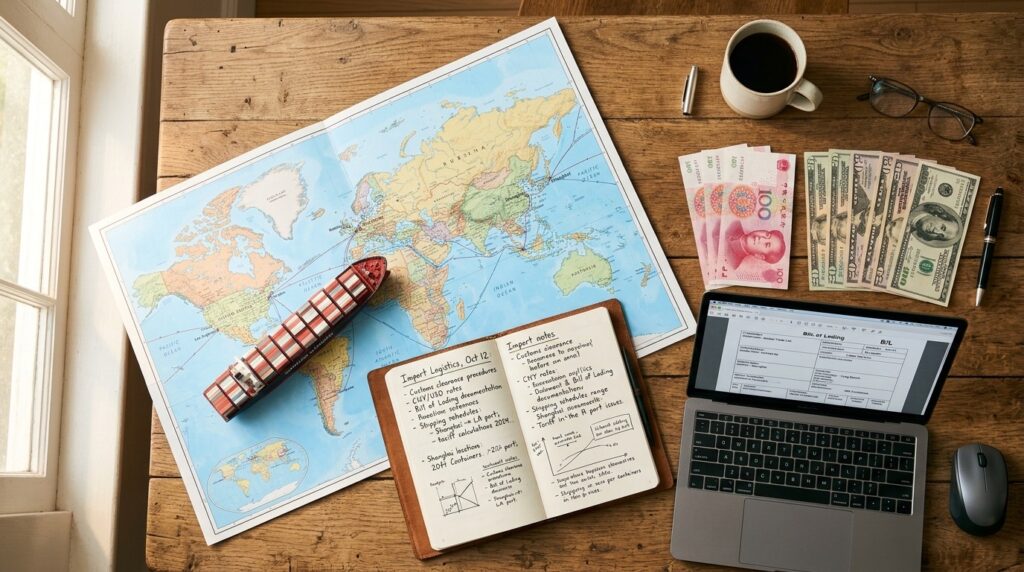
What You Need Before You Start
Before you approach a single supplier, get two things sorted:
1. Know your product clearly — not vaguely.
“Phone cases” is not a product spec. “Soft TPU phone cases for iPhone 16, 1.5mm thickness, matte black finish, bulk-packed in polybags, MOQ 500 units” is a product spec. The more specific you are upfront, the more accurately suppliers can quote — and the less room there is for misunderstanding later.
2. Understand your market’s import requirements.
Every country has its own rules on what can be imported, what certifications are required, and what duties apply. A toy imported into the EU needs CE marking. A food container going to the US may need FDA compliance. Electronics sold in the UK post-Brexit need UKCA marking. Find out what applies to your product before you source it — not after it arrives at the port.
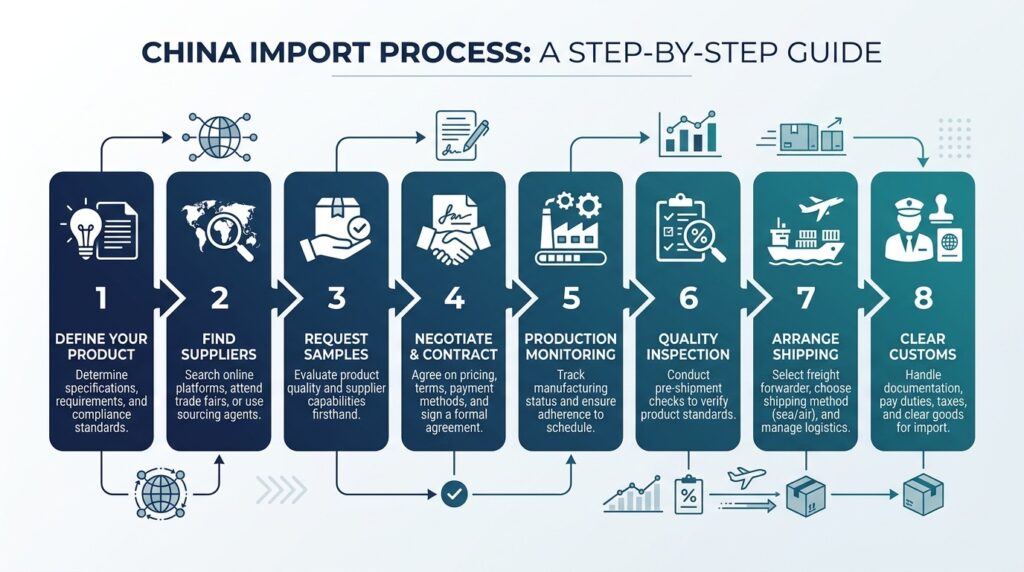
How to Import from China: The 8-Step Process
Step 1: Define Your Product Specification
Write a spec sheet before you contact anyone. It should include:
- Product name and function — what it is and what it does
- Materials — e.g., 304 stainless steel, food-grade PP, 600D polyester
- Dimensions and tolerances — with a sketch or technical drawing if possible
- Color references — Pantone codes, not “light blue”
- Required certifications — CE, ASTM, FDA, RoHS, etc.
- Packaging instructions — inner box, master carton, labeling requirements
- MOQ preference — your ideal quantity for a trial order
A good spec sheet does two things: it filters out suppliers who can’t meet your requirements, and it gives you a legally defensible document if the goods arrive wrong.
What to Do If You Don’t Have a Spec
If you’re sourcing an existing product (rather than creating something new), photograph the best version of that product you can find — from multiple angles. Measure it. Note the materials. That’s your working spec. You can refine it after you see supplier samples.
Step 2: Find and Shortlist Suppliers
There are several ways to find Chinese manufacturers, each with trade-offs:
Alibaba.com — The default starting point. Large directory, English interface, Trade Assurance protection. Prices quoted are typically 10–20% higher than factory floor price because many listings are trading companies, not manufacturers. Look for “Verified Supplier” badges and factories with 3+ years on the platform.
1688.com — China’s domestic wholesale platform. Prices are significantly lower — often 20–40% below Alibaba for the same product — but the interface is in Chinese and most sellers don’t speak English. A sourcing agent can navigate 1688 on your behalf.
Global Sources — Skews toward verified manufacturers with export experience. Good for electronics, gifts, and hardware. Annual trade shows in Hong Kong give direct factory access.
Canton Fair (Guangzhou) — The world’s largest trade fair, held twice yearly. Meeting suppliers face-to-face is a different quality of relationship than email. If you’re sourcing regularly, attending once is worth the investment.
Direct factory search — If you know the industrial cluster for your product (e.g., furniture in Foshan, electronics in Shenzhen, textiles in Guangzhou), you can source factory contacts directly through industry directories or via a local agent.
How Many Suppliers to Contact
Contact 8–12 suppliers initially. After reviewing quotes and basic vetting, narrow to 3–4 for sample requests. You’ll typically end up working with one or two. Starting broad gives you negotiating leverage and a genuine comparison baseline.
Step 3: Request Samples and Evaluate Them Properly
Never place a bulk order without samples. This is not optional.
How to request samples:
Send your spec sheet and ask for one production sample (not a showroom display piece). Clarify whether you’re paying for the sample and shipping — most factories charge $20–150 for samples plus courier costs. Some will credit this against your first bulk order.
What to test when samples arrive:
| Test | What You’re Checking |
|---|---|
| Visual inspection | Color accuracy, finish quality, print alignment |
| Dimensional check | Does it match your specs? Measure everything. |
| Material feel | Does it match what was quoted? |
| Function test | Does it actually work as intended? |
| Drop / stress test | How does it hold up under normal use stress? |
| Packaging check | Is it protective enough for shipping? |
If the sample is wrong in any way, document it with photos and go back to the supplier with specific corrections before approving production. Don’t assume the bulk order will be better than the sample — it’s usually the same or worse.
Step 4: Negotiate Terms and Sign a Purchase Agreement
Price negotiation is expected. Most suppliers build 10–15% negotiating room into their initial quote. You don’t need to be aggressive — a straightforward “Is this your best price for [quantity]?” will usually open the conversation.
Beyond price, negotiate:
- Payment terms — Standard is 30% deposit, 70% before shipment. First-time buyers rarely get credit terms, but it’s worth asking.
- Lead time — Get a written production schedule, not a verbal estimate.
- Defect tolerance — What percentage of defective units is acceptable? What’s the remedy if it’s exceeded?
- Packaging specs — Get everything in writing, including what goes on the label.
Once agreed, issue a Purchase Order (PO) — a formal document that confirms product specifications, quantity, price, payment terms, delivery timeline, and the agreed quality standard. A PI (Proforma Invoice) from the supplier should match your PO exactly. If there are discrepancies, resolve them before you pay the deposit.
Step 5: Monitor Production
This is the step most first-timers skip — and it’s where many problems originate.
Once production starts, stay in contact. Request:
– Confirmation that production has begun (and when)
– Photos of raw materials before use
– A mid-production progress update with photos
– Confirmation of the expected completion date
If your order is large (over $15,000) or involves complex specifications, consider arranging a during-production inspection (DPI) through a third-party inspection company. An inspector visits the factory while 30–80% of production is complete and checks for defects before the entire batch is finished — when there’s still time to fix them.
Step 6: Pre-Shipment Quality Inspection
Before goods are loaded into a container, a final pre-shipment inspection (PSI) verifies that the batch is consistent with your approved sample.
You have two options:
Option A — Use a third-party inspection company (recommended for orders over $5,000)
Companies like QIMA, Bureau Veritas, or SGS send an inspector to the factory on your behalf. The inspection report covers AQL sampling results, photos, packaging check, and any defects found. Cost: $150–300 per inspection day. Worth it.
Option B — Request factory photos and video
For smaller orders or with established suppliers, photo/video documentation of a random sample from the batch is a lower-cost alternative. Less reliable than a physical inspection, but better than nothing.
If the inspection reveals defects above your agreed tolerance: don’t release final payment. Negotiate a discount, arrange rework, or — in severe cases — reject the shipment.
Step 7: Arrange Shipping
Once the goods pass inspection and final payment is released, your freight forwarder takes over.
Choose your shipping method based on urgency and volume:
| Method | Transit Time | Best For | Approx. Cost (per kg) |
|---|---|---|---|
| Sea Freight (FCL) | 18–35 days | Full containers, large orders | $0.30–0.80 |
| Sea Freight (LCL) | 25–40 days | Smaller orders sharing a container | $0.80–2.00 |
| Air Freight | 5–10 days | Time-sensitive, high-value, small volume | $3–8 |
| Express Courier (DHL/FedEx) | 3–7 days | Samples, small parcels under 100kg | $6–15 |
Understand your Incoterm. The most common arrangement for first-time importers is FOB (Free on Board) — the factory delivers goods to the Chinese port, and you’re responsible for everything from that point. Your freight forwarder handles the rest. EXW (Ex Works) puts even more responsibility on you; DDP (Delivered Duty Paid) puts it all on the supplier and is typically the most expensive option.
Your freight forwarder needs: commercial invoice, packing list, bill of lading (or air waybill), and any required certificates. Make sure these documents are accurate — errors cause customs delays.
Step 8: Clear Customs and Take Delivery
Customs clearance is the final step before your goods arrive at your warehouse.
Documents required:
– Commercial Invoice (showing the correct declared value)
– Packing List
– Bill of Lading or Airway Bill
– Country of Origin Certificate (in some cases)
– Product-specific certificates (CE, FDA, etc.)
Import duties are calculated as a percentage of the declared customs value (product cost + insurance + freight). Rates vary by country, product category, and HS code. In the US, check rates via the USITC Tariff Database. In the UK, use the Trade Tariff tool.
First-time importers are strongly advised to use a licensed customs broker — a specialist who ensures your paperwork is correct, handles communication with customs officials, and can resolve holds or queries. Broker fees ($100–250) are well worth the cost compared to a customs delay that holds your goods for weeks.
Once cleared, your freight forwarder or last-mile carrier delivers to your address, Amazon FBA warehouse, or 3PL facility.
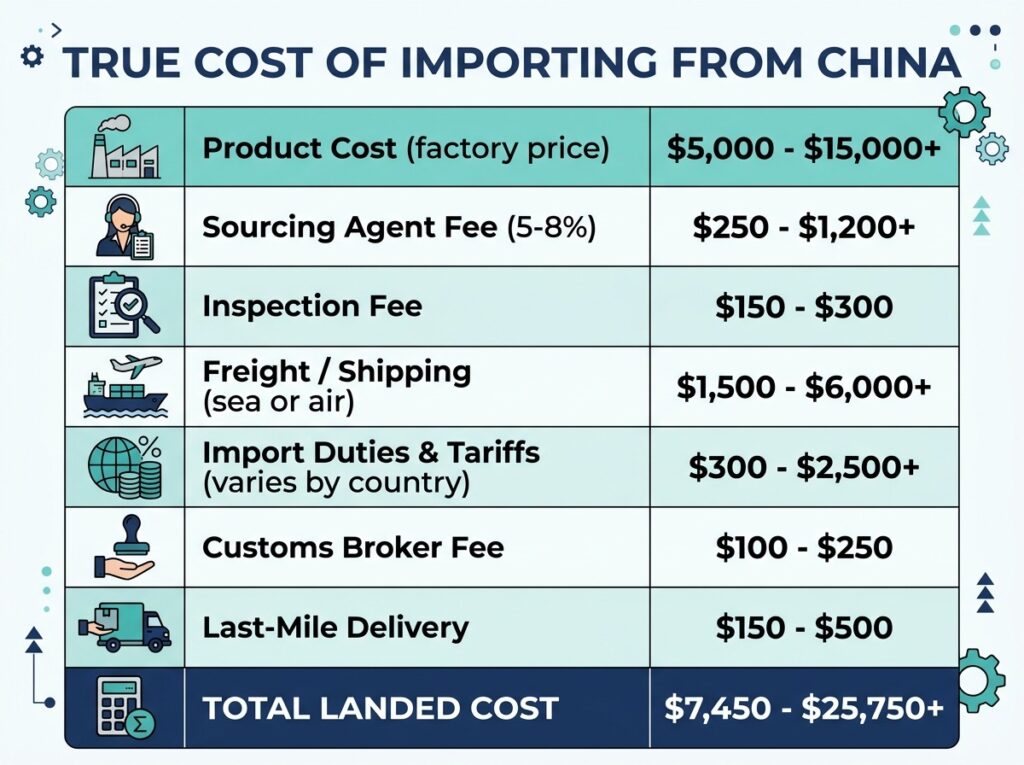
The True Cost of Importing from China: A Reality Check
The factory price is not what you pay. Your actual cost — the landed cost — is the sum of:
- Factory/product cost
- Sourcing agent fee (if used): 5–8% of order value
- Sample and pre-production costs
- Pre-shipment inspection fee: $150–$300
- Freight (sea, air, or express)
- Import duties and tariffs
- Customs broker fee: $100–$250
- Last-mile delivery to your warehouse
For a typical first order of $10,000 in goods shipped by sea to the US, landed cost is usually $13,000–$16,000 all-in. Plan your margins accordingly.
Further reading → How to Calculate Your True Landed Cost from China Before You Place an Order
Common Mistakes First-Time Importers Make
These aren’t hypotheticals — they’re the situations we see regularly:
Ordering too much on the first order. The trial order exists for a reason. Even if the factory offers a better unit price at 5,000 units, starting with 500–1,000 lets you verify quality and test the market without tying up capital in inventory you may not be able to move.
Skipping the pre-shipment inspection. The most consistently expensive mistake. A $200 inspection can catch problems that would cost $3,000–10,000 in returned goods, re-orders, or customer complaints.
Confusing FOB price with landed cost. FOB price is what the factory charges. Landed cost is what you actually spend by the time goods reach your door. The gap can be 30–60%. Don’t build a margin calculation on FOB price.
Using WeChat as the only communication record. WeChat is convenient. It’s also ephemeral — screenshots are easy to edit, conversations are easy to delete. Keep a paper trail: confirm all agreements via email, and put specifications in writing before production starts.
Releasing final payment before inspection. Once the money leaves your account, your leverage disappears. Always tie the 70% balance payment to a satisfactory inspection result, not just a “production complete” notification from the factory.
A Note on Building vs. Jumping In
There’s a version of importing from China that goes well from the start: clear specs, careful supplier selection, a pre-shipment inspection, a modest first order. And there’s a version where someone wires $15,000 to a supplier they found on Alibaba last week, skips the inspection, and receives a container of goods that don’t match the photos.
The difference isn’t luck. It’s process.
The eight steps above aren’t bureaucracy — they’re the sequence that experienced importers use precisely because each step protects the one that follows. The more carefully you work through them, the less likely you are to be learning from an expensive mistake.
If you’d rather have someone handle the China-side of this process — supplier search, negotiation, production follow-up, inspection coordination — talk to our team. We’ll tell you honestly whether it makes sense for your situation.
Related reading → China Sourcing Agent: The Complete 2026 Guide
This guide reflects direct operational experience across hundreds of import orders. Cost figures are based on 2025–2026 market rates and should be used as planning estimates, not guarantees.