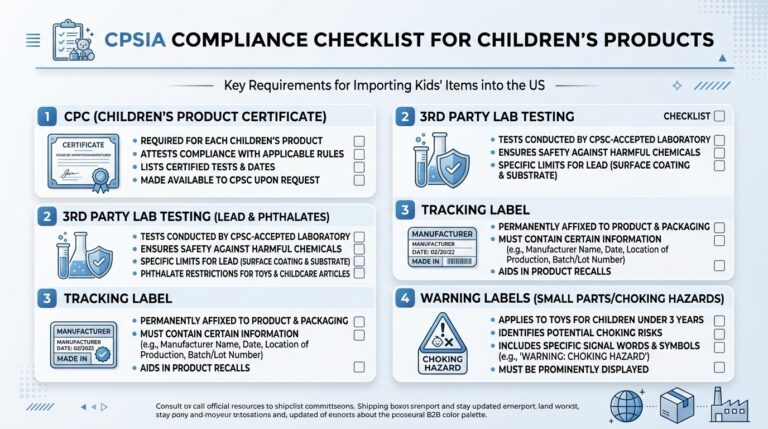
Smartwatches, fitness bands, and other wearables combine three compliance challenges at once: wireless radio certification, lithium battery safety, and skin-contact material regulations — since these products are worn directly against skin for extended periods.
Zertifizierung für Funk und Konnektivität
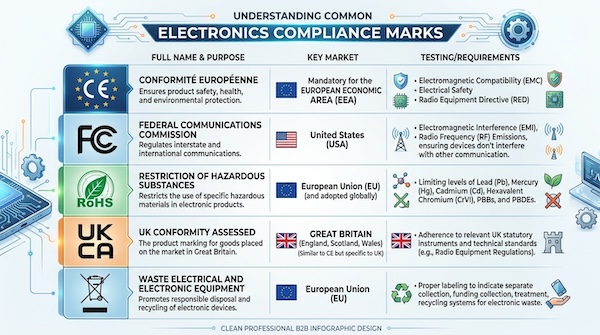
Any Bluetooth or Wi-Fi enabled wearable needs FCC certification for the US and CE/RED (Radio Equipment Directive) for the EU. Shenzhen wearable factories almost always use pre-certified Bluetooth modules, which simplifies your own certification since the radio component is already approved — you’re mainly certifying the finished device assembly.
Sicherheit im Umgang mit Akkus und beim Laden

Wearables use small lithium-polymer cells, which still require UN38.3 testing for shipping and, for the US market, UL 2054 or IEC 62133 battery safety certification. Wireless charging components add an additional layer — confirm Qi certification if you’re marketing wireless charging as a feature.
Einhaltung der Vorschriften für Materialien mit Hautkontakt
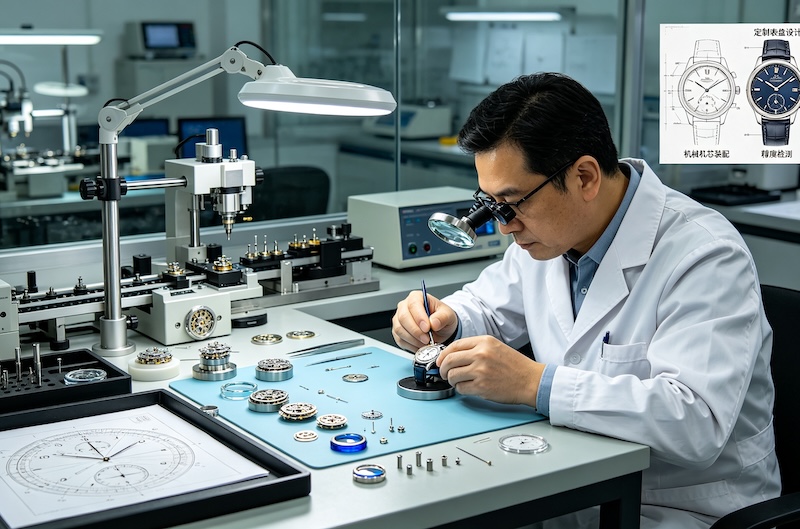
Watch bands and device housings that touch skin for extended periods should be tested for nickel release (especially relevant in the EU under REACH) and general skin sensitization. This is frequently overlooked by importers focused only on electronics compliance, but it’s a real liability and return-rate issue — cheap metal buckles are a common source of skin irritation complaints.
Häufig gestellte Fragen
Reicht die FCC-Zertifizierung aus, oder benötige ich für Wearables auch die CE-Kennzeichnung?
You need both if you’re selling in both markets — FCC covers the US, CE (specifically the RED directive) covers the EU. They test different things and neither substitutes for the other.
Benötige ich eine separate Batteriezertifizierung, wenn die Zelle selbst bereits gemäß UN 38.3 geprüft wurde?
Ja. UN 38.3 regelt den sicheren Transport; UL 2054/IEC 62133 regelt die Sicherheit der Batterie im Endprodukt. In der Regel sind beide vorgeschrieben.
Wie häufig tritt eine Nickelallergie bei tragbaren Geräten auf?
Dies kommt so häufig vor, dass die EU-REACH-Verordnung einen spezifischen Grenzwert für die Nickelabgabe bei allen Produkten festlegt, die über einen längeren Zeitraum mit der Haut in Kontakt kommen. Es lohnt sich, Metallkomponenten zu prüfen, auch wenn Ihr Hauptaugenmerk bei der Einhaltung der Vorschriften auf Elektronik liegt.