Smartwatches, fitness bands, and other wearables combine three compliance challenges at once: wireless radio certification, lithium battery safety, and skin-contact material regulations — since these products are worn directly against skin for extended periods.
無線および接続性の認証
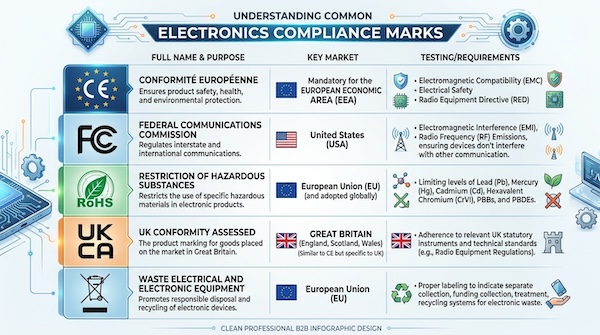
Any Bluetooth or Wi-Fi enabled wearable needs FCC certification for the US and CE/RED (Radio Equipment Directive) for the EU. Shenzhen wearable factories almost always use pre-certified Bluetooth modules, which simplifies your own certification since the radio component is already approved — you’re mainly certifying the finished device assembly.
バッテリーおよび充電の安全性

Wearables use small lithium-polymer cells, which still require UN38.3 testing for shipping and, for the US market, UL 2054 or IEC 62133 battery safety certification. Wireless charging components add an additional layer — confirm Qi certification if you’re marketing wireless charging as a feature.
スキンコンタクト材料のコンプライアンス
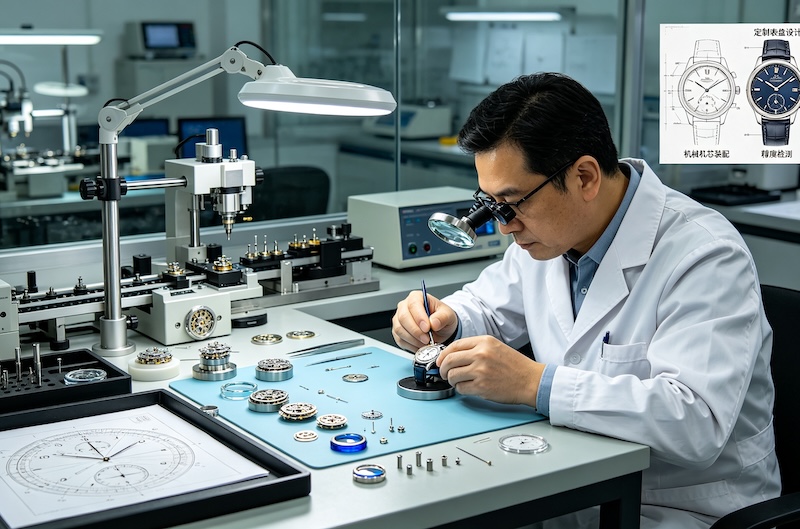
Watch bands and device housings that touch skin for extended periods should be tested for nickel release (especially relevant in the EU under REACH) and general skin sensitization. This is frequently overlooked by importers focused only on electronics compliance, but it’s a real liability and return-rate issue — cheap metal buckles are a common source of skin irritation complaints.
よくある質問
ウェアラブル機器については、FCC認証だけで十分でしょうか、それともCEマークも必要ですか?
You need both if you’re selling in both markets — FCC covers the US, CE (specifically the RED directive) covers the EU. They test different things and neither substitutes for the other.
セル自体がすでにUN38.3の試験に合格している場合、別途バッテリーの認証は必要ですか?
はい。UN38.3は安全な輸送に関する規格であり、UL 2054/IEC 62133は完成品に組み込まれたバッテリーの安全性に関する規格です。通常、両方の規格への準拠が求められます。
ウェアラブルデバイスにおいて、ニッケルアレルギーはどの程度一般的な問題なのでしょうか?
この問題は非常に一般的であるため、EUのREACH規制では、皮膚に長時間接触するあらゆる製品について、ニッケルの溶出量に関する具体的な基準値が定められています。たとえコンプライアンスの主な対象が電子機器であっても、金属部品の試験を行う価値は十分にあります。