A UK importer of wireless smart plugs received a shipment of 4,000 units from a Shenzhen factory in March. Each unit displayed a CE mark. The supplier had provided a CE test report from a company called “European Quality Testing Center Ltd” — a professional-looking document with official-seeming stamps.
By September, Trading Standards issued a recall notice. The products had been found to contain live parts accessible without tools — a basic Low Voltage Directive safety failure. The test report was traced to a non-accredited “testing company” based in Guangdong that generates compliance-looking documents for a fee of approximately ¥800 per product.
The importer faced a full product recall, destruction of 4,000 units, £23,000 in regulatory fines, and civil liability for any consumer incidents. The products had been on sale for six months.
こうした事態は、業界が公に認めている以上に頻繁に発生しています。本ガイドでは、その理由、真のコンプライアンスを見極める方法、そして電子機器の輸入プロセスがどのようなものであるべきかについて解説します。
なぜ中国の電子機器にはコンプライアンス上の問題が頻繁に発生するのか
原因を理解することで、解決策を見出すことができます。
市場の構造がコンプライアンス上のプレッシャーを生み出している:
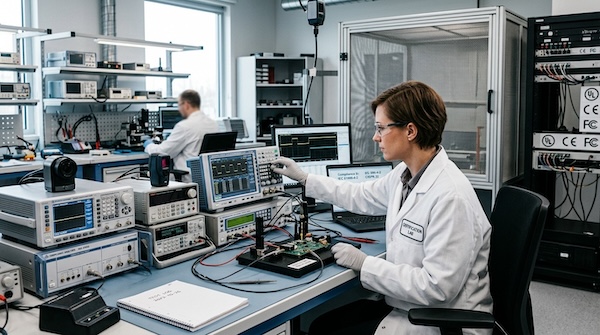
Chinese electronics factories compete primarily on price. Genuine compliance certification — using an accredited lab, running actual product testing, maintaining documentation — costs $3,000–15,000 per product variant depending on what’s required. For a factory selling a product at $8.50/unit, that certification cost is material.
その手口はよく知られている。CE適合を自己宣言する(EU規則の下では一部の製品カテゴリーで認められているが、真の適合性評価が必要となる)、類似製品のCEマークを別の製品に転用する、あるいは本物そっくりの試験報告書を作成してくれる文書作成サービスを利用する、といった方法だ。
法執行の状況にはばらつきがある:
Market surveillance authorities in the EU, UK, and US don’t test every imported product. The probability of any individual shipment being tested for compliance is low — which means the expected cost of non-compliance, weighted by probability of detection, is often lower than the cost of genuine compliance. This is a structural incentive problem.
その結果については、買い手が責任を負う:
When non-compliant products reach consumers and cause harm, or when market surveillance tests a product and finds failures, the responsible party is the entity that placed the product on the market — which is the importer, not the factory. Chinese factories are shielded from EU/UK/US regulatory consequences by jurisdiction. The importer is not.
最も一般的なコンプライアンス違反の形態
1. 適合性評価を伴わないCE自己宣言
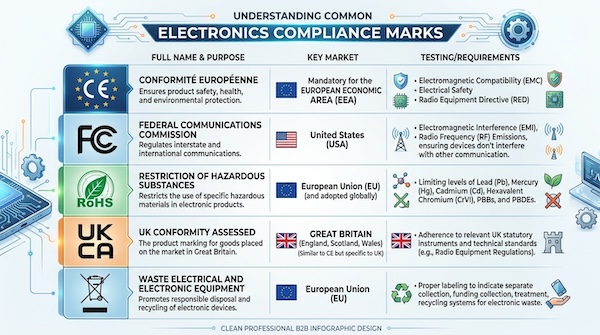
The CE marking system allows manufacturers to self-declare compliance with relevant EU Directives for certain product categories — but only after conducting a genuine conformity assessment, which requires either internal technical documentation demonstrating compliance with applicable harmonised standards, or third-party testing by a Notified Body (for higher-risk products).
多くの中国のサプライヤーが行っていること:EU域内で販売するにはCEマークが必要であり、個々の出荷分については不適合による摘発リスクが低いため、適合性評価を一切行わずにCEマークを貼付している。
見分け方: Ask for the Declaration of Conformity (DoC) — a legally required document for CE products that must list the specific EU Directives and harmonised standards the product complies with, plus the responsible person’s signature. If they can’t provide it, there’s no compliant CE marking. If it lists the wrong Directives or generic/inapplicable standards, it’s likely fabricated.
2. FCC IDの無断複製または虚偽表示
米国の無線機器に対するFCCパート15の認可には、認証(認定されたFCC試験機関による第三者試験)または適合宣言(試験結果の文書化を含む)のいずれかが必要です。各FCC IDは、1つの申請者による1つの製品に固有のものです。
Common fraud pattern: A Shenzhen supplier applies an FCC ID from a legitimately authorized product (often a similar product from a different company) to their non-authorized product. The ID looks valid when searched in the FCC database — because it is valid for the product it was issued to, just not this product.
確認方法: fcc.gov/oet/ea/fccid で FCC ID を検索してください。検索結果には、認可を受けた企業の名称や製品の写真・説明が表示されます。製品名が輸入するものと一致しない場合、または認可を受けた企業が貴社のサプライヤーとは無関係な企業である場合は、その FCC ID が不正に使用されていることになります。
3. 試験を行わないRoHS宣言
RoHSは、EU域内で販売される電気・電子機器に含まれる10種類の有害物質の使用を規制しています。サプライヤーによる「RoHS準拠」の宣言には、規制対象物質(鉛、水銀、カドミウム、六価クロム、PBB、PBDE、および2019年に追加された4種類のフタル酸エステル類)の検査が求められます。
What frequently happens: Suppliers provide RoHS “compliance” without any actual substance testing — simply declaring compliance because it’s what buyers request.
確認方法: Request the RoHS test report from an accredited lab, not just a declaration. The report should list test results for each restricted substance category and the detection method used. A lab name you can verify (SGS, Intertek, Bureau Veritas, TÜV, UL, QIMA) and a certificate number you can look up is the standard.
4. UKCAマークをめぐる混乱(ブレグジット後)
2021年1月以降、英国で販売される製品には、CEマークの代わりに(あるいはそれに加えて)UKCAマークの表示が義務付けられています。多くの中国のサプライヤーは、主要なEUの顧客が依然としてCEマークを使用しているため、UKCAに関する要件を認識していないか、あるいはUKCA関連の書類を整備していません。
For UK-market electronics, confirm UKCA documentation specifically — CE documentation alone is not sufficient for GB market sales.
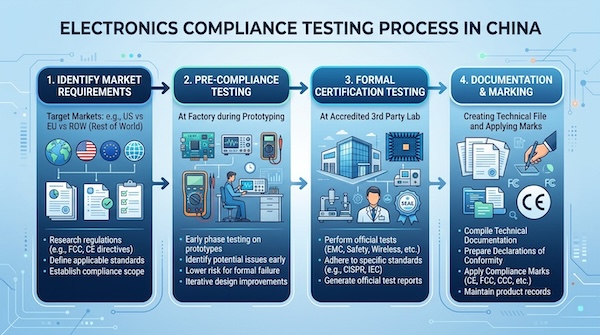
輸入前のコンプライアンス確認方法
ステップ1:該当する認定資格を特定する
製品の種類によって、必要な認証は異なります。米国で販売されるワイヤレスBluetoothスピーカーには、FCC Part 15の認可が必要です。EUで販売される場合は、無線機器指令(RED)、低電圧指令(LVD)、およびWEEE/RoHSへの準拠に基づくCEマークが必要です。英国で販売する場合は、さらにUKCAマークが必要です。
サプライヤーに連絡する前に、製品の規制要件を把握しておきましょう。FCCの機器認可データベース、EUの指定機関に関するNANDOデータベース、および自国の市場監視当局のウェブサイトが参考になります。
ステップ2:一般的な主張ではなく、具体的な資料の提出を求める
「御社の製品はCE認証を取得していますか?」と尋ねないでください。その答えは常に「はい」になります。代わりに、次のように尋ねてください:
— 特定の指令番号が記載された適合宣言書(DoC)
— 認定試験所による試験報告書(当該試験所のILAC認定状況を含む)
— お客様の製品に該当するFCC受領者IDおよび製品説明
— 第三者認証(CE指定機関、UL認証など)の認証番号
ステップ3:検査室の認定状況を確認する
試験所は、公認の認定機関による認定を受けている必要があります。米国では、関連する認定機関としてA2LAおよびNVLAPがあります。EUでは、各国に国内認定機関があります(ドイツではDAkkS、英国ではUKAS、フランスではCOFRACなど)。ILAC(国際試験所認定協力機構)は、世界的なディレクトリを管理しています。
Go to the accreditation body’s website — not the lab’s website — and verify that the lab holds current accreditation for the relevant test scope. Accreditation is scope-specific: a lab may be accredited for EMC testing but not product safety testing.
ステップ4:試験所だけでなく、特定の証明書も確認する
たとえその検査機関が正規のものであっても、証明書番号がご自身の製品を対象としているかどうかを確認してください。証明書番号を明記の上、検査機関に直接電話またはメールで問い合わせてください。正規の検査機関であれば、特定の製品に対して特定の証明書を発行したかどうかを確認してくれます。
ステップ5:輸入前の自主試験
For any significant order of regulated electronics, arrange independent compliance testing on production samples before your full shipment arrives. Submit samples to an accredited third-party lab yourself — don’t use the supplier’s samples or the supplier’s lab selection.
Cost: $300–1,500 per product depending on the test scope. Timeline: 5–20 business days. This is your practical protection against sophisticated document fraud that passes document verification but fails actual testing.
商品が仕様通りに届かなかった場合の対処法
出荷品が到着した後にコンプライアンス上の問題が見つかった場合は:
Option 1 — Stop before customs clearance if possible:
商品が港や保税倉庫にある段階で問題が発覚した場合は、通関業者に相談して対応策を検討してください。通常、商品が流通市場に入った後に処理するよりも、原産地への再輸出や港での廃棄の方が費用を抑えられます。
Option 2 — Don’t list for sale while investigating:
すでに倉庫にある商品については、コンプライアンス状況の調査中は販売リストに掲載しないでください。コンプライアンスに違反する製品を市場に出回らせると、販売日以降、規制上の責任が生じます。倉庫に保管されている商品は財務上の問題ですが、消費者に販売された商品は規制上および法的な問題となります。
Option 3 — Commission independent testing:
Submit samples from the shipment to an accredited lab. Get written test results. This establishes what you actually have — some products may partially comply (failing specific tests but passing others), which affects your options.
Option 4 — Return or renegotiate:
メーカーが適合性について虚偽の表示を行った場合、返品、再加工、または価格補償を求める根拠となります。その証拠となるのは、適合性に関する発注書の条件と、第三者機関による試験での不合格結果です。すべてを文書で記録しておいてください。
関連記事 → 中国における出荷前検査:検査対象項目
関連記事 → 深センの電子部品調達:インサイダーによるガイド
特定の中国製電子製品のコンプライアンス関連書類の確認について、サポートが必要ですか? 当社のチームには、お客様の貨物が中国を出荷する前に認証情報を確認するコンプライアンスの専門家が在籍しています。