Packaging is the first physical touchpoint your customer has with your brand. When sourcing from China, relying on generic factory packaging is a missed opportunity. Investing in custom packaging can elevate a standard white-label product into a premium brand experience, allowing you to charge higher prices and build customer loyalty.
However, sourcing packaging requires understanding materials, dimensions, and design blueprints (dielines). This guide covers everything you need to know to get custom packaging right.
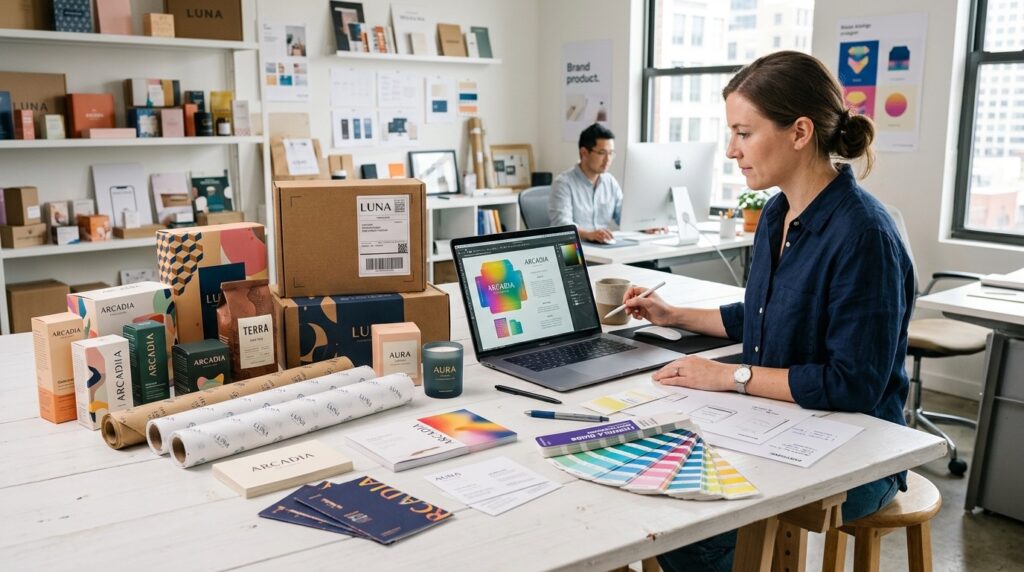
1. Common Custom Packaging Options
Chinese packaging suppliers offer a vast array of materials and finishes. Your choice should balance your budget, the product’s weight and fragility, and the unboxing experience you want to create.
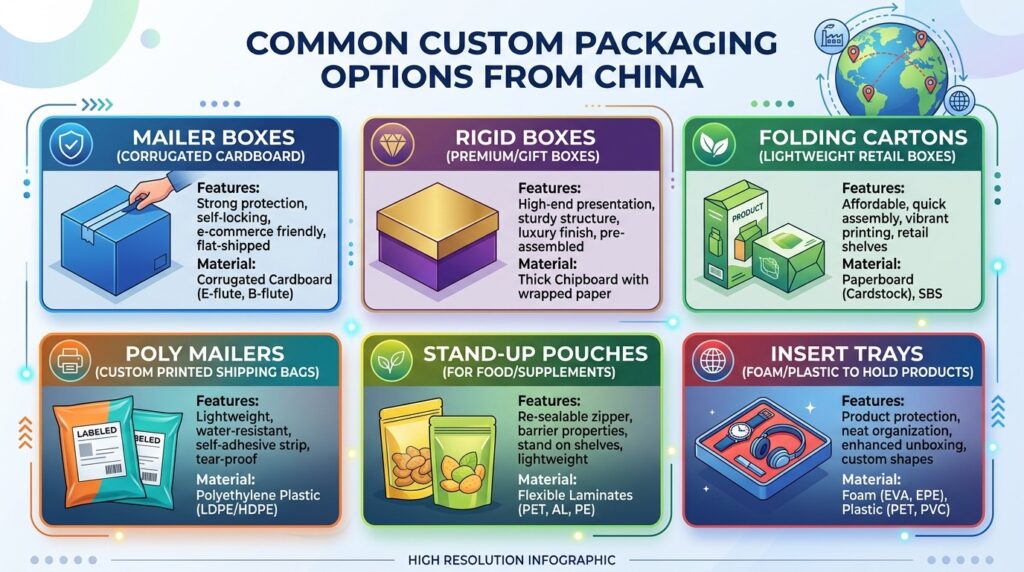
Corrugated Mailer Boxes
These are the standard for e-commerce (think the classic subscription box). They are durable, relatively cheap, and can be printed inside and out. Ideal for shipping directly to consumers without an outer box.
Folding Cartons (Paperboard Boxes)
Lightweight and cost-effective. These are the thin cardboard boxes used for retail products like cosmetics or supplements. They are usually shipped flat and assembled by your product manufacturer.
Rigid Boxes
The ultimate premium option (think iPhone boxes). Made of thick, rigid board wrapped in printed paper. They do not fold flat, meaning they take up significant volume during shipping, making them expensive to transport. Best reserved for high-end luxury goods.
Poly Mailers and Pouches
For clothing or non-fragile items, custom-printed poly mailers or stand-up pouches (for food or supplements) are highly cost-effective and take up minimal space.
2. Understanding Packaging Dielines
When you contact a packaging supplier, they won’t just ask for your logo. They will ask for your design applied to a “dieline.”
A dieline is a 2D flat blueprint of your 3D box. It shows exactly where the box will be cut (usually solid lines) and where it will be folded or creased (usually dashed lines).
The Workflow:
1. You provide the exact dimensions of your product to the packaging supplier.
2. The supplier provides a blank PDF dieline.
3. Your graphic designer overlays your artwork onto this dieline.
4. You send the completed file back to the supplier for printing.
3. How to Source Packaging Efficiently
There are two main ways to source packaging:
Method 1: Have Your Product Manufacturer Do It
This is the easiest route. Ask the factory making your product to source the custom packaging. They likely have partner printing factories nearby. The downside is that they will add a small markup, and you have less direct control over the packaging factory.
Method 2: Source the Packaging Separately
You can find dedicated packaging suppliers on Alibaba. Once the packaging is produced, you have it shipped to your product manufacturer so they can pack the items inside. This gives you better prices and more options but requires careful coordination of timelines.
Summary: What to Take Away
Custom packaging is a high-ROI investment for e-commerce brands. By understanding your options and mastering the dieline process, you can create memorable unboxing experiences that drive repeat purchases.
If you need help coordinating product manufacturing with custom packaging, reach out to our sourcing team. We handle the logistics so you can focus on building your brand.
Further reading → How to Calculate Your True Landed Cost from China