Many businesses make the same sourcing mistake:
They focus only on the factory price.
A supplier quotes:
$5 per unit
The numbers look great.
Profit margins seem strong.
Then unexpected costs start appearing:
- Shipping fees
- Customs duties
- Packaging costs
- Inspection expenses
- Storage fees
Suddenly, that “cheap” product becomes far less profitable.
This is why experienced importers calculate total landed cost before placing orders.
Because the real cost of a product is rarely just manufacturing.
Understanding landed cost helps businesses:
- Improve pricing decisions
- Protect profit margins
- Compare suppliers accurately
- Avoid unexpected sourcing expenses
What Is Total Landed Cost?
Total landed cost refers to the complete cost of getting a product from the supplier to its final destination.
This includes more than manufacturing.
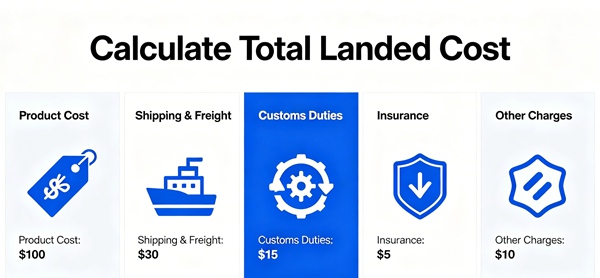
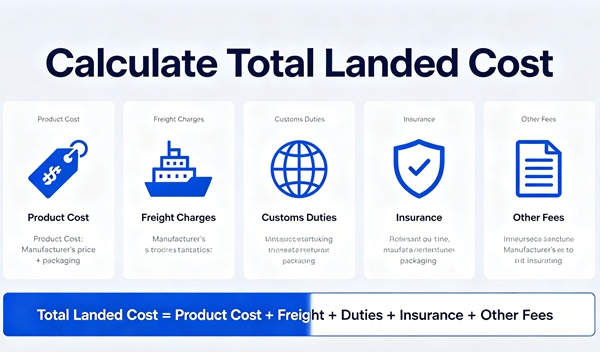
It typically covers:
- Product cost
- Shipping fees
- Duties and taxes
- Customs charges
- Packaging costs
- Quality inspections
- Warehousing
In simple terms:
Landed cost = the true cost of imported products.
Without this calculation, businesses often overestimate profits.
Why Landed Cost Matters
Many importers compare suppliers based only on unit price.
That creates problems.
A cheaper supplier does not always mean lower total cost.
For example:
| Supplier | Unit Cost | Shipping Cost | Total Cost |
|---|---|---|---|
| Supplier A | $4.80 | High | More expensive |
| Supplier B | $5.10 | Lower | More profitable |
Factory pricing tells only part of the story.
Landed cost helps businesses:
Protect Profit Margins
Unexpected costs reduce profitability.
Compare Suppliers More Accurately
The lowest quote may not be the best option.
Improve Pricing Strategy
Better cost visibility supports better pricing decisions.
Reduce Financial Surprises
Predictability matters in sourcing.
Especially for growing businesses.
The Main Components of Landed Cost
Understanding cost categories improves forecasting.
Product Manufacturing Cost
The starting point.
This includes:
- Unit price
- Tooling fees
- Setup costs
Always clarify pricing structure early.
Read: How to Negotiate Better Pricing With Suppliers Without Hurting Relationships
Shipping and Freight Costs
Freight costs vary significantly.
Depending on:
- Air freight
- Ocean freight
- Destination country
- Shipment volume
Shipping often becomes one of the largest expenses.
Customs Duties and Import Taxes
Many businesses underestimate tariffs.
Duty rates depend on:
- Product category
- Country of origin
- Import destination
Always estimate duties before ordering.
Packaging Costs
Custom packaging adds cost.
This may include:
- Branded boxes
- Labels
- Inserts
Especially important for ecommerce brands.
Quality Inspection Fees
Skipping inspections creates risk.
Quality checks help reduce:
- Defects
- Returns
- Customer complaints
Read: Quality Inspection in Manufacturing
Warehousing and Storage
Imported products often incur storage costs before fulfillment.
Especially for:
- Ecommerce inventory
- Seasonal products
Calculate Landed Cost
Final Example
| Cost Category | Amount |
|---|---|
| Product Cost | $4,500 |
| Shipping | $1,200 |
| Duties | $600 |
| Inspection | $300 |
| Packaging | $400 |
| Total Landed Cost | $7,000 |
Then calculate:
Cost Per Unit=10007000
Final landed cost:
$7 per unit
Not $4.50.
This difference matters.
Hidden Costs Businesses Often Forget
Many importers underestimate sourcing expenses.
Common hidden costs include:
Bank Transfer Fees
International payments often carry charges.
Currency Exchange Fluctuations
Exchange rates affect profitability.
Product Rework Costs
Defective inventory creates unexpected expense.
Delays and Rush Shipping
Production delays often increase freight costs.
Compliance and Certification Costs
Some products require testing or documentation.
Common Landed Cost Mistakes
Avoid these common problems.
Looking Only at Factory Price
This is the biggest mistake.
Ignoring Inspection Costs
Poor quality usually costs more later.
Underestimating Freight Volatility
Shipping costs change frequently.
Forgetting Duties and Taxes
These costs can significantly impact margins.
Overordering Inventory
Large MOQ may increase cash flow pressure.
Read: MOQ Explained: What Minimum Order Quantity Means
How to Reduce Landed Cost
Businesses can reduce landed cost strategically.
Improve Packaging Efficiency
Smaller packaging lowers shipping costs.
Negotiate Supplier Pricing
Better agreements improve profitability.
Consolidate Shipments
Larger shipments may improve freight efficiency.
Reduce Quality Problems
Fewer defects lower replacement cost.
Optimize Supplier Selection
Sometimes a slightly higher supplier price produces lower total cost.
Final Thoughts
Strong sourcing decisions depend on understanding real costs.
Not just supplier quotes.
Businesses that calculate landed cost properly make better decisions around:
- Supplier selection
- Product pricing
- Profit margins
- Inventory planning
The cheapest supplier often stops looking cheap once hidden costs appear.
Good sourcing starts with accurate numbers.
Need Help Evaluating Product Costs?
At SourcePilot Global, we help businesses:
✓ Compare supplier pricing accurately
✓ Calculate sourcing costs
✓ Reduce procurement risk
✓ Coordinate inspections and logistics
✓ Improve sourcing efficiency
Looking for sourcing support? Contact our team to discuss your project.