Finding a reliable electronics manufacturer in China is not difficult.
Finding the right one for your product, however, is where most sourcing problems begin.
China has one of the largest electronics manufacturing ecosystems in the world. From consumer electronics to industrial components, suppliers vary widely in capability, quality control systems, and production focus.
For overseas buyers, especially those launching new products or scaling existing ones, the challenge is not availability. It is filtering.
Many suppliers can produce electronics. Fewer can consistently deliver stable quality at scale, communicate clearly, and support long-term production.
This guide focuses on how experienced buyers typically identify reliable electronics manufacturers in China and reduce sourcing risks before placing orders.
Where most buyers start and why it often fails
Most sourcing journeys begin on large B2B platforms or through search engines.
This usually leads to thousands of supplier listings.
At first, the options look promising. But after contacting multiple suppliers, buyers often notice the same issues:
- Inconsistent responses
- Unclear manufacturing capabilities
- Over-promising on production capacity
- Samples that do not match mass production quality
- Limited transparency on factory operations
The issue is not the platform itself. It is the lack of structured filtering.
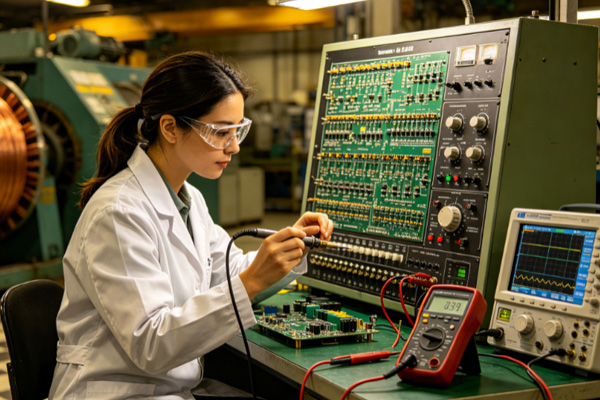
Electronics manufacturing is highly technical. A supplier that produces simple consumer devices may not be suitable for precision components or high-reliability products.
Understand the difference between factory capability levels
Not all electronics manufacturers operate at the same level.
In general, suppliers can be grouped into three categories:
1. Basic assembly factories
These factories focus on simple assembly processes. Suitable for low-complexity consumer products.
2. Specialized manufacturers
These suppliers focus on specific product categories such as PCBs, modules, or enclosures.
3. Full-system manufacturers
These factories handle complex production with integrated supply chain and engineering support.
Most sourcing mistakes happen when buyers select the wrong capability level for their product.
What to check before shortlisting a supplier
Instead of focusing only on price, experienced buyers usually evaluate suppliers based on operational capability.
Key points include:
- Production consistency across batches
- Ability to handle technical specifications
- Quality control process maturity
- Engineering support responsiveness
- Material sourcing stability
A supplier that performs well in these areas is usually more reliable than one offering the lowest price.
Supplier verification matters more than initial samples
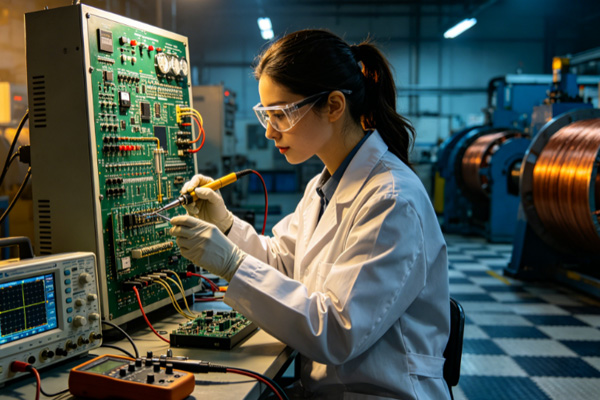
Samples often look perfect in electronics sourcing.
But samples do not always reflect mass production conditions.
Before placing an order, it is important to confirm:
- Whether the sample uses production-grade materials
- Whether the production process is repeatable
- Whether tolerances are clearly defined
- Whether the supplier can scale output without quality drift
This step is where many sourcing issues can be prevented early.
Read related context:
How experienced buyers usually find reliable electronics manufacturers
Most experienced buyers do not rely on a single channel.
Instead, they combine multiple sourcing methods:
- Direct factory sourcing
- Industry referrals
- Verified sourcing partners
- Trade show networking
- Supplier audits before commitment
The key difference is not where they search, but how they filter.
Filtering is based on capability, not just availability.
Common mistakes when sourcing electronics manufacturers
Several recurring issues appear in overseas sourcing:
- Choosing suppliers based only on price
- Skipping factory verification
- Ignoring production scalability
- Assuming sample equals mass production
- Not clarifying technical tolerance requirements
These mistakes often lead to delays or quality inconsistencies later in production.
How-to: a practical sourcing workflow
A simple sourcing workflow used by many procurement teams:
- Define product requirements clearly
- Search and list potential manufacturers
- Filter based on capability and specialization
- Request quotations and technical feedback
- Evaluate samples under real usage conditions
- Verify production consistency
- Place initial trial order
- Scale only after stable results
This workflow reduces risk without slowing down sourcing unnecessarily.
Final Thoughts
Finding electronics manufacturers in China is not about discovering hidden suppliers.
It is about filtering effectively.
The strongest sourcing decisions usually come from understanding capability, not just cost.
For many businesses, the difference between a stable supply chain and repeated production issues comes down to supplier selection discipline at the very beginning.