7 China Sourcing Scam Stories — And What Each Victim Learned
Время чтения: 8 минутАвтор: команда SourcePilot
Seven real China sourcing fraud cases — each a different scam type, a different dollar amount, and a lesson experienced importers now apply to every order.
Цифры варьируются. Категории товаров меняются. Страны происхождения покупателей в каждом случае разные. Но схема мошенничества при закупках в Китае удивительно однообразна: поставщик, который казался надежным, произведенный платеж, а затем проблема, которую оказалось невозможно решить.
These are seven of those stories. They’re composites drawn from real reported cases — details changed to protect privacy, financial figures approximate. Each one involves a different type of fraud and a different gap in the buyer’s process. Each one ends with a lesson that costs nothing to apply going forward.
Story 1: The Phantom Factory — $28,000 Lost
Предпосылки:
A UK-based online retailer found a ceramic cookware manufacturer through a Google search. The website was excellent — high-quality product photos, a detailed “About Us” page describing 12 years in the industry, testimonials. The email responses were prompt and professional.
Что произошло:
Покупатель разместил заказ на 1 200 керамических горшков и внес аванс в размере 30 % от суммы заказа — 8 400 долларов. Через три недели он получил сообщение о том, что производство задерживается из-за «технического обслуживания оборудования». Еще через две недели адрес электронной почты перестал отвечать. Сайт перестал работать. По указанному номеру телефона дозвонились на неработающий китайский мобильный телефон.
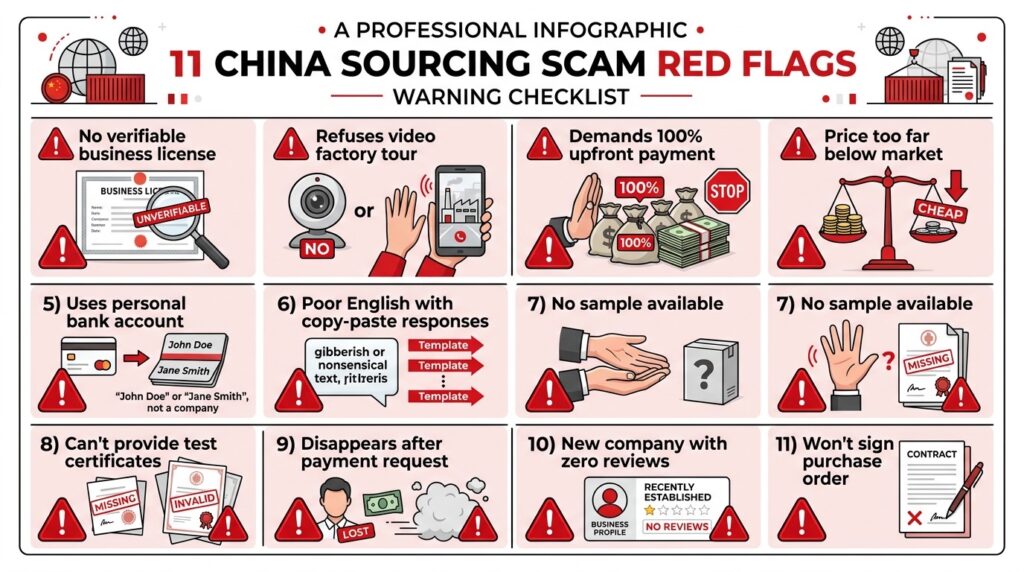
A business license check — run after the fact — showed the 18-digit USCC code on the license image they’d been sent corresponded to a food distribution company in Henan province, not a cookware manufacturer in Guangdong.
Общая сумма убытка: Депозит в размере 8 400 долларов (невозвратный).
УРОК: Verify the business license before any payment. The 18-digit USCC code is publicly searchable at gsxt.samr.gov.cn in three minutes. A code that returns the wrong company type, the wrong province, or no result at all is a hard stop — not a reason to ask the supplier for clarification.
Story 2: The Quality Bait-and-Switch — $47,000 Absorbed
Предпосылки:
A US Amazon seller sourced silicone baking mats from a Guangdong supplier they’d used once before for a small test order. The initial 200-unit sample order had been excellent — consistent thickness, proper food-grade certification documentation, clean printing.
Что произошло:
The follow-up 5,000-unit bulk order arrived 11 weeks later. Within the first week of Amazon FBA receiving, 23% of units were flagged for a quality defect: the logo printing was bleeding into the silicone surface under heat, creating a transfer that contaminated food surfaces. The defect was traced to a different silicone base compound used in the bulk run — a domestic-grade material substituted for the food-grade compound used in the sample.
Завод признал наличие «некоторого отклонения» и предложил скидку в размере 7 % на следующий заказ. При массовом производстве предотгрузочный контроль не проводился.
Общая сумма убытка: 10 810 долларов в виде непригодных для продажи запасов (23 % от стоимости заказа в 47 000 долларов), плюс расходы на обработку возвратов через Amazon, плюс один цикл отрицательных отзывов.
УРОК: A good sample doesn’t guarantee a good bulk order. Material substitution is the most common and hardest-to-detect quality fraud because it passes visual inspection. The fix is a pre-shipment inspection with a specific brief that includes material verification — not just cosmetic and functional checks. See our руководство по предотгрузочной проверке что следует включить в техническое задание.
Story 3: The Payment Redirect — $78,000 Diverted
Предпосылки:
Немецкий импортер мебели в течение двух лет сотрудничал с фабрикой в Гуанчжоу, производящей мягкую мебель. Оплата всегда производилась банковским переводом на один и тот же счет в HSBC в Гонконге.
Что произошло:
Three months into a new order cycle, the importer received an email from what appeared to be their regular supplier contact — same email address, same name, same signature — explaining that the company was restructuring their banking to a new account at a different Hong Kong bank. The email provided new account details and asked the buyer to use these for the forthcoming balance payment of $78,000.
Импортер не позвонил, чтобы уточнить. Оплата была произведена. Настоящий завод так и не получил деньги.
Впоследствии криминалистическая экспертиза электронной почты показала, что учетная запись поставщика была взломана шесть недель назад. Письмо с «перенаправлением платежа» было отправлено с подлинного адреса, но злоумышленником, который отслеживал почтовый трафик и ждал крупного платежа, чтобы его перехватить.
Общая сумма убытка: $78,000 (partial recovery of $11,200 attempted via wire recall 96 hours after payment — largely too late).
УРОК: Any change to payment bank details must be confirmed by phone — calling the supplier’s verified, previously established contact number, not a number in the email requesting the change. This rule has no exceptions. Man-in-the-middle payment fraud is specifically designed to exploit long-established trust in email communication. The call takes 90 seconds.
Story 4: The Disappeared Deposit — $12,500 Gone
Предпосылки:
Австралийский бренд товаров для дома нашёл производителя мебели из ротанга на сайте Made-in-China.com. Компания была зарегистрирована на этой платформе уже три года, имела положительные отзывы и предложила конкурентоспособные цены на коллекцию уличной мебели, изготовленной по индивидуальному заказу.
Что произошло:
После двух недель переговоров по утверждению образцов (образцы были отправлены и действительно оказались качественными) покупатель разместил заказ на производство 400 единиц и внес аванс в размере 50 % от суммы заказа — 12 500 долларов. Подтверждение о начале производства было отправлено двумя днями позже с указанием ориентировочного срока завершения заказа — 45 дней.
At day 40, the buyer sent a production progress inquiry. No response. At day 45, the buyer called the number on the business license. A different person answered — a private individual who said they’d never heard of the furniture company. The Made-in-China.com listing went offline within 48 hours of the buyer’s support ticket to the platform.
Общая сумма убытка: $12,500 (full deposit, irrecoverable — Made-in-China’s dispute process found insufficient evidence of platform rule violations as the transaction had been conducted off-platform via WeChat).
УРОК: Conduct all business through the platform’s official messaging system, not WeChat or WhatsApp. Platform-based messaging creates a documented record that enables dispute resolution. Off-platform communication is private and gives you no case when the platform’s dispute team reviews what happened. Also: positive platform reviews and multi-year registration are necessary but not sufficient — combine them with business license verification and a video call.
Story 5: The Sample Scam — $3,200 and 14 Weeks
Предпосылки:
A Canadian health and wellness brand was developing a custom supplement container — a specific shape, specific lid mechanism, BPA-free plastic. They found a plastics manufacturer in Zhejiang claiming OEM capabilities and requested a custom sample.
Что произошло:
The supplier quoted $800 for tooling fees and three custom samples. The buyer paid. Samples arrived at week six — well-made, matching the spec. The buyer placed a 3,000-unit production order and paid a 40% deposit.
At week 12, the supplier said production was “60% complete” and requested the 60% balance before shipping “to cover material costs.” The buyer — feeling the samples had proven quality — paid. At week 14, the supplier became unresponsive. No goods were ever shipped.
A reverse image search of the sample product photos later found identical images on five different supplier websites — the “custom sample” had been a stock product with the buyer’s label applied.
УРОК: Custom tooling should produce a verifiable paper trail — mold invoices, production photos, factory QC records. If a supplier can’t provide mid-production photos showing your specific product on the line, be skeptical of “60% complete” status updates. Never pay the balance before goods have been physically inspected and verified at the factory. Consider this a universal rule with no exceptions.
Story 6: The Packaging Substitution — $19,000 Absorbed
Предпосылки:
Американский бренд электронной коммерции, занимающийся продажей средств личной гигиены, заказал у шанхайского производителя упаковки коробки с индивидуальной печатью. Утвержденный образец: крафт-бумага без покрытия с особой фактурной поверхностью, которая играла ключевую роль в позиционировании бренда в сегменте премиум-класса.
Что произошло:
Заказ на производство (10 000 штук, 19 000 долларов) поступил в срок. При распаковке выяснилось, что коробки были напечатаны на стандартной мелованной бумаге, а не на указанной крафт-бумаге. Поверхность оказалась глянцевой, а не матовой. Размеры соответствовали заказу. Печать была выполнена правильно. А вот бумага — нет.
The factory’s position: “The artwork specifications didn’t specify paper type — we used a comparable alternative.” Review of the purchase order revealed no explicit paper specification had been included. The buyer had assumed the sample paper would be matched.
Общая сумма убытка: 19 000 долларов на упаковку, которую нельзя было использовать для запуска без ущерба для позиционирования бренда, плюс расходы на перепечатку.
УРОК: Approved samples must be accompanied by written specifications — paper type, weight, surface treatment, finish, dimension tolerances. “Make it like the sample” is not a specification. Anything that matters must be written down with measurable parameters. The factory will manufacture to what’s on paper; what’s in your head doesn’t count.
Story 7: The Certification Forgery — $120,000 and a Market Exit
Предпосылки:
A UK electrical accessories importer sourced a range of smart home devices — switches, dimmers, smart plugs — from a Shenzhen electronics manufacturer. The supplier provided CE certification documents and test reports from what appeared to be an accredited testing laboratory.
Что произошло:
Eighteen months after market entry, a UK trading standards investigation prompted by a consumer complaint found that the CE marks on the products were self-declared rather than third-party certified, and that the test reports had been falsified — the laboratory named on the reports confirmed they had never tested the specific products. Several units had exhibited overheating under load testing.
Импортеру грозил отзыв продукции, штрафы со стороны регулирующих органов и окончательный уход из категории электротехнических аксессуаров. К тому времени поставщик уже прошел перерегистрацию под новым названием компании.
Общая сумма убытка: Estimated £95,000+ in recall costs, fines, inventory write-off, and legal fees. Market reputation: permanently damaged in the category.
УРОК: For regulated products (electrical, children’s items, medical, food contact), never accept supplier-provided test reports at face value. Contact the named testing laboratory directly and ask them to confirm the certificate number and test date. Third-party certification by an accredited body (SGS, TÜV, Intertek, Bureau Veritas) means the certifier’s own reputation is attached to the document. Self-declared certificates mean nothing. This verification takes one email and one day.
Общая черта всех 7 историй
Эти истории касаются разных категорий товаров, разных стран и разных сумм в долларах. Но в каждой из них в процессе покупки покупателя был как минимум один пробел, который можно было выявить заранее:
История
Тип мошенничества
Можно предотвратить с помощью
1. «Фабрика-призрак»
Мошенничество с личными данными
Проверка лицензии на ведение бизнеса
2. «Приманка и подмена»
Замена материала
Предотгрузочный осмотр с кратким описанием материала
3. Перенаправление на страницу оплаты
«Человек посередине»
Подтверждение по телефону любого изменения реквизитов платежа
4. Пропавший депозит
Фиктивный поставщик
Внутриплатформенное общение + видеоверификация
5. Пример мошенничества
Мошенничество с авансовыми платежами
Никогда не оплачивайте остаток без проверки
6. Замена упаковки
Использование уязвимостей, связанных с несоответствиями спецификаций
Письменные технические характеристики по каждому материальному элементу
7. Подделка сертификатов
Подделка документов
Прямое лабораторное подтверждение результатов испытаний
None of these protections requires special expertise or expensive tools. Each one costs less than an hour to apply. The cost of not applying them is visible in the numbers above.
Эти истории представляют собой обобщённые примеры, основанные на задокументированных случаях мошенничества в сообществах импортеров, отраслевых отчётах и тематических исследованиях специалистов по поиску поставщиков. Идентифицирующие детали были изменены. Финансовые показатели приведены приблизительно.
Вопрос: Можно ли вернуть деньги после мошенничества при закупках в Китае?#+
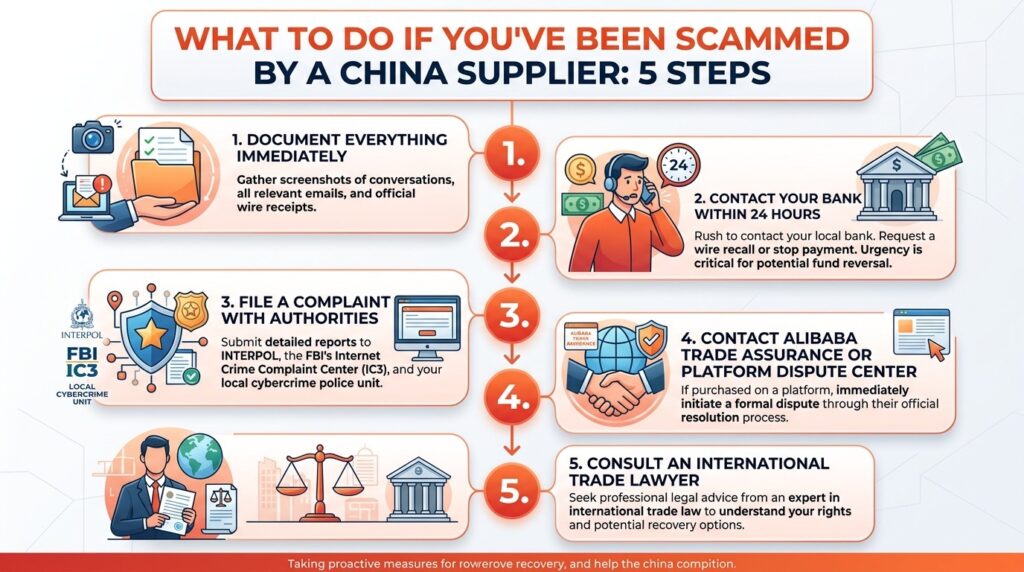
A: Recovery is possible but uncommon after 72 hours. Wire recalls initiated within 24–48 hours have the highest success rate — contact your bank immediately, provide all transaction details, and request an urgent wire recall. For amounts above $10,000, consult a lawyer familiar with international commercial fraud. Alibaba Trade Assurance provides meaningful recourse for transactions conducted within that system; transactions outside it have very limited platform protection.
Вопрос: Существуют ли категории товаров, которые подвержены более высокому риску мошенничества?#+
A: В таких категориях, как электроника, товары для детей, а также товары для здоровья и красоты, чаще всего встречаются случаи мошенничества с сертификатами и подмены материалов, в первую очередь потому, что необходимость получения сертификатов соответствия создает давление, побуждающее идти на уступки. В сегменте массовых товаров (упаковка, текстиль, простые металлические детали) чаще встречаются случаи мошенничества с подделкой идентификационных данных и мошенничества с «исчезающим залогом», направленные на покупателей, которые совершают покупку впервые и еще не выработали привычку проверять информацию.
Вопрос: Помогает ли программа «Alibaba Trade Assurance» предотвратить все эти ситуации?#+
A: Программа «Trade Assurance» обеспечивает надежную защиту от мошенничества с перенаправлением платежей (платежи поступают на счет Alibaba, а не напрямую поставщику) и споров по поводу качества (при условии прохождения процедуры урегулирования). Она не защищает вас от замены товара на другой, который проходит проверку; от подделки сертификатов, которую не обнаружила ваша служба контроля качества; или от несоответствий в спецификациях упаковки, возникающих из-за некорректно составленных заказов на поставку. Рассматривайте эту программу как один из уровней защиты, а не как полноценную систему.
Вопрос: Являются ли случаи мошенничества при закупках в Китае более распространенными, чем при закупках в других странах?#+
A: China accounts for the largest volume of international sourcing, so it naturally accounts for the largest absolute number of fraud cases. The per-transaction fraud rate is not higher than other developing manufacturing regions. The difference is that China's sourcing ecosystem is sophisticated enough that fraudulent operators are skilled at mimicking legitimate business practices — which is why the verification steps described in these cases matter more, not less.
Вопрос: Как проверить подлинность протокола испытаний?#+
A: Contact the testing laboratory named on the report directly — use contact details from the laboratory's own website, not those provided by the supplier. Give them the certificate number, product name, and test date. They can confirm in writing whether they issued the report for that product. This takes one email and typically one business day.
Вопрос: Какую самую быструю меру я могу принять, чтобы снизить риск мошенничества?#+
A: Run the business license check first. It takes three minutes, costs nothing, and eliminates the largest category of first-contact fraud — the phantom factory. If the USCC code doesn't match the company you're talking to, the rest of the verification process is irrelevant. Start there every time.
SP
Автор:
Команда SourcePilot
Специалисты по поиску поставщиков в Китае помогают малым и средним предприятиям, продавцам на Amazon и стартапам находить проверенные заводы, вести переговоры о ценах, проверять качество и организовывать доставку из Китая прямо к их двери. Есть вопросы по этой теме? Обратитесь к нашей команде.
Мы используем файлы cookie для улучшения вашего опыта работы с нашим сайтом и анализа посещаемости. Нажав Принять, вы даете согласие на использование нами файлов cookie в соответствии с описанием в нашем Политика конфиденциальности.