7 China Sourcing Scam Stories — And What Each Victim Learned
8 دقائق للقراءةبقلم فريق SourcePilot
Seven real China sourcing fraud cases — each a different scam type, a different dollar amount, and a lesson experienced importers now apply to every order.
تختلف الأرقام. وتتغير فئات المنتجات. وتختلف دول المشترين من حالة إلى أخرى. لكن بنية قصص الاحتيال في مجال التوريد من الصين تتسم بثبات ملحوظ: مورد بدا أنه شرعي، ودفعة تم سدادها، ثم مشكلة تبين أنها لا يمكن حلها.
These are seven of those stories. They’re composites drawn from real reported cases — details changed to protect privacy, financial figures approximate. Each one involves a different type of fraud and a different gap in the buyer’s process. Each one ends with a lesson that costs nothing to apply going forward.
Story 1: The Phantom Factory — $28,000 Lost
الخلفية:
A UK-based online retailer found a ceramic cookware manufacturer through a Google search. The website was excellent — high-quality product photos, a detailed “About Us” page describing 12 years in the industry, testimonials. The email responses were prompt and professional.
ماذا حدث:
قدم المشتري طلبًا لشراء 1,200 وحدة من الأواني الخزفية ودفع عربونًا بنسبة 30% قدره 8,400 دولار. وبعد ثلاثة أسابيع، تلقى رسالة تفيد بأن الإنتاج قد تأخر بسبب «صيانة المعدات». وبعد أسبوعين من ذلك، توقف عنوان البريد الإلكتروني عن الرد. وتوقف الموقع الإلكتروني عن العمل. وكان رقم الهاتف يربط برقم هاتف محمول صيني غير عامل.
A business license check — run after the fact — showed the 18-digit USCC code on the license image they’d been sent corresponded to a food distribution company in Henan province, not a cookware manufacturer in Guangdong.
الخسارة الإجمالية: مبلغ 8,400 دولار كوديعة (غير قابل للاسترداد).
الدرس: Verify the business license before any payment. The 18-digit USCC code is publicly searchable at gsxt.samr.gov.cn in three minutes. A code that returns the wrong company type, the wrong province, or no result at all is a hard stop — not a reason to ask the supplier for clarification.
Story 2: The Quality Bait-and-Switch — $47,000 Absorbed
الخلفية:
A US Amazon seller sourced silicone baking mats from a Guangdong supplier they’d used once before for a small test order. The initial 200-unit sample order had been excellent — consistent thickness, proper food-grade certification documentation, clean printing.
ماذا حدث:
The follow-up 5,000-unit bulk order arrived 11 weeks later. Within the first week of Amazon FBA receiving, 23% of units were flagged for a quality defect: the logo printing was bleeding into the silicone surface under heat, creating a transfer that contaminated food surfaces. The defect was traced to a different silicone base compound used in the bulk run — a domestic-grade material substituted for the food-grade compound used in the sample.
أقر المصنع بوجود «بعض التباين» وعرض خصمًا بنسبة 7% على الطلب التالي. ولم يتم إجراء أي فحص قبل الشحن على الدفعة الكبيرة.
الخسارة الإجمالية: 10,810 دولارات من المخزون غير القابل للاستخدام (23% من قيمة الطلب البالغة 47,000 دولار)، بالإضافة إلى تكاليف معالجة المرتجعات لدى أمازون، بالإضافة إلى دورة تقييم سلبية واحدة.
الدرس: A good sample doesn’t guarantee a good bulk order. Material substitution is the most common and hardest-to-detect quality fraud because it passes visual inspection. The fix is a pre-shipment inspection with a specific brief that includes material verification — not just cosmetic and functional checks. See our دليل فحص ما قبل الشحن بشأن ما يجب تضمينه في الموجز.
Story 3: The Payment Redirect — $78,000 Diverted
الخلفية:
كان مستورد أثاث ألماني على علاقة استمرت عامين مع مصنع في قوانغتشو ينتج مقاعد منجدة. وكانت المدفوعات تُسدد دائمًا عن طريق التحويل المصرفي إلى نفس الحساب في بنك HSBC بهونغ كونغ.
ماذا حدث:
Three months into a new order cycle, the importer received an email from what appeared to be their regular supplier contact — same email address, same name, same signature — explaining that the company was restructuring their banking to a new account at a different Hong Kong bank. The email provided new account details and asked the buyer to use these for the forthcoming balance payment of $78,000.
لم يتصل المستورد للتحقق. وقد تم سداد المبلغ. لكن المصنع الحقيقي لم يستلمه قط.
وأظهر تحليل جنائي للبريد الإلكتروني لاحقًا أن حساب المورد قد تعرض للاختراق قبل ستة أسابيع. وقد أُرسلت رسالة البريد الإلكتروني الخاصة بـ«إعادة توجيه الدفع» من العنوان الحقيقي، لكن من قبل المهاجم الذي كان يراقب حركة البريد الإلكتروني وينتظر دفعة كبيرة ليقوم باعتراضها.
الخسارة الإجمالية: $78,000 (partial recovery of $11,200 attempted via wire recall 96 hours after payment — largely too late).
الدرس: Any change to payment bank details must be confirmed by phone — calling the supplier’s verified, previously established contact number, not a number in the email requesting the change. This rule has no exceptions. Man-in-the-middle payment fraud is specifically designed to exploit long-established trust in email communication. The call takes 90 seconds.
Story 4: The Disappeared Deposit — $12,500 Gone
الخلفية:
عثرت علامة تجارية أسترالية متخصصة في الأدوات المنزلية على مصنع للأثاث المصنوع من الروطان عبر موقع Made-in-China.com. وكانت الشركة مسجلة على المنصة منذ ثلاث سنوات، وحظيت بتقييمات إيجابية، وقدمت عروض أسعار تنافسية لمجموعة أثاث خارجي مصممة حسب الطلب.
ماذا حدث:
بعد أسبوعين من المناقشات حول الموافقة على العينات (تم إرسال العينات وكانت جيدة بالفعل)، قدم المشتري طلب إنتاج لـ 400 وحدة ودفع عربونًا بنسبة 50% قدره 12,500 دولار. وتم إرسال تأكيد الإنتاج بعد يومين، مع تحديد تاريخ إنجاز متوقع بعد 45 يومًا.
At day 40, the buyer sent a production progress inquiry. No response. At day 45, the buyer called the number on the business license. A different person answered — a private individual who said they’d never heard of the furniture company. The Made-in-China.com listing went offline within 48 hours of the buyer’s support ticket to the platform.
الخسارة الإجمالية: $12,500 (full deposit, irrecoverable — Made-in-China’s dispute process found insufficient evidence of platform rule violations as the transaction had been conducted off-platform via WeChat).
الدرس: Conduct all business through the platform’s official messaging system, not WeChat or WhatsApp. Platform-based messaging creates a documented record that enables dispute resolution. Off-platform communication is private and gives you no case when the platform’s dispute team reviews what happened. Also: positive platform reviews and multi-year registration are necessary but not sufficient — combine them with business license verification and a video call.
Story 5: The Sample Scam — $3,200 and 14 Weeks
الخلفية:
A Canadian health and wellness brand was developing a custom supplement container — a specific shape, specific lid mechanism, BPA-free plastic. They found a plastics manufacturer in Zhejiang claiming OEM capabilities and requested a custom sample.
ماذا حدث:
The supplier quoted $800 for tooling fees and three custom samples. The buyer paid. Samples arrived at week six — well-made, matching the spec. The buyer placed a 3,000-unit production order and paid a 40% deposit.
At week 12, the supplier said production was “60% complete” and requested the 60% balance before shipping “to cover material costs.” The buyer — feeling the samples had proven quality — paid. At week 14, the supplier became unresponsive. No goods were ever shipped.
A reverse image search of the sample product photos later found identical images on five different supplier websites — the “custom sample” had been a stock product with the buyer’s label applied.
الدرس: Custom tooling should produce a verifiable paper trail — mold invoices, production photos, factory QC records. If a supplier can’t provide mid-production photos showing your specific product on the line, be skeptical of “60% complete” status updates. Never pay the balance before goods have been physically inspected and verified at the factory. Consider this a universal rule with no exceptions.
Story 6: The Packaging Substitution — $19,000 Absorbed
الخلفية:
قامت إحدى العلامات التجارية الأمريكية المتخصصة في التجارة الإلكترونية، والتي تبيع منتجات العناية الشخصية، بشراء علب تغليف مطبوعة حسب الطلب من إحدى شركات تصنيع التغليف في شنغهاي. وكانت العينة المعتمدة عبارة عن ورق كرافت غير مطلي بنوع معين، يتميز بلمسة نهائية مميزة كانت عنصراً أساسياً في التموضع المتميز للعلامة التجارية في السوق.
ماذا حدث:
وصلت طلبية الإنتاج (10,000 وحدة، 19,000 دولار) في الموعد المحدد. وعند فتح الصناديق، تبين أن الصناديق قد طُبعت على ورق مطلي عادي، وليس على ورق الكرافت المحدد. وكان سطح الورق لامعًا وليس ذو ملمس غير لامع. وكانت الأبعاد صحيحة. وكانت الطباعة صحيحة. أما الورق فلم يكن مطابقًا للمواصفات.
The factory’s position: “The artwork specifications didn’t specify paper type — we used a comparable alternative.” Review of the purchase order revealed no explicit paper specification had been included. The buyer had assumed the sample paper would be matched.
الخسارة الإجمالية: 19,000 دولار أمريكي على مواد التغليف التي لم يكن بالإمكان استخدامها في إطلاق المنتج دون المساس بمكانة العلامة التجارية، بالإضافة إلى تكاليف إعادة الطباعة.
الدرس: Approved samples must be accompanied by written specifications — paper type, weight, surface treatment, finish, dimension tolerances. “Make it like the sample” is not a specification. Anything that matters must be written down with measurable parameters. The factory will manufacture to what’s on paper; what’s in your head doesn’t count.
Story 7: The Certification Forgery — $120,000 and a Market Exit
الخلفية:
A UK electrical accessories importer sourced a range of smart home devices — switches, dimmers, smart plugs — from a Shenzhen electronics manufacturer. The supplier provided CE certification documents and test reports from what appeared to be an accredited testing laboratory.
ماذا حدث:
Eighteen months after market entry, a UK trading standards investigation prompted by a consumer complaint found that the CE marks on the products were self-declared rather than third-party certified, and that the test reports had been falsified — the laboratory named on the reports confirmed they had never tested the specific products. Several units had exhibited overheating under load testing.
واجه المستورد سحب المنتج من الأسواق، وغرامات تنظيمية، وإقصاءً نهائيًا من فئة الملحقات الكهربائية. وكان المورد قد أعاد تسجيل نفسه بحلول ذلك الوقت تحت اسم كيان جديد.
الخسارة الإجمالية: Estimated £95,000+ in recall costs, fines, inventory write-off, and legal fees. Market reputation: permanently damaged in the category.
الدرس: For regulated products (electrical, children’s items, medical, food contact), never accept supplier-provided test reports at face value. Contact the named testing laboratory directly and ask them to confirm the certificate number and test date. Third-party certification by an accredited body (SGS, TÜV, Intertek, Bureau Veritas) means the certifier’s own reputation is attached to the document. Self-declared certificates mean nothing. This verification takes one email and one day.
النمط المشترك بين القصص السبع جميعها
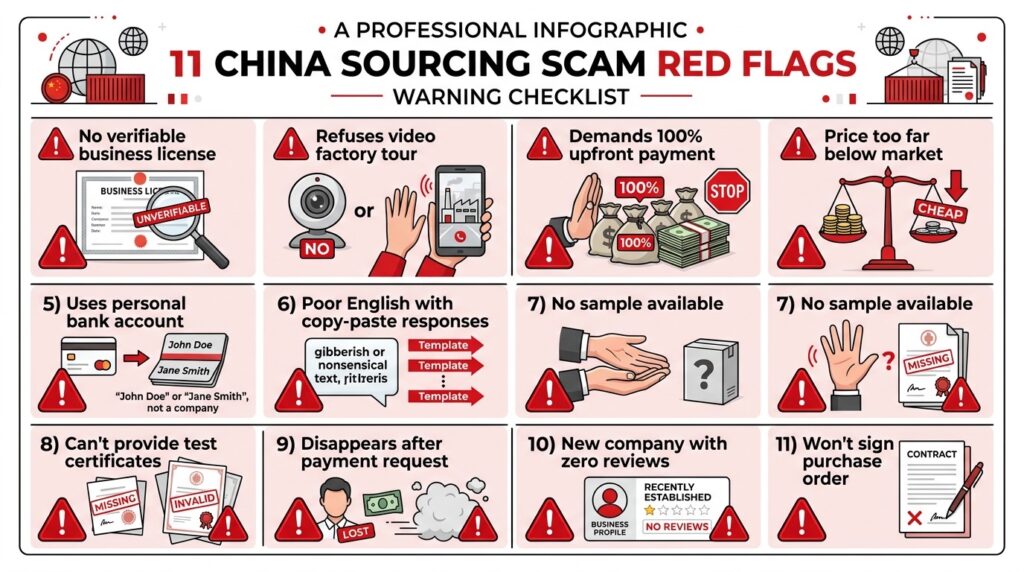
تتناول هذه القصص فئات منتجات مختلفة، وبلدانًا مختلفة، ومبالغ مختلفة بالدولار. لكن كل واحدة منها كانت تنطوي على ثغرة واحدة على الأقل في عملية الشراء كان من الممكن تحديدها مسبقًا:
القصة
نوع الاحتيال
يمكن الوقاية منه عن طريق
1. مصنع فانتوم
الاحتيال المتعلق بالهوية
التحقق من رخصة العمل
2. الإغراء والخداع
استبدال المواد
فحص ما قبل الشحن مع موجز عن المواد
3. إعادة التوجيه إلى صفحة الدفع
هجوم «الرجل في الوسط»
التأكيد عبر الهاتف على أي تغيير في تفاصيل الدفع
4. الوديعة المفقودة
المورد الوهمي
التواصل عبر المنصة + التحقق عبر الفيديو
5. مثال على عملية احتيال
الاحتيال المتعلق بالدفع المسبق
لا تدفع الرصيد أبدًا دون فحصه
6. استبدال مواد التغليف
استغلال الثغرات في المواصفات
مواصفات مكتوبة لكل عنصر من العناصر المادية
7. تزوير الشهادات
التزوير في المستندات
التأكيد المباشر من المختبر لتقارير الفحوصات
None of these protections requires special expertise or expensive tools. Each one costs less than an hour to apply. The cost of not applying them is visible in the numbers above.
هذه القصص هي حالات مركبة مستمدة من قضايا احتيال موثقة في أوساط المستوردين، وتقارير القطاع، ودراسات الحالة الخاصة بمتخصصي التوريد. وقد تم تغيير التفاصيل التي قد تكشف عن الهوية. والأرقام المالية تقريبية.
س: هل يمكن استرداد الأموال بعد وقوع احتيال في عمليات الشراء من الصين؟#+
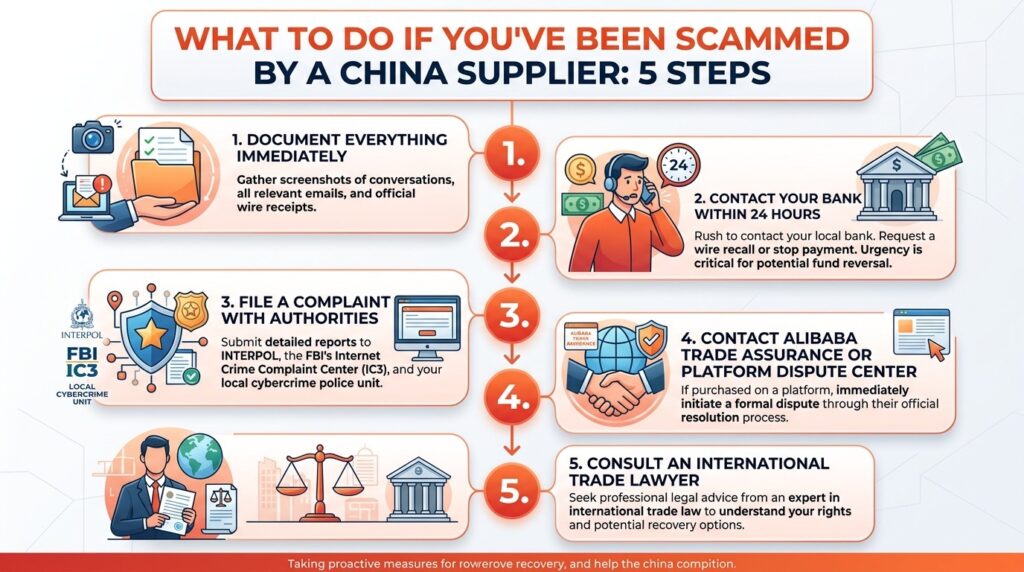
A: Recovery is possible but uncommon after 72 hours. Wire recalls initiated within 24–48 hours have the highest success rate — contact your bank immediately, provide all transaction details, and request an urgent wire recall. For amounts above $10,000, consult a lawyer familiar with international commercial fraud. Alibaba Trade Assurance provides meaningful recourse for transactions conducted within that system; transactions outside it have very limited platform protection.
س: هل هناك فئات معينة من المنتجات أكثر عرضة لخطر الاحتيال؟#+
ج: تشهد فئات الإلكترونيات ومنتجات الأطفال والصحة/الجمال أعلى معدلات الاحتيال في مجال الشهادات واستبدال المواد، ويرجع ذلك أساسًا إلى أن شهادات الامتثال تخلق ضغطًا يدفع إلى التهاون في المعايير. أما السلع الأساسية العامة (مثل التغليف والمنسوجات والأجهزة الأساسية) فتشهد المزيد من حالات تزوير الهوية وعمليات الاحتيال المتعلقة باختفاء الودائع، والتي تستهدف المشترين الجدد الذين لم يعتادوا بعد على التحقق من صحة المنتجات.
س: هل تمنع خدمة «Alibaba Trade Assurance» حدوث جميع هذه الحالات؟#+
ج: يوفر برنامج «ضمان التجارة» حماية فعالة ضد الاحتيال المتعلق بإعادة توجيه المدفوعات (حيث تذهب المدفوعات إلى «علي بابا» وليس إلى المورد مباشرةً) والنزاعات المتعلقة بالجودة (الخاضعة لعملية التسوية). لكنه لا يحميك من حالات «الإغراء والتبديل» التي تنطوي على استبدال المواد التي تجتاز الفحص، أو تزوير الشهادات التي لم يكتشفها قسم مراقبة الجودة لديك، أو الثغرات في مواصفات التعبئة والتغليف الناجمة عن أوامر الشراء المكتوبة بشكل سيئ. اعتبرها طبقة حماية واحدة، وليست نظامًا كاملاً.
س: هل حالات الاحتيال في عمليات التوريد من الصين أكثر شيوعًا من عمليات التوريد من البلدان الأخرى؟#+
A: China accounts for the largest volume of international sourcing, so it naturally accounts for the largest absolute number of fraud cases. The per-transaction fraud rate is not higher than other developing manufacturing regions. The difference is that China's sourcing ecosystem is sophisticated enough that fraudulent operators are skilled at mimicking legitimate business practices — which is why the verification steps described in these cases matter more, not less.
A: Contact the testing laboratory named on the report directly — use contact details from the laboratory's own website, not those provided by the supplier. Give them the certificate number, product name, and test date. They can confirm in writing whether they issued the report for that product. This takes one email and typically one business day.
س: ما هي أسرع خطوة يمكنني اتخاذها بمفردي للحد من مخاطر الاحتيال؟#+
A: Run the business license check first. It takes three minutes, costs nothing, and eliminates the largest category of first-contact fraud — the phantom factory. If the USCC code doesn't match the company you're talking to, the rest of the verification process is irrelevant. Start there every time.
SP
بقلم
فريق SourcePilot
متخصصون في التوريد من الصين يساعدون الشركات الصغيرة والمتوسطة وبائعي «أمازون» والشركات الناشئة في العثور على مصانع معتمدة، والتفاوض بشأن الأسعار، وفحص الجودة، والشحن من الصين إلى عتبة بابهم. هل لديك سؤال حول هذا الموضوع؟ استشر فريقنا.
نحن نستخدم ملفات تعريف الارتباط لتحسين تجربتك على موقعنا وتحليل حركة المرور. بالنقر على قبول، فإنك توافق على استخدامنا لملفات تعريف الارتباط على النحو المبين في سياسة الخصوصية.