If you’re sourcing products from overseas suppliers, you’ve probably come across the term:
MOQ.
And if you’re new to manufacturing, it can quickly become frustrating.
You finally find a supplier with competitive pricing — only to hear:
“Our MOQ is 5,000 units.”
But what if you only need 500?
Does that mean the supplier isn’t right for you?
Not necessarily.
MOQ, or Minimum Order Quantity, is one of the most misunderstood concepts in global sourcing. Yet understanding how it works can help businesses negotiate better, reduce sourcing risks, and make smarter purchasing decisions.
What Is MOQ?
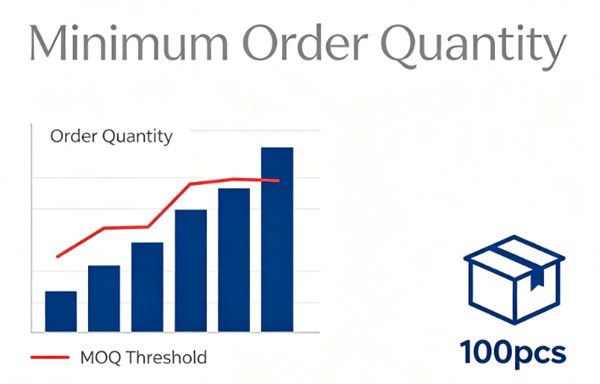
MOQ stands for Minimum Order Quantity.
It refers to the smallest number of products a supplier is willing to manufacture or sell per order.
In simple terms:
A supplier sets a minimum purchase threshold to make production economically worthwhile.
For example:
A factory may require:
- 1,000 units for water bottles
- 5,000 units for packaging products
- 500 pieces for electronics accessories
If your order quantity falls below that threshold, the supplier may decline production or increase pricing.
MOQ exists because factories need enough volume to cover:
- Material sourcing
- Machine setup
- Labor costs
- Production efficiency
MOQ is especially common when sourcing products internationally.
If you’re new to overseas procurement, our guide on What Is Global Sourcing? explains how international supplier relationships work.
Why Do Suppliers Have MOQ Requirements?
Many buyers assume MOQ exists only to maximize profits.
In reality, MOQ usually reflects manufacturing economics.
Factories have fixed costs.
Even small production runs require:
- Machine setup
- Labor allocation
- Material preparation
- Quality inspections
Producing 100 units often requires almost the same setup effort as producing 5,000 units.
For suppliers, very small orders may simply not be financially practical.
Material Purchasing Requirements
Factories often purchase raw materials in bulk.
For example:
A packaging manufacturer may buy:
- Cardboard
- Ink
- Plastic film
in large quantities.
Small orders may leave unused material inventory.
This increases costs for suppliers.
Production Efficiency
Mass production is generally more efficient.
Larger runs reduce:
- Machine downtime
- Labor inefficiencies
- Setup costs per unit
That’s why bigger orders often come with lower pricing.
Factory Capacity Priorities
Factories frequently prioritize larger customers.
A manufacturer operating at full capacity may prefer a 50,000-unit order over several small ones.
This doesn’t mean small buyers cannot succeed — but supplier fit matters.
Different Types of MOQ in Manufacturing
MOQ isn’t always as straightforward as “X number of units.”
There are several common MOQ structures.
Product MOQ
The most common type.
Example:
A supplier requires:
1,000 units per product SKU.
Order Value MOQ
Some suppliers care more about total order value than unit count.
Example:
Minimum order = $5,000
This offers more flexibility across multiple products.
Material MOQ
Sometimes MOQ comes from raw material suppliers.
For example:
Custom colors or materials may require bulk purchases.
This often affects:
- Packaging
- Textiles
- Plastics
- Custom molds
Custom Packaging MOQ
Private label packaging often has separate MOQ requirements.
For example:
You may order:
- 500 product units
but need:
- 5,000 branded boxes
because packaging suppliers have different minimums.
This surprises many first-time importers.
How MOQ Impacts Product Pricing
MOQ and pricing are closely connected.
Generally:
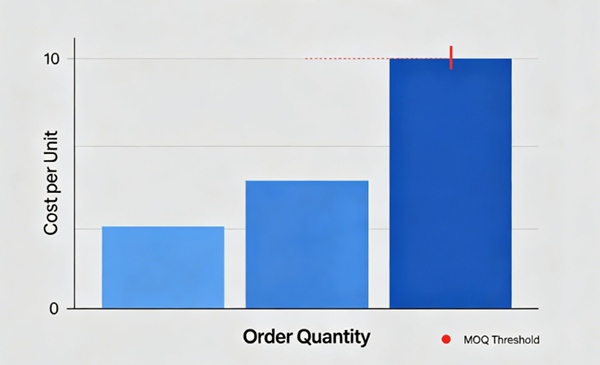
Higher MOQ = Lower Cost Per Unit
Because factories benefit from economies of scale.
Example:
| Quantity | Unit Cost |
|---|---|
| 500 Units | $5.20 |
| 2,000 Units | $4.10 |
| 10,000 Units | $3.25 |
Larger orders spread production costs across more units.
This reduces:
- Labor cost per item
- Setup costs
- Material expenses
Why Very Small Orders Cost More
Small orders are usually more expensive because factories still incur:
- Setup costs
- Labor expenses
- Material preparation
Even if production volume is low.
This is why startups sometimes struggle with profitability early on.
Can You Negotiate MOQ?
Yes — but not always.
MOQ is often negotiable under the right conditions.
Many suppliers are willing to be flexible for buyers showing long-term potential.
When Suppliers May Lower MOQ
Factories may reduce MOQ if:
✔ You accept standard materials
✔ You simplify packaging
✔ You order existing products (ODM)
✔ You agree to higher pricing
✔ You plan repeat orders
Relationship-building matters.
When MOQ Is Hard to Negotiate
MOQ may be fixed when:
✘ Custom molds are required
✘ Special materials are needed
✘ Production complexity is high
✘ Supplier capacity is limited
If you’re sourcing internationally, our guide on How to Find Reliable Suppliers in China can help you evaluate supplier options.
Common MOQ Mistakes Buyers Make
Avoid these common sourcing mistakes.
Choosing Suppliers Only Based on Low MOQ
Low MOQ sounds attractive.
But extremely low MOQ suppliers may have:
- Higher pricing
- Lower quality
- Limited production capability
Supplier quality matters more than minimum quantity alone.
Ignoring Hidden Costs
Low MOQ may come with:
- Higher shipping costs
- Higher packaging cost per unit
- More expensive materials
Always calculate total landed cost.
Scaling Too Fast
Some startups place huge orders too early.
This creates inventory risk.
Test market demand first.
Skipping Supplier Verification
MOQ negotiation means little if the supplier is unreliable.
Learn how to reduce risks in our guide on How to Avoid Supplier Scams When Sourcing Overseas
Final Thoughts
MOQ can feel restrictive at first — especially for startups and growing brands.
But understanding how minimum order quantities work helps businesses make smarter sourcing decisions.
Instead of focusing only on the lowest MOQ, successful buyers evaluate:
- Supplier reliability
- Pricing structure
- Production quality
- Scalability
The goal is finding a manufacturing partner that supports both current needs and future growth.
Need Help Negotiating MOQ With Suppliers?
At SourcePilot Global, we help businesses:
✓ Find reliable manufacturers
✓ Negotiate supplier terms
✓ Reduce sourcing risks
✓ Support OEM & ODM production
✓ Improve procurement efficiency
Looking for the right supplier? Contact our sourcing team to discuss your project.