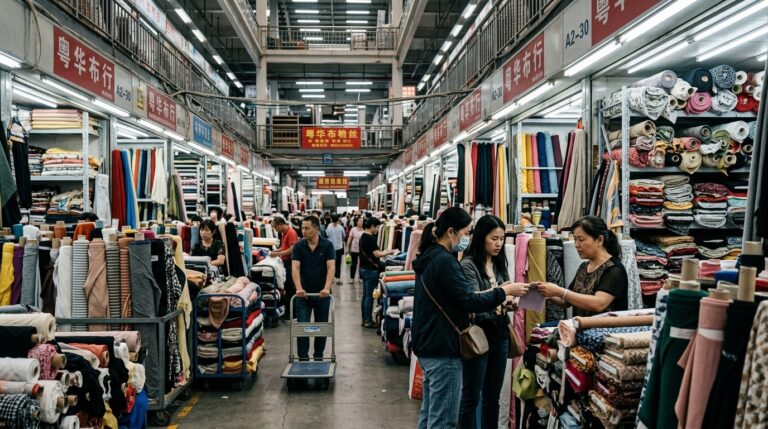
The same silicone kitchen utensil set that lists for $4.80/unit on Alibaba costs ¥18 ($2.50) on 1688. The same wireless earbuds: $12.50 on Alibaba, ¥62 ($8.60) on 1688. The same polyester tote bag: $1.90 on Alibaba, ¥8.50 ($1.17) on 1688.
The price gap is real and consistent. It exists because 1688.com is Alibaba Group’s wholesale marketplace designed for Chinese domestic buyers — business owners purchasing for their own retail operations inside China. The platform assumes buyers speak Mandarin, pay in RMB, and ship within China. None of that is true for an overseas buyer. But the prices are.
This guide walks you through every step needed to access 1688 as an international buyer: account setup, search without Mandarin, communicating with suppliers, navigating payment, and understanding the risks that come with a platform not built for you.
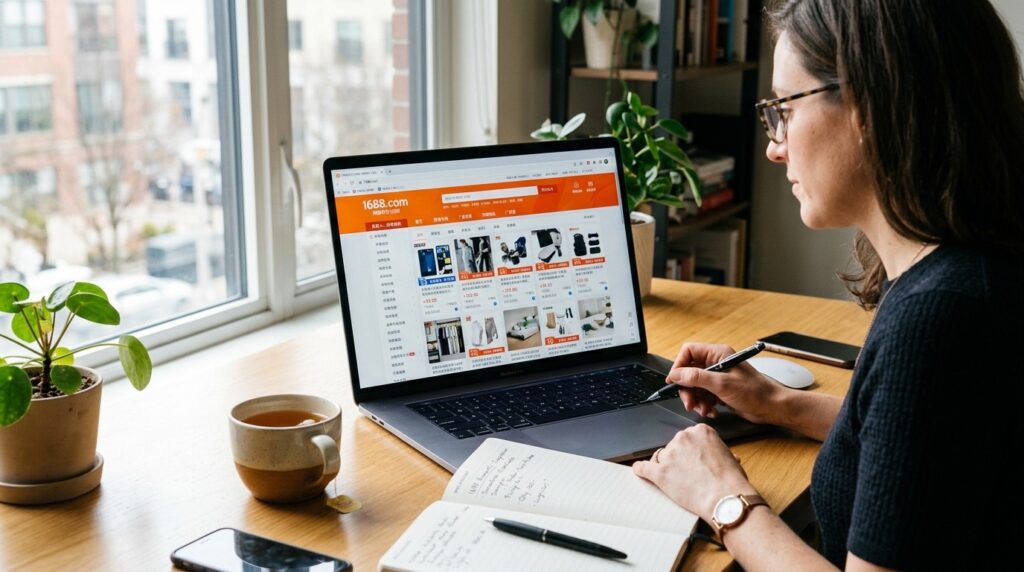
Why the Price Difference Exists
Before the how-to, a quick explanation of why the gap is so large — because it affects your expectations of what 1688 can and can’t do.
1688 is a domestic B2B marketplace. It’s not optimized for international trade. Suppliers on 1688 aren’t paying for Alibaba’s Gold Supplier certification, Trade Assurance coverage, or English-language customer service. Those features cost money, and that cost gets passed into Alibaba pricing.
Minimum order quantities are often lower. Because 1688 targets small Chinese retailers and resellers, many suppliers list smaller MOQs than they’d offer to international buyers on Alibaba.
There’s less buyer protection. Alibaba Trade Assurance, dispute resolution, and overseas-focused compliance don’t exist on 1688. When something goes wrong, your recourse is significantly more limited.
The trade-off is straightforward: lower prices, lower protection. Whether that trade-off works for your business depends on your order size, product category, and risk tolerance.
Method 1: Buy Directly on 1688 (For Experienced Buyers)
Step 1: Create a 1688 Account
Go to 1688.com and click the registration link (注册 — top right). You’ll need:
- A mobile phone number (Chinese numbers are preferred; international numbers work but sometimes require extra verification steps)
- An Alipay account linked to the registration
The Alipay issue: 1688’s standard checkout requires Alipay (支付宝), which is linked to a Chinese bank account. International Alipay accounts exist but have transaction limits and don’t work for all sellers. This is the biggest practical barrier for direct buying — more on payment solutions below.
Browser tip: Use Google Chrome with Google Translate enabled. The translation is imperfect but navigable. Alternatively, the 1688 mobile app translates more cleanly than the desktop version on some browsers.
Step 2: Search Without Speaking Mandarin
Method A — Image Search (Most Effective)
Upload a photo of the product you want to find. Click the camera icon in the 1688 search bar, upload your image, and the platform returns visually similar listings. This works remarkably well for physical products and bypasses language entirely.
Method B — Google Translate Your Keywords
Translate your product keywords into Simplified Chinese using Google Translate or DeepL. Paste the Chinese term into the 1688 search bar. For example: “silicone spatula” → “硅胶铲子”. Results will be more targeted than English equivalents.
Method C — Find on Alibaba, Cross-Reference on 1688
Find the product on Alibaba, note the Chinese product name from the listing (often visible in product specifications), and search that term on 1688.
Search filters to use:
– Sort by number of transactions (成交量) — this surfaces high-volume suppliers
– Filter by supplier location (city/province) to find suppliers in relevant manufacturing clusters
Step 3: Evaluate Listings and Suppliers
1688 supplier ratings work similarly to Alibaba, but the scoring system is different:
- Heart/diamond ratings: The more hearts and diamonds, the more established the seller
- Transaction volume: Displayed on each listing — higher is better
- Response rate: Check the supplier’s response time statistics
Red flags on 1688 are largely the same as on any Chinese sourcing platform: new accounts with no transaction history, prices dramatically below comparable listings, no product photos of actual goods (only renders), and no response to initial messages.
Step 4: Communicate with Suppliers
1688’s messaging system (旺旺/Wangwang, integrated into the platform) is the standard communication channel. Compose your message in English; use Google Translate to convert to Chinese before sending. Many 1688 suppliers have some English capability but will respond in Chinese — use translation tools on their replies.
Essential information to communicate:
– Your required quantity
– Destination country (this matters for whether they can export)
– Whether you need export-ready packaging
– Payment method you intend to use
Important: Not all 1688 suppliers export. Many sell domestic-only. Confirm export capability (是否可以出口 / kěyǐ chūkǒu ma?) before proceeding.
Step 5: Payment — The Biggest Hurdle
Direct 1688 payment for international buyers has three practical routes:
Option A — International Alipay
Alipay launched international versions that accept foreign credit cards and bank transfers in select markets. Limits apply (typically ¥5,000–¥50,000 per transaction depending on verification level). Works for small to medium orders.
Option B — 1688 International (1688跨境)
1688 launched a dedicated cross-border section (accessible at https://www.1688.com/chanpin/ with the 跨境专供 filter) where suppliers are set up for international payment including Visa, Mastercard, and PayPal in some cases. Prices are slightly higher than the domestic-only listings, but still significantly below Alibaba.
Option C — Sourcing Agent (Most Reliable)
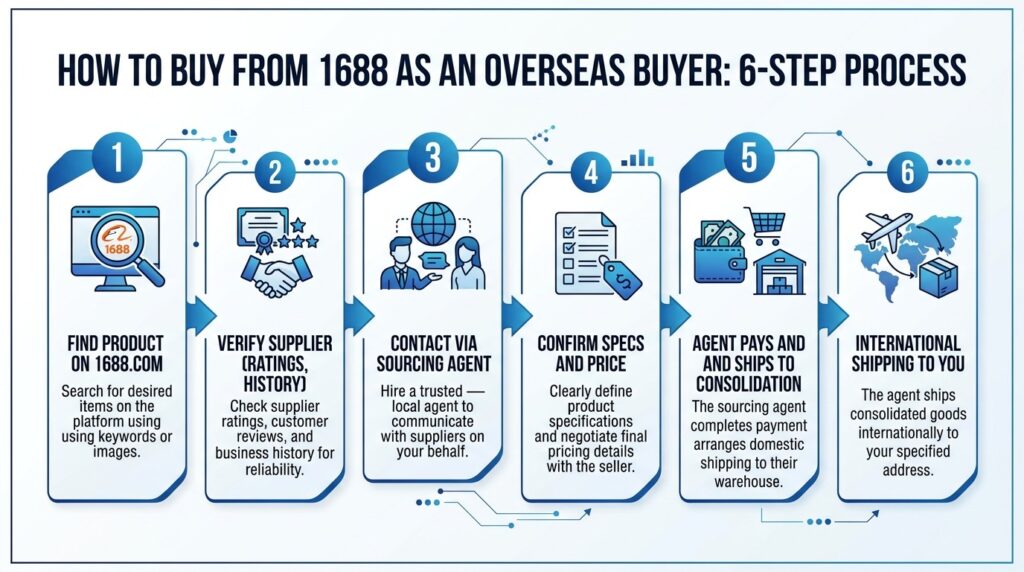
A China-based sourcing agent can purchase on your behalf on 1688, consolidate the goods, handle export customs, and ship internationally. This is the most reliable method for buyers who can’t navigate the payment system directly, and it’s how most overseas buyers actually access 1688 effectively. The agent fee (typically 5–10% of order value) is usually still cheaper than buying equivalent products on Alibaba.
Method 2: Use a Sourcing Agent to Access 1688 (Recommended for Most Buyers)
For overseas buyers who want 1688 pricing without the operational complexity, working with a China sourcing agent is the most practical route.
What an agent does on your behalf:
– Searches 1688 for products matching your specifications
– Negotiates price and MOQ directly with domestic suppliers (in Mandarin, with local credibility)
– Purchases using their own Alipay/Chinese bank account
– Quality checks goods before shipping (critical — 1688 has no buyer protection once paid)
– Consolidates multiple supplier orders into one shipment
– Handles export customs documentation
– Ships internationally via your chosen freight method
The effective cost: Agent fee (5–10%) + goods cost (40–70% below Alibaba) = net cost still 30–60% below equivalent Alibaba pricing for many product categories. The math works clearly in favor of using an agent, especially for orders above $2,000–$3,000.
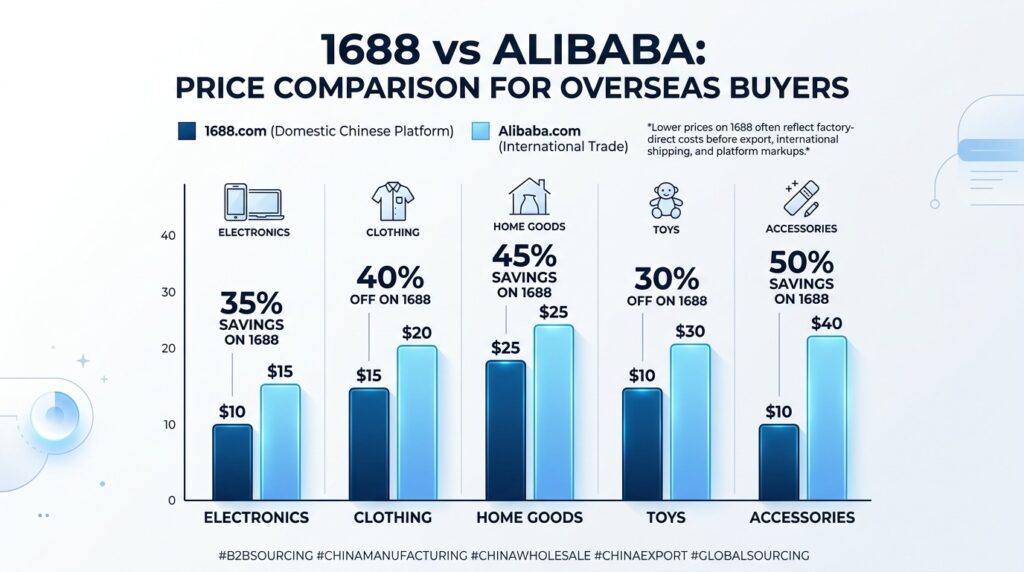
1688 vs. Alibaba: An Honest Comparison
| Factor | 1688.com | Alibaba.com |
|---|---|---|
| Price | 40–70% lower on comparable products | Higher (includes platform certification costs) |
| Language | Chinese only | English-first |
| Payment | Alipay / Chinese bank required | International payments, Trade Assurance |
| Buyer Protection | Minimal | Alibaba Trade Assurance (significant) |
| MOQ | Often lower (domestic resellers) | Variable, typically higher |
| Supplier Vetting | Limited | Gold Supplier verification, reviews |
| Export capability | Not guaranteed — must confirm | Standard for most Gold Suppliers |
| Best for | Experienced buyers or agent-assisted | First-time buyers, lower-risk orders |
What Products Work Best on 1688
1688 is strongest for:
– Generic consumer goods (kitchenware, home goods, toys, stationery) where brand and compliance certification are not the primary purchasing factor
– Packaging materials (boxes, bags, labels, tissue paper) — often 50–70% cheaper than Alibaba equivalents
– Accessories and components (hardware, fasteners, electronics components) where exact specifications are the primary criterion
– Testing new products before committing to larger Alibaba orders — smaller MOQs allow genuine validation
1688 is weaker for:
– Safety-regulated products (electrical, children’s, food contact) where supplier compliance verification is difficult
– Brand-sensitive categories where counterfeit risk is higher
– First-time buyers without a local partner to verify suppliers and goods
Getting Started: The Practical Decision Tree
If you’re a first-time buyer: Use Alibaba with Trade Assurance for your initial orders. The price premium buys you meaningful buyer protection while you build supplier relationships and sourcing experience.
If you’ve completed 2–3 successful import cycles: Start using 1688 with a sourcing agent. The agent acts as your local partner, handles payment and quality verification, and gives you access to domestic pricing with substantially less operational risk than going direct.
If you’re an experienced importer with established China relationships: Direct 1688 purchasing (International Alipay + your own quality inspection process) may be viable. The savings are material at scale.
The platform’s pricing advantage is real. The operational barriers are also real. The question isn’t whether to eventually use 1688 — it’s how to get there in a way that doesn’t expose you to unnecessary losses while you’re learning the system.
Related reading → Alibaba vs. 1688 vs. Made-in-China: Which Platform Gets Better Prices?
If you’d like assistance sourcing specific products from 1688 with full agent support — search, negotiation, quality check, and international shipment — our team works directly with domestic Chinese suppliers on your behalf.